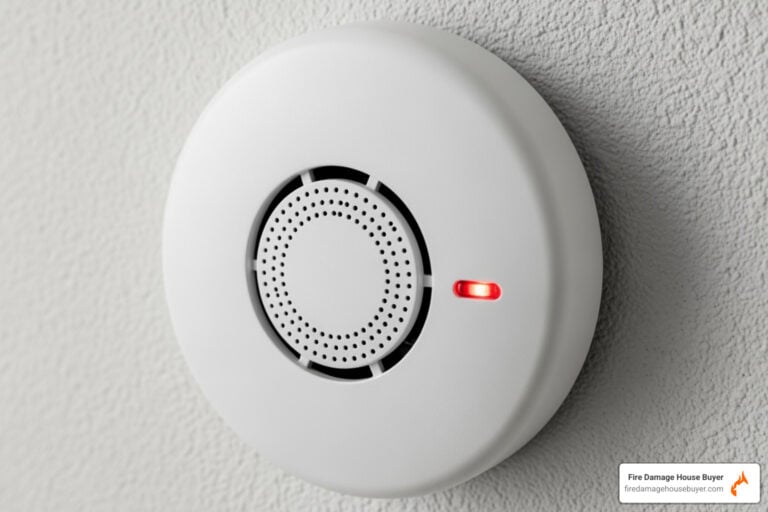
Why Knowing How to Turn Off House Fire Alarm Matters
Knowing how to turn off house fire alarm is an essential skill. Here’s the quick answer:
Quick Steps to Turn Off Your House Fire Alarm:
- Check for real danger – Look for smoke, flames, or the smell of fire.
- Press the silence/hush button – Hold for 5-10 seconds to temporarily quiet the alarm.
- For battery-powered alarms – Remove the battery if the silence button doesn’t work.
- For hardwired alarms – Turn off the circuit breaker, then remove the backup battery.
- Reset the system – Disconnect power, remove battery, hold the test button for 15 seconds, then reconnect.
Always assume a sounding alarm means fire and get to safety. Only silence it after confirming there’s no emergency.
A blaring fire alarm is stressful, especially if you’ve recently experienced a house fire. The sound can trigger anxiety about repairs and safety. If your smoke detector won’t stop beeping, it might be signaling more than a low battery—it could be a sign that your home’s electrical system was damaged by fire.
Common reasons for false alarms include:
- Low or dying batteries
- Dust and debris in the sensor
- High humidity from cooking or showers
- Expired detectors (over 10 years old)
- Electrical issues from fire damage
At Fire Damage House Buyer, we’ve helped hundreds of homeowners steer the challenges of fire-damaged properties, including persistent alarm issues. If your alarm problems stem from fire damage and the thought of costly repairs feels overwhelming, there’s a simpler path forward.
First, Is It a Real Emergency?
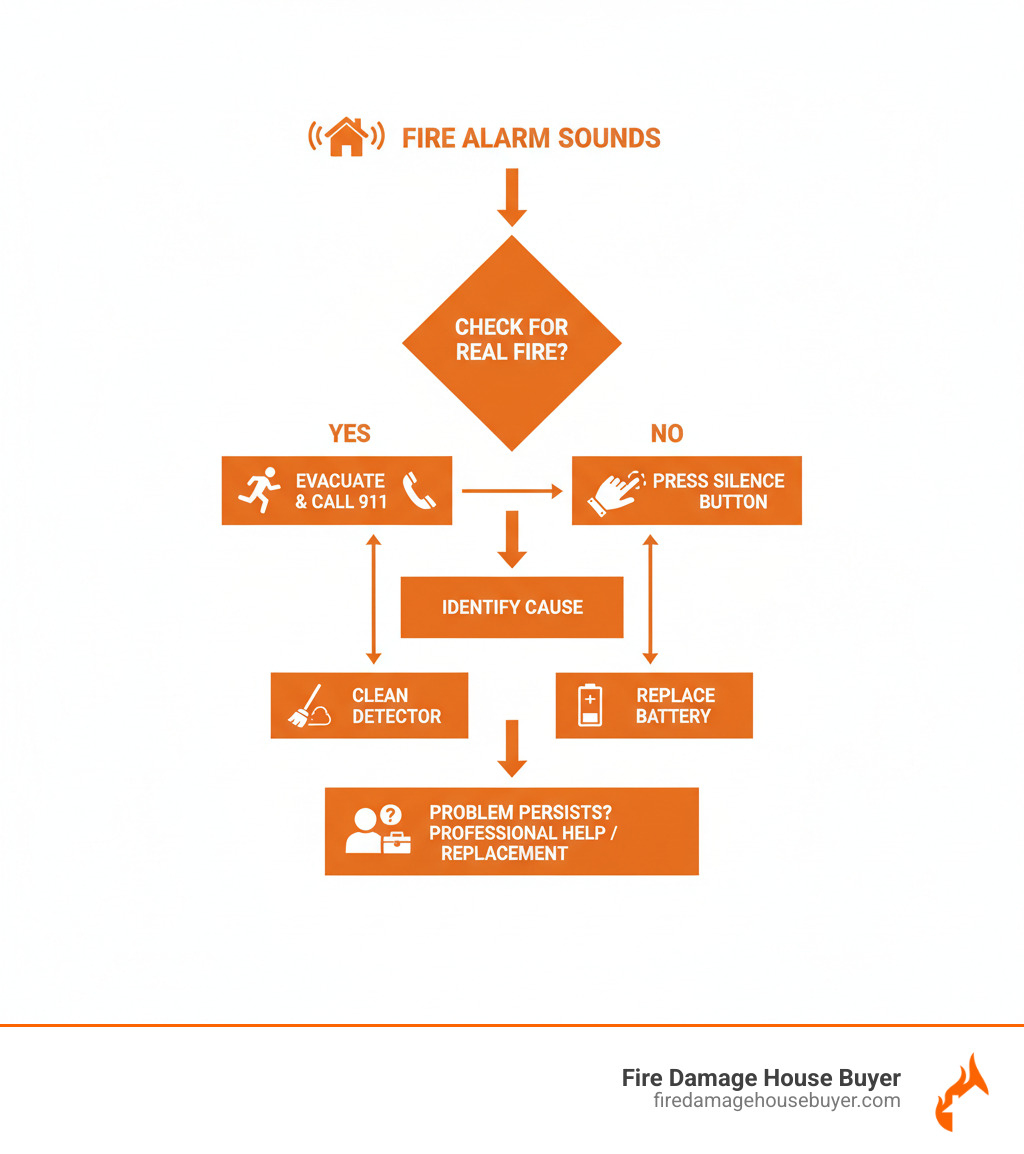
When an alarm sounds, treat it as a real emergency until you know otherwise. Your first step is to quickly assess the situation for danger.
Do you see smoke or flames? Do you smell something burning? Is the air hot or hazy? If you notice any sign of a real fire, evacuate immediately. Get everyone out, then call 911 from a safe location. A practiced evacuation plan is critical—ensure everyone knows two ways out of every room and a designated meeting spot outside.
Only after you’ve confirmed there is no actual fire should you proceed with figuring out how to turn off house fire alarm and identify the cause.
Differentiating Alarm Sounds: Emergency vs. Warning
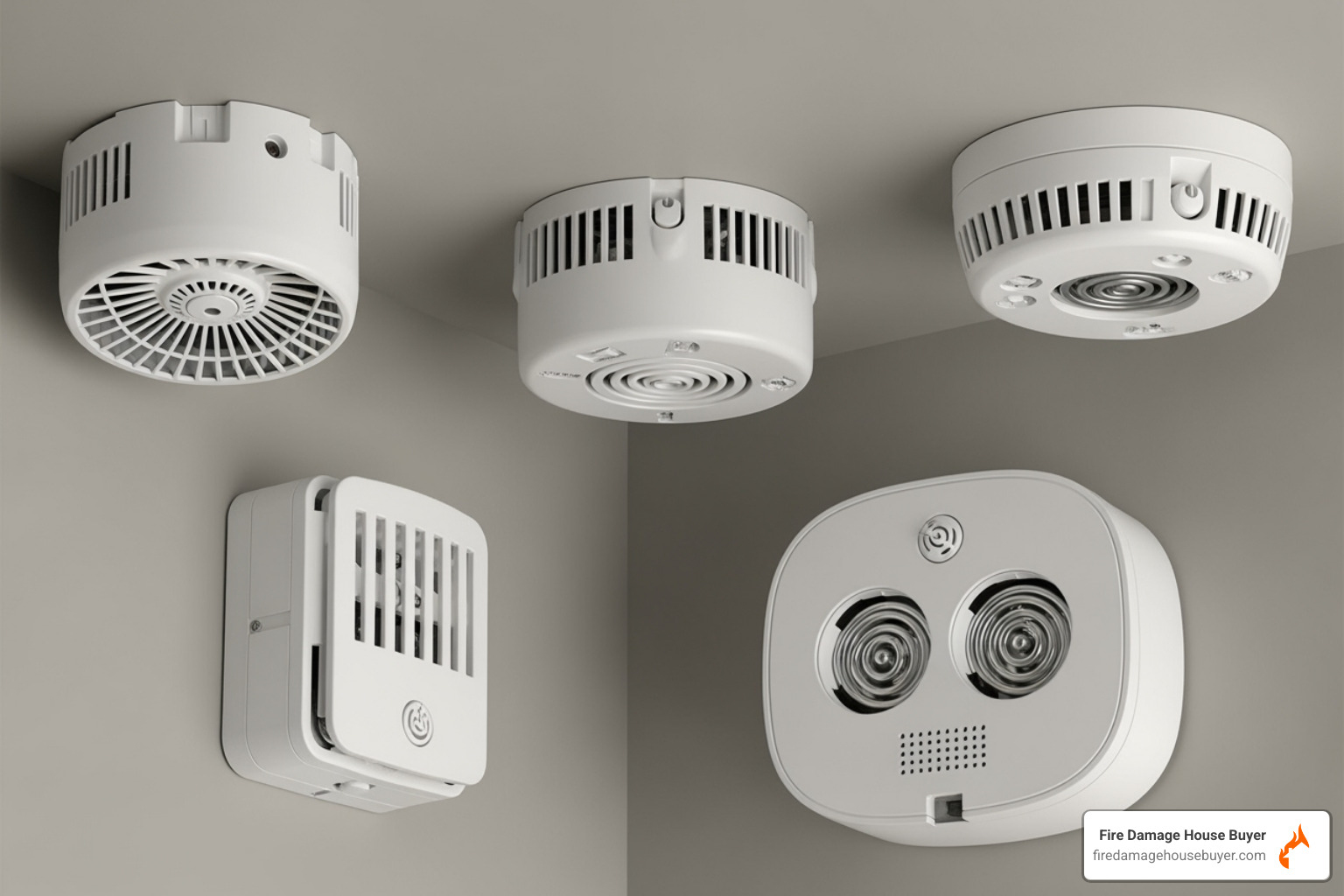
Your smoke alarm uses different sounds to communicate different issues.
- Emergency Alarm: A continuous, loud, three-beep pattern (Temporal-Three) means “FIRE!” Evacuate immediately.
- Warning Chirp: A single chirp every 30-60 seconds is a non-urgent warning. It usually means the battery is low. This often happens in the middle of the night when cooler temperatures cause a slight voltage drop.
- Other Patterns: Multiple beeps can signal other issues. For example, four quick beeps may indicate carbon monoxide, while five chirps per minute can mean the alarm has reached its end-of-life (usually 10 years). Check your user manual for your specific model’s codes.
If There’s No Fire: Identifying the Problem Alarm
If there’s no fire, you need to find which alarm is causing the noise. This can be tricky in homes with interconnected alarms, where if one detects an issue, they all sound off.
Look for a flashing LED light. The initiating alarm—the one with the actual problem—will typically have a rapidly flashing red or green light. This is your culprit.
If you have standalone, battery-powered alarms, the process is simpler, as only the faulty unit will be making noise.
Once you’ve identified the problem alarm, you can silence it and fix the issue. If alarm problems started after a fire, it could indicate deeper electrical issues. The cost to repair fire damaged house can escalate quickly in these situations, leading many to seek simpler alternatives.
How to Turn Off a House Fire Alarm: A Step-by-Step Guide
After confirming there’s no fire, you can silence the alarm. The method depends on your alarm type.
Silencing Battery-Powered and Sealed-Battery Alarms
For common battery-powered alarms, follow these steps:
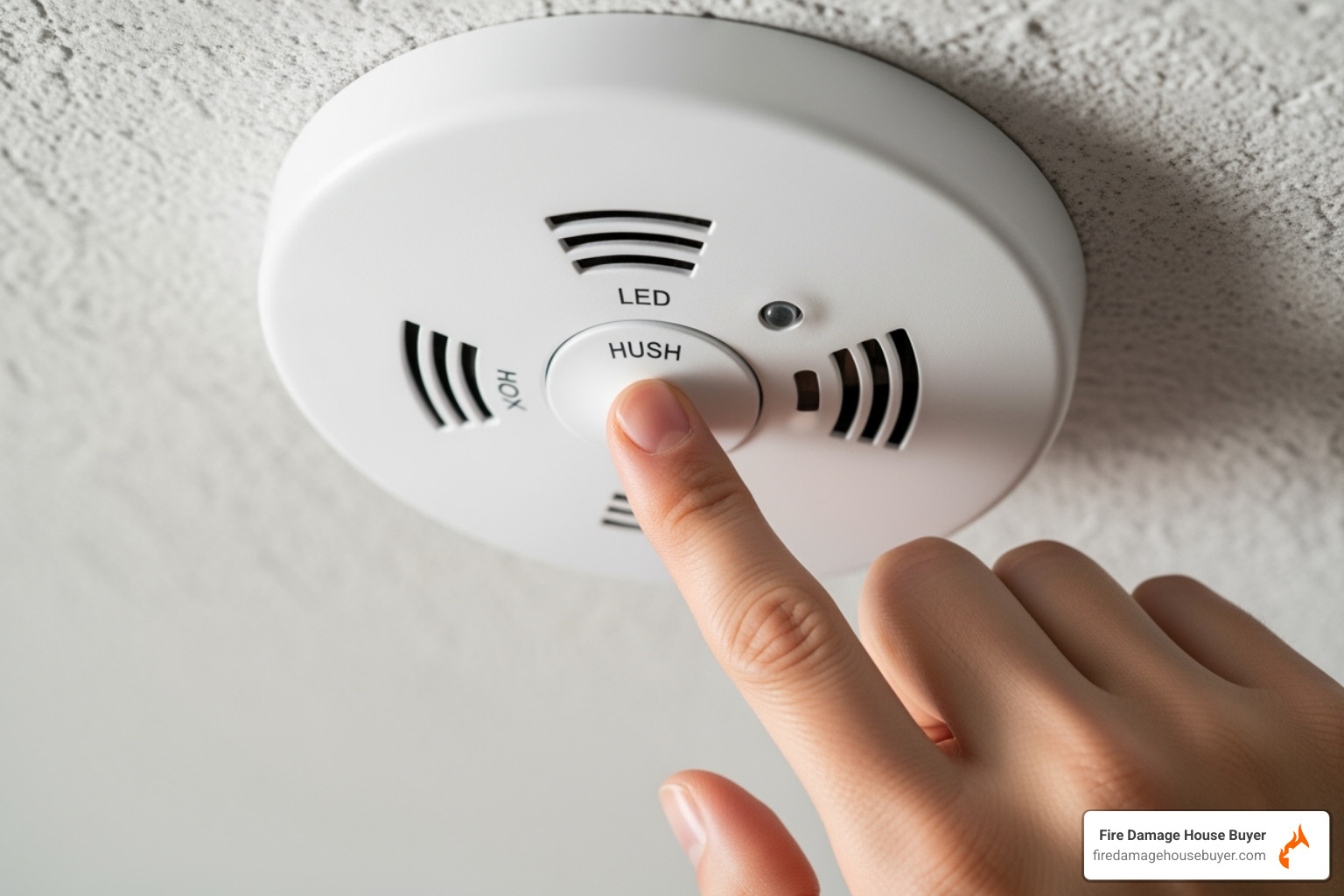
- Press the Silence/Hush Button: Press and hold the button for 5-10 seconds. This will temporarily silence the alarm for about 10-15 minutes, allowing smoke or steam to clear.
- Remove the Battery: If the hush button doesn’t work, twist the alarm to detach it from its mount, open the battery compartment, and remove the battery. This will stop the noise immediately.
Sealed-battery alarms have a non-replaceable 10-year battery. You can use the hush button, but if it fails, you must deactivate the unit according to the manufacturer’s instructions and replace it.
Important: Never leave a smoke detector disabled. Replace the battery immediately. Persistent issues after a fire may point to deeper electrical problems. Our fire safety resources can offer more insight.
How to turn off a house fire alarm that is Hardwired
Hardwired alarms are connected to your home’s electricity and have a battery backup. They are often interconnected, so when one sounds, they all do.
- Reset the Unit: First, try pressing the reset button on the initiating alarm.
- Turn Off the Circuit Breaker: If resetting doesn’t work, go to your breaker panel and find the breaker labeled “Smoke Alarms” or similar. Flip it to the “off” position.
- Remove the Backup Battery: The alarm will still have power from its backup battery. Twist the unit to remove it from the ceiling and take out the battery.
Silencing the initiating unit should quiet the entire system. If not, you may need to remove the backup batteries from other units as well.
Performing a Full Reset to Stop False Alarms
If an alarm is acting erratically, a full reset (or “power cycle”) can clear its memory.
- Disconnect All Power: For battery units, remove the battery. For hardwired units, turn off the breaker and remove the backup battery.
- Drain Residual Charge: With the alarm unpowered, press and hold the test/reset button for 15-20 seconds. This drains any leftover charge in the capacitors.
- Restore Power: Re-insert the battery and, for hardwired units, flip the breaker back on.
The alarm should chirp once to signal it has reset and is functioning. If false alarms continue after a reset, the unit is likely faulty or expired and needs to be replaced.
Common Causes of False Alarms and How to Prevent Them
Understanding why false alarms happen is the key to preventing them. Most are caused by environmental factors, not a faulty detector.
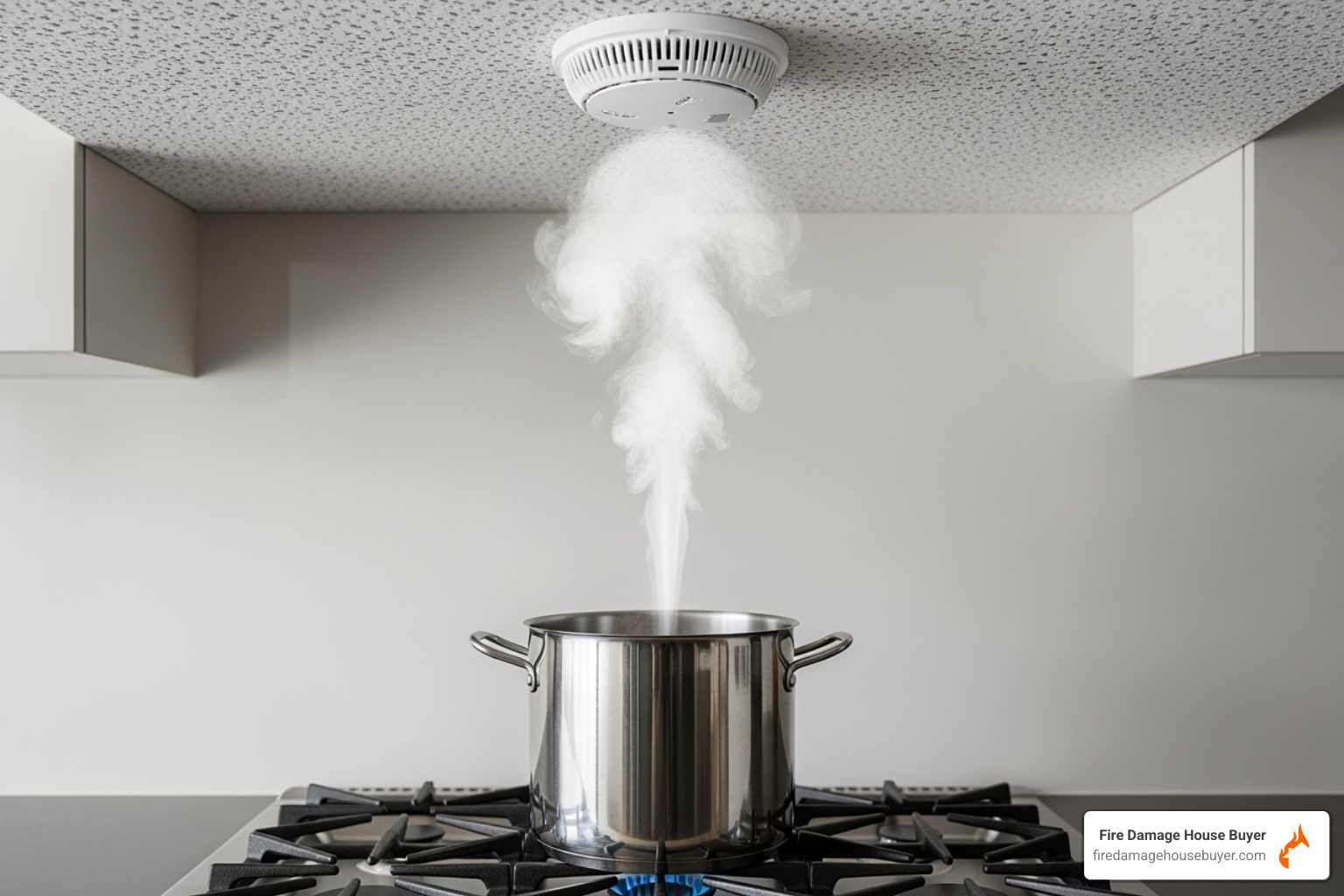
Environmental Triggers
Everyday activities can mimic smoke and trigger an alarm. Prevention is often simple.
- Cooking Smoke and Steam: This is the most common cause. Alarms placed too close to the kitchen (less than 10 feet) will react to normal cooking byproducts.
- High Humidity: Steam from a hot shower can trigger alarms located near a bathroom. Use an exhaust fan and ensure proper placement.
- Dust and Insects: Debris or even a small spider in the sensing chamber can cause a false alarm. Regular cleaning is essential.
- Chemical Fumes: Strong vapors from paint, cleaning products, or aerosols can be mistaken for smoke by the sensor. Ensure good ventilation when using these products.
Proper placement is the best prevention. The NFPA guidelines for alarm placement recommend installing alarms on every level, inside and outside sleeping areas, but away from kitchens and bathrooms.
Device-Related Issues
Sometimes, the problem is with the alarm itself.
- Low Batteries: The familiar chirp in the middle of the night is almost always a low battery warning. Replace batteries annually.
- Power Surges: Electrical surges can cause hardwired alarms to malfunction. A system reset usually fixes this.
- Old or Expired Alarms: Smoke alarms have a 10-year lifespan. As they age, their sensors degrade, leading to false alarms or, worse, failure to detect a real fire. Check the manufacturing date on the back of the unit.
- Faulty Sensors: If an alarm continues to trigger falsely after cleaning and battery replacement, its sensor may be defective. The only solution is replacement.
- Fire Damage: A fire can damage the sensitive electronics in your alarms, even if they look fine. This can lead to persistent false alarms or complete failure. After a fire, your entire alarm system should be professionally assessed and likely replaced.
For homeowners recovering from a fire, malfunctioning alarms are often a sign of widespread electrical damage. The cost to repair fire damaged house can be substantial, and ensuring safety systems are fully functional is a non-negotiable part of that expense.
Maintenance, Repair, or Selling: Your Long-Term Options
Regular maintenance is key to preventing false alarms and ensuring your smoke detectors work when you need them most.
Proper Cleaning and Testing Procedures
Follow this simple maintenance schedule to keep your alarms in working order:
- Clean Monthly: Gently vacuum the outside of your alarms using a soft brush attachment to remove dust and cobwebs.
- Test Monthly: Press the “test” button on each alarm for a few seconds. A loud beep confirms it’s working.
- Replace Batteries Annually: Change the batteries in all your detectors once a year. A good time to do this is when you change your clocks for daylight saving time.
For more extensive cleanup tips after a fire, see our guide to cleaning up after a house fire.
When to Replace Your Smoke Alarm
Smoke alarms don’t last forever. Replace your unit immediately if you notice any of these signs:
- It’s Over 10 Years Old: The manufacturing date is printed on the back. Sensors degrade over time.
- The Plastic is Yellowing: This is a sign of age and material degradation.
- It Has Constant False Alarms: If cleaning and a new battery don’t solve the problem, the sensor is likely faulty.
- It Fails the Test: If the alarm doesn’t sound when you press the test button, it’s no longer protecting you.
- It’s Visibly Damaged: Any cracks, scorch marks, or other damage means the unit is compromised.
How to turn off a house fire alarm for good after a fire?
After a house fire, the question of how to turn off house fire alarm systems becomes much more serious. The issue is no longer a simple false alarm but a symptom of potentially fried electrical systems and damaged detectors.
Fire can cause hidden damage to wiring and sensors, making your home’s safety systems unreliable. The cost to restore a fire-damaged house can range from $20,000 to $150,000, with electrical rewiring alone costing $2,000 to $10,000. Replacing a full system of smoke detectors can add another $300 to $800.
Faced with these costs, insurance hassles, and the emotional toll, many homeowners feel overwhelmed. If the thought of managing complex Fire Damage Restoration Repair processes is too much, there is a simpler alternative.
We buy fire-damaged houses in all 50 states, exactly as they are. You don’t need to make any repairs or even fix the alarms. We provide a fair cash offer and close quickly, allowing you to move forward. Sometimes the best way to turn off a house fire alarm for good is to close that chapter. If that sounds like the right path for you, we’re here to help. Get a no obligation free cash offer for your house and start fresh.
Frequently Asked Questions about House Fire Alarms
Here are answers to some of the most common questions we receive from homeowners about their fire alarms.
What’s the difference between a loud, continuous alarm and a single chirp?
A continuous, loud alarm (often a three-beep pattern) signals a potential fire. You should evacuate immediately and call 911. A single, intermittent chirp every 30-60 seconds is a maintenance warning, typically indicating a low battery or that the alarm is nearing its end-of-life.
Can I just take the battery out if the alarm won’t stop?
Removing the battery will stop the noise, but it also leaves you completely unprotected. This should only be a temporary measure while you immediately fix the root cause (e.g., replace the battery, clean the unit, or get a new alarm). Never leave a smoke detector disabled.
Why do all my hardwired alarms go off at the same time?
Modern hardwired alarms are interconnected for safety. When one detector senses smoke or has a fault, it sends a signal to all other units on the network, causing them all to sound. This ensures an alarm is heard throughout the entire house, giving you more time to evacuate safely.
Can a smoke alarm be deactivated remotely?
Generally, no. For safety and security reasons, most residential smoke alarms cannot be silenced or deactivated remotely via a smartphone app. Deactivation requires physical interaction with the unit or a connected keypad. This prevents accidental or malicious tampering with your life-saving safety system.
If you’re dealing with persistent alarm issues after fire damage and facing overwhelming repairs, consider a simpler solution. We buy fire-damaged houses as-is, for cash, in all 50 states. We handle all the complexities, allowing you to move forward without the stress.
Conclusion
Understanding how to turn off house fire alarm systems is an essential homeowner skill. This guide provides the steps to handle everything from a simple low-battery chirp to resetting a hardwired system after a false alarm. Regular cleaning, testing, and timely replacement are crucial for keeping your home safe.
However, if your alarm issues started after a house fire, the problem may run much deeper. A constantly malfunctioning alarm can be a sign of serious electrical damage, and the prospect of managing extensive repairs can be overwhelming. The costs, time, and stress involved in post-fire restoration are significant.
If you find yourself in this difficult situation, know that there is a simpler path. Fire Damage House Buyer specializes in helping homeowners move on from fire-damaged properties without the burden of repairs.
We provide a fast, fair cash offer for your house exactly as-is. You don’t have to fix anything—not the wiring, not the alarms, nothing. We operate nationwide, ready to help you close this chapter quickly and with peace of mind. If the road to recovery seems too daunting, let us offer you a fresh start.
Get a free cash offer today.