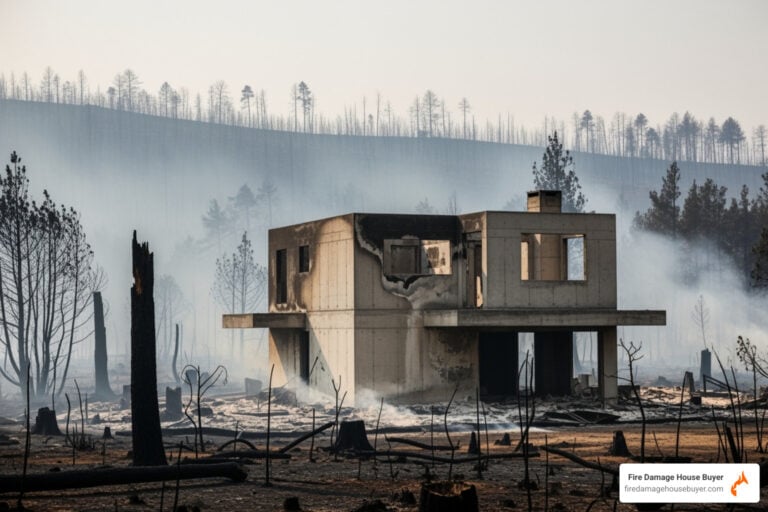
Understanding Fire Resistance: Can Concrete Homes Survive a Fire?
Do concrete houses burn? No, concrete houses do not burn because concrete is a non-combustible material. However, while the concrete structure itself won’t catch fire, extreme heat can still cause damage, and the contents inside the home remain vulnerable.
Quick Answer:
- Concrete is non-combustible – it doesn’t ignite or burn like wood
- Fire-resistant, not fireproof – can withstand 3-4 hours of extreme heat
- Structure typically survives – walls and floors remain standing
- Interior and contents still burn – furniture, belongings, and interior finishes are vulnerable
- Can suffer heat damage – spalling, cracking, and strength loss at extreme temperatures
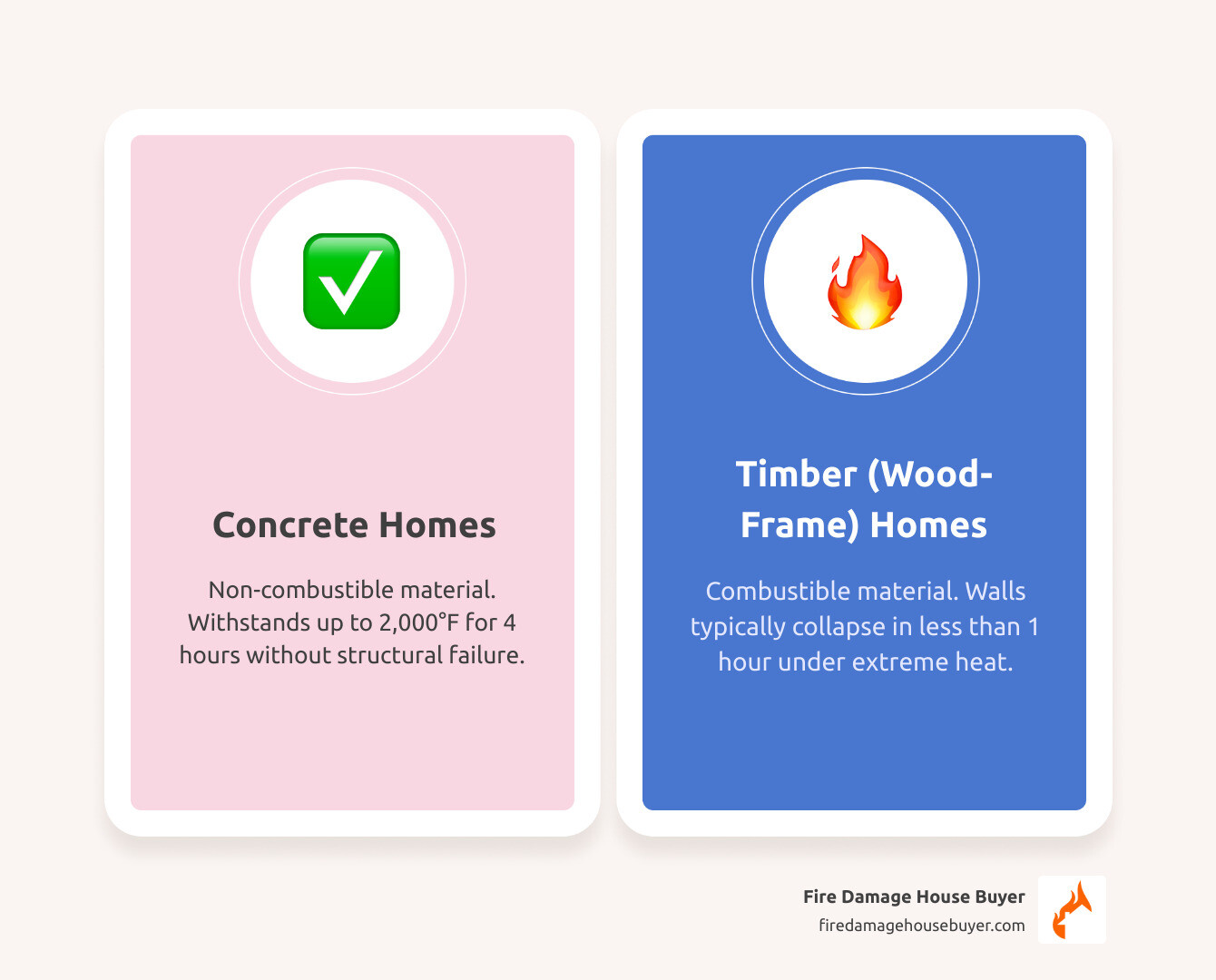
When a house fire strikes, understanding what survives can mean the difference between rebuilding and starting over. Concrete structures offer exceptional protection compared to wood-frame homes. Fire-wall tests show concrete walls can withstand temperatures up to 2,000°F for as long as four hours without structural failure, while most wood-framed walls collapse in less than an hour.
But even when the concrete walls survive, the damage from smoke, water, and interior fire often makes restoration prohibitively expensive. The average cost to repair a fire-damaged house can range from $25,000 to over $150,000, not including the months of stress and insurance battles.
I’m Daniel Cabrera, founder of Fire Damage House Buyer. With 15 years of experience with fire-damaged properties, I’ve seen how concrete structures perform in fires and understand the difficult decisions homeowners face. This guide explains what happens to concrete homes in a fire, how they can fail, and why selling is often a better option than rebuilding.
The Science Behind Concrete’s Superior Fire Resistance
When people ask do concrete houses burn, the answer lies in chemistry. Concrete isn’t built to burn. While wood is fuel for a fire, concrete acts as a shield.
Why Concrete Doesn’t Burn
Concrete is non-combustible. Unlike wood, it’s made from chemically inert inorganic materials. It won’t ignite, support combustion, or add fuel to a fire.
Concrete also slows fire spread due to its low thermal conductivity, meaning it transfers heat very slowly. When one side of a concrete wall faces flames, the other side heats up at a crawl. This contains the blaze, protecting adjacent rooms and buying precious time for evacuation and firefighting. The Portland Cement Association notes this combination makes concrete “impervious to flames.”
Concrete also has a high heat capacity, absorbing enormous thermal energy before its temperature rises. Trapped water in hardened concrete also helps. When heated, it turns to steam, absorbing energy from the fire in an endothermic reaction. This acts as an internal cooling system, further delaying temperature rise.
Key Components and Their Role
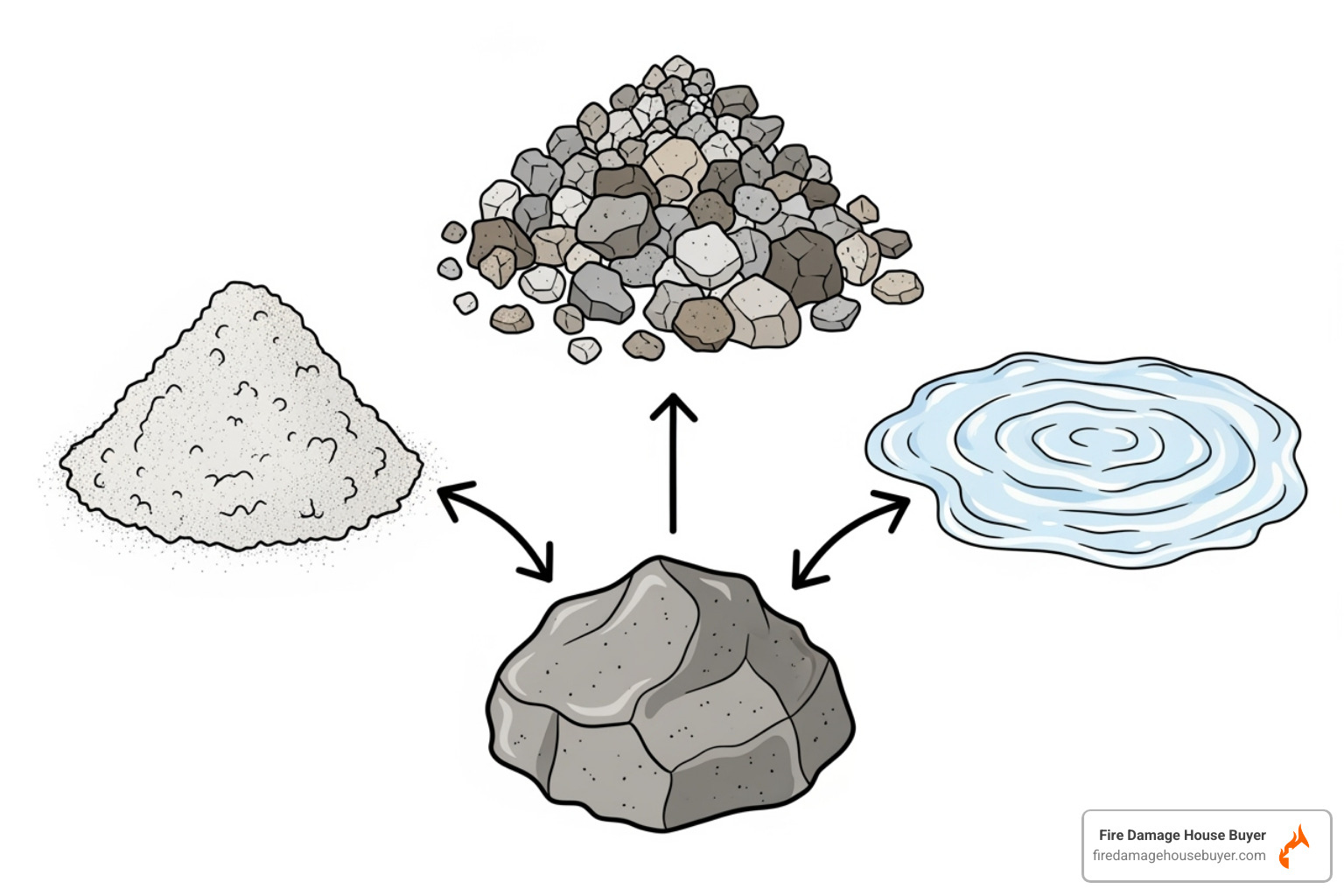
Concrete’s fire resistance comes from three simple ingredients.
Portland cement, the glue in concrete, is made from limestone, clay, and gypsum processed at very high temperatures. This makes it chemically stable and non-combustible. The cement matrix only starts breaking down around 750-930°F, far beyond what most materials can handle.
Aggregates like sand and gravel make up most of concrete’s volume. These inorganic materials won’t burn and add mass and density, improving heat absorption and slowing fire spread.
Water is essential for hardening concrete (hydration). Residual moisture also adds fire resistance by absorbing heat through dehydration, creating an internal defense when temperatures rise.
These components create a material that won’t catch fire or feed flames. That’s why the concrete skeleton of a house often endures even when everything inside is destroyed.
Concrete vs. Other Materials: A Fire Performance Showdown
Understanding that concrete houses do not burn is one thing, but how does concrete stack up against other materials in a real fire? The differences are dramatic.
Concrete vs. Timber
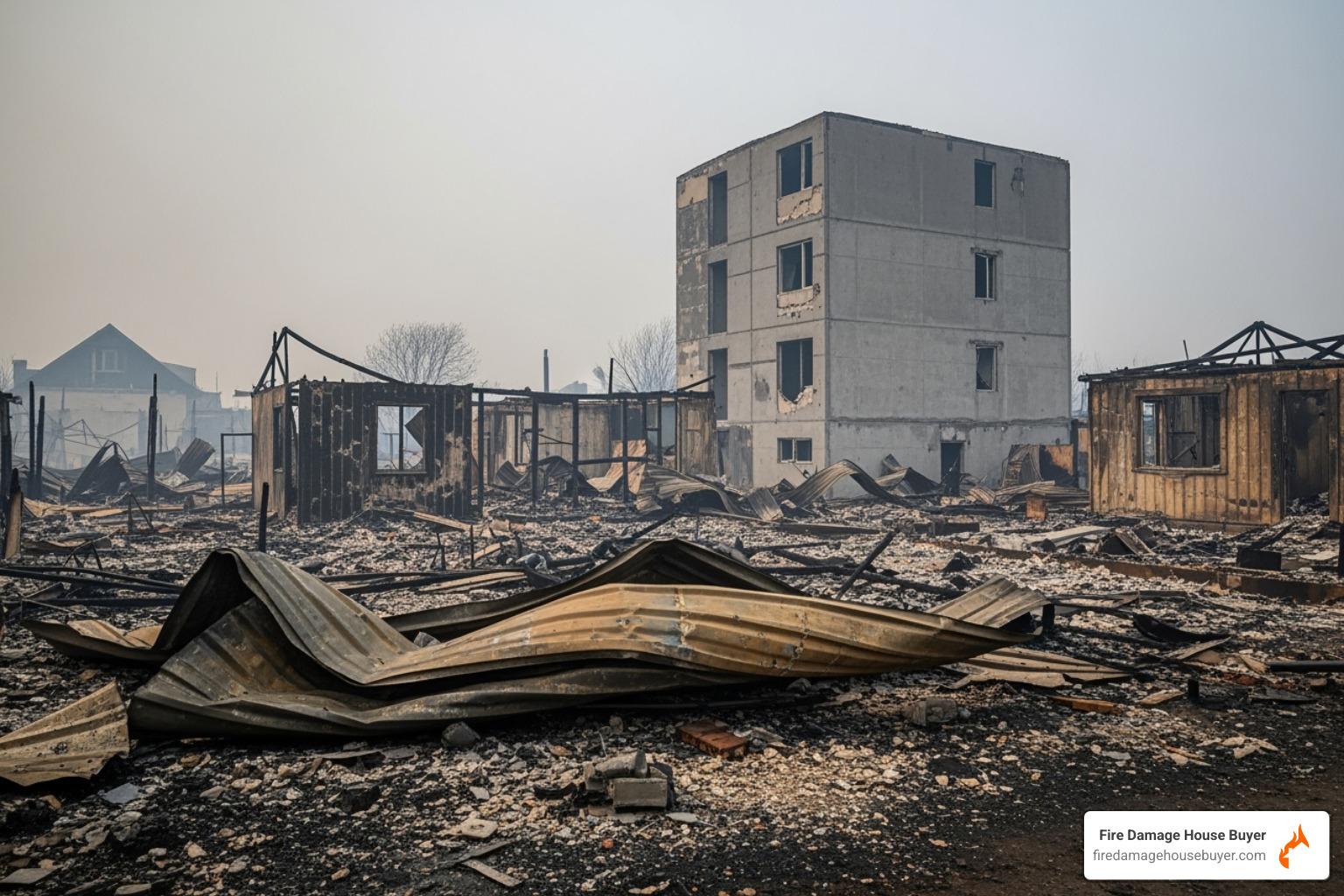
After a wildfire, the story is written in the rubble: concrete homes often stand while wood-frame homes collapse. It’s that simple.
Timber is combustible. It becomes fuel for the fire, spreading destruction rapidly. Most wood-framed walls collapse in less than an hour. By contrast, concrete walls can withstand up to four hours of extreme heat without structural failure.
This difference is critical for safety. It provides time for escape and allows firefighters to contain the blaze. Concrete walls provide compartmentalization, trapping fire in one area. A finished concrete wall provides a 3-4 hour fire rating without special treatments, while wood will always ignite.
Over 90% of new U.S. homes are wood-framed, as timber is cheaper. But with increasing wildfire risk, this choice is becoming more dangerous. Fire spreads exponentially faster in timber homes than in concrete ones.
Concrete vs. Steel
Steel is also non-combustible, but it has a critical weakness: it loses strength when heated.
Structural steel starts weakening rapidly above 570°F (300°C). By 1,300°F (700°C), a common temperature in house fires, it has lost most of its strength. Beams can soften, buckle, and cause a catastrophic collapse long before the steel melts (at 2,500°F). As documented in the Mechanical Properties of Structural Steel, heat degradation is the real danger.
This is another advantage of reinforced concrete. The concrete shields the steel rebar inside, acting as a poor heat conductor. It keeps the steel from reaching critical failure temperatures. Just one inch of concrete cover protects rebar from 800°F for about an hour, keeping it cool and strong.
Here’s how these materials compare:
| Material | Fire Resistance | Failure Temperature | Combustibility |
|---|---|---|---|
| Concrete | High (3-4+ hours) | Loses 50% strength at 1100°F (593°C) | Non-combustible |
| Timber | Low (<1 hour) | Ignites and burns at ~500-750°F (260-400°C) | Combustible |
| Steel | Moderate (depends on fireproofing) | Loses most strength by 1300°F (700°C) | Non-combustible |
The bottom line is that concrete provides time and a fighting chance that other materials can’t match.
So, Do Concrete Houses Burn and When Can They Fail?
While we can confidently say do concrete houses burn? No, they don’t—it’s important to understand that “fire-resistant” and “fireproof” are different. Concrete is tough, but not indestructible. Under extreme heat, even concrete can suffer serious damage and fail without actually burning.
Understanding Concrete Failure: Beyond Burning
When a fire rages, concrete undergoes physical and chemical changes that compromise its integrity.
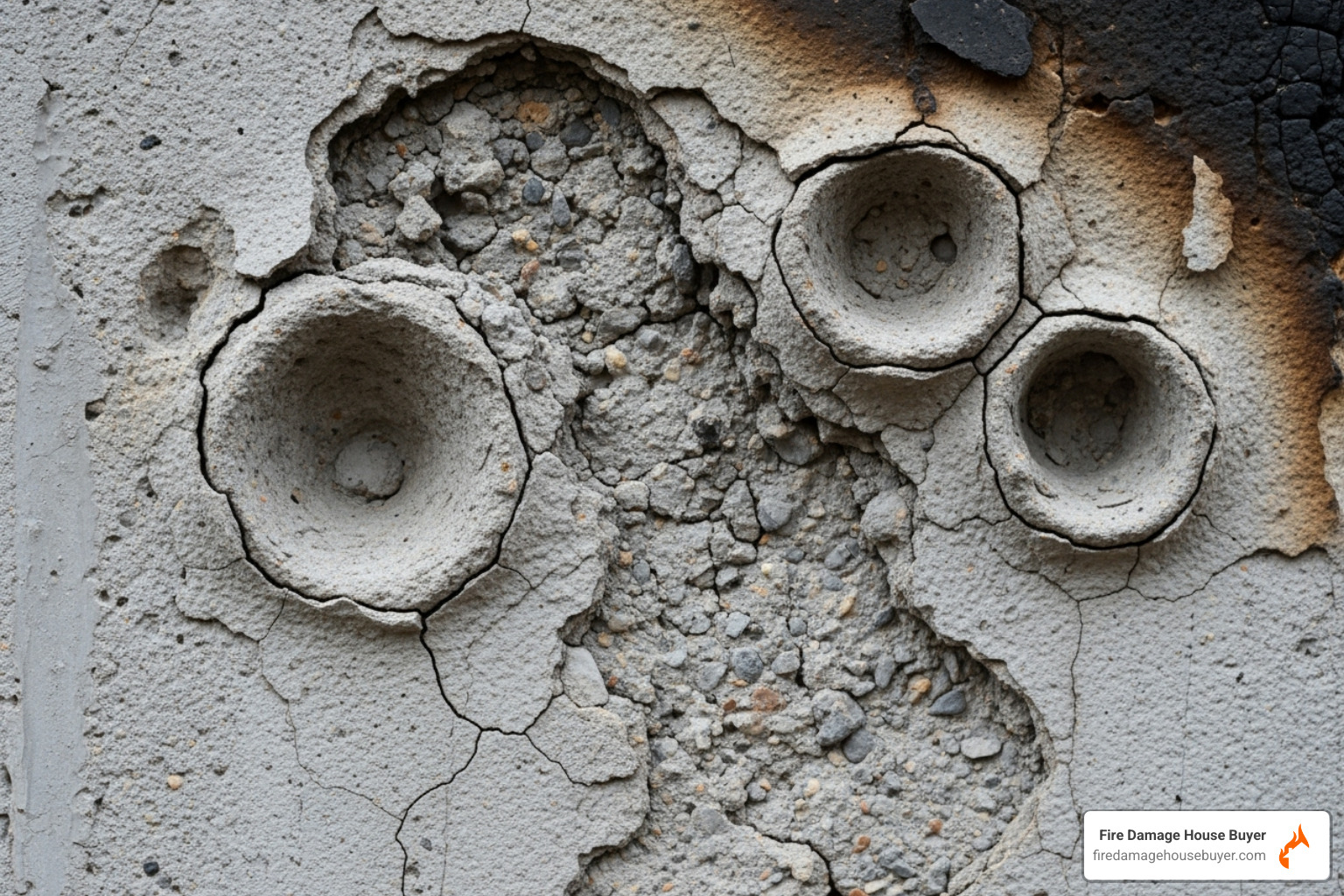
Spalling is a visible sign of fire damage. Trapped moisture turns to steam, building pressure until chunks of concrete pop off the surface. This thins the concrete and can expose steel rebar to direct heat, leading to more serious problems.
Concrete also loses its compressive strength at high temperatures. Around 1100°F, it can permanently lose about half its strength as chemical bonds break. The cement matrix itself begins to fail between 750°F and 930°F due to irreversible chemical changes.
Rebar failure is another concern. If heat reaches the steel reinforcement (rebar), it can soften around 800°F. The steel loses its tensile strength, which can lead to sagging floors, buckling walls, or collapse.
Even if your concrete house is standing, the internal damage can make it unsafe or too expensive to repair. A structural engineer’s assessment is needed, and the high cost to repair fire damaged house often starts climbing before you’ve even begun.
What are the limitations if concrete houses do not burn?
Concrete’s fire resistance has real-world limitations:
- Intense fires can overwhelm concrete. Fires involving gasoline (1880°F), chemicals, or high winds can generate enough heat to seriously compromise its strength.
- Prolonged heat exposure is also dangerous. The longer the exposure, the deeper heat penetrates, causing more spalling and loss of structural integrity.
- Vulnerable points like windows, non-concrete roofs, and utility gaps provide entry points for fire and embers.
- Interior combustibles like furniture and carpets fuel the fire, producing intense heat and devastating smoke and water damage. Smoke leaves toxic residue, while water from firefighting causes saturation and mold.
Why you may need to rebuild or sell after a house fire even if the walls don’t burn
Many homeowners are relieved to see their concrete walls standing, but then reality sets in.
Structural assessment costs come first. You need a licensed engineer for an assessment that can cost thousands, just to determine if repairs are possible.
Hidden damage is a nightmare. Heat can cause internal cracking and weaken rebar without obvious external signs. Finding these issues requires destructive testing, further damaging the home.
Even if standing, the structure might have compromised integrity and no longer meet code. Reinforcing it is specialized, expensive work that can make repairs financially unfeasible.
Next is interior gutting. Everything—drywall, insulation, wiring, plumbing, HVAC—must be removed due to contamination. You’re rebuilding the entire interior, with costs from $50,000 to over $150,000.
Smoke and soot contamination is insidious. Toxic particles pose health hazards and leave odors that are hard to eliminate. Professional remediation is expensive ($10,000-$30,000+) and may not be fully effective.
The truth is, many homeowners with concrete structures face the same difficult decision as those with wood-frame homes. Even with walls that survived, the total damage often makes selling the property as-is the more practical choice. Understanding your options, including the possibility to Sell Fire Damaged House, can help you make the right decision.
Modern Construction and The Aftermath of a Fire
Modern techniques like Insulated Concrete Forms (ICFs) create homes that are even better equipped to withstand fire. Yet even with these methods, the aftermath of a fire presents overwhelming challenges.
Enhancing Fire Resistance with ICFs
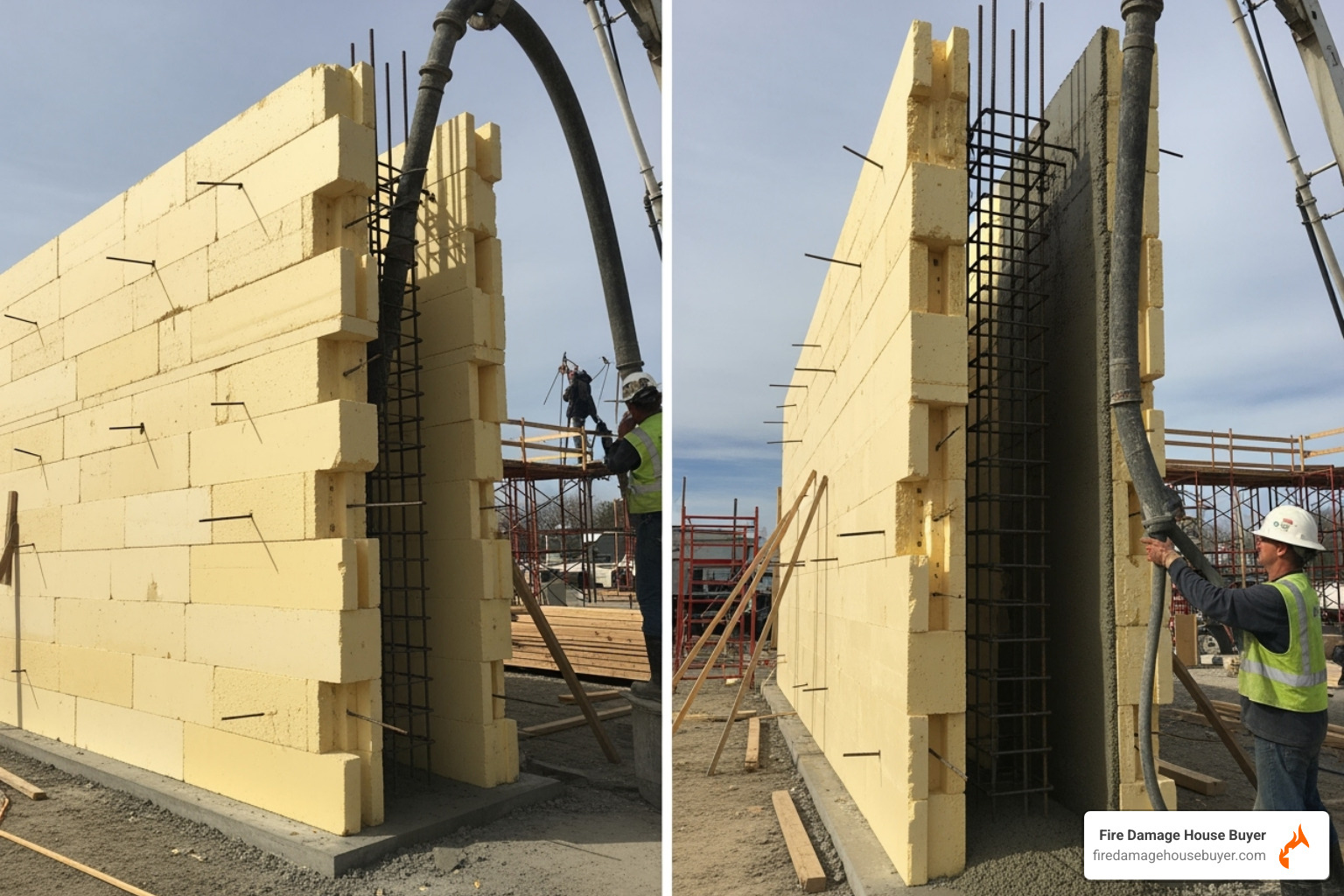
If you’re wondering do concrete houses burn when built with ICFs, the answer is still no—and they offer even greater fire resistance. These systems use a solid concrete core sandwiched between two layers of insulating foam.
ICF walls consistently achieve fire ratings of 3 to 4 hours or more. In tests, they withstood temperatures up to 2,000°F for four hours without structural failure. The polystyrene foam has flame-retardant additives and tends to melt away from heat rather than spread flames. Furthermore, studies show its emissions are “no more toxic” than smoke from wood-frame housing.
The solid concrete core maintains its load-bearing capacity during a fire, preventing collapse and giving firefighters more time to work safely. For homeowners in fire-prone areas, ICFs offer superior protection.
The Reality of Fire Damage in Any Home
Even with advanced construction like ICF, a fire can still result in a total loss. While the walls may stand, the interior is vulnerable. As we’ve discussed, the combination of smoke damage, water damage from firefighting, and the destruction of personal belongings creates a devastating situation. Smoke leaves toxic residue, water leads to mold, and emotional losses are immense. A professional structural assessment is still required to check for hidden damage, and the entire restoration process is complex. Our house fire damage restoration guide details the long journey of dealing with adjusters, engineers, and contractors—a process that adds months and significant costs to your recovery.
Your Options After a Fire
When facing a fire-damaged home, you have options.
Navigating insurance claims is the first hurdle. Adjusters work for the insurance company and may undervalue the damage, leading to long disputes while you still pay the mortgage on an unlivable house.
The restoration process is a marathon, often taking six months to a year. It involves gutting the interior, replacing all systems, and rebuilding finishes. Total costs typically range from $25,000 to over $150,000.
If you’re considering selling, understanding how to price a fire damaged house is crucial. Traditional buyers want move-in ready homes, making it hard to find a buyer on the open market.
That’s where the “as-is” sale option becomes attractive. Selling your fire-damaged house as-is means no repairs, no cleaning, and no dealing with contractors or insurance. You can Sell Fire Damaged House quickly, close this difficult chapter, and move forward. For many, this option brings overwhelming relief from the stress and uncertainty of a six-figure restoration project.
The Easiest Way to Move on From a Fire-Damaged House
We’ve established that concrete houses do not burn like wood homes, with walls that can withstand incredible heat. But as my 15 years of experience have shown, even the most fire-resistant structure doesn’t prevent the overwhelming aftermath. The concrete shell may survive, but the interior is often destroyed by fire, smoke, and water.
You’re left facing a gut renovation costing $25,000 to $150,000+, a required structural assessment, and the emotional toll of a long, stressful restoration process. Many homeowners find the reality of rebuilding is far more difficult than they ever imagined.
Skip the Repairs and Uncertainty
This is exactly why we started Fire Damage House Buyer. We saw too many homeowners trapped in this nightmare, and we wanted to offer a genuine alternative.
When you sell your fire-damaged house as-is to us, you’re choosing to skip all of it. No cleanup crews scrubbing soot from concrete walls. No structural engineers delivering bad news about hidden damage. No contractor delays or cost overruns. No arguments with insurance adjusters about coverage limits.
We buy your house in its current condition—whether the concrete walls survived beautifully or suffered spalling and cracking. We don’t care if the interior is gutted, if there’s water damage throughout, or if the roof collapsed. You pay zero for restoration costs, which means you keep tens of thousands of dollars in your pocket instead of spending them on a house you’re not even sure you want to keep.
There are no real estate commissions eating into your proceeds. No months of waiting while your damaged house sits on the market, scaring away traditional buyers who want move-in ready homes. We provide fast cash offers—fair, transparent, and quick. Many of our homeowners close in as little as a week, though we work on your timeline.
The process is genuinely simple. You reach out, we assess your situation, and we make you a no-obligation offer. If it works for you, we move forward. If not, no hard feelings. We’re here to provide options, not pressure.
Whether you’re in Alabama or Wyoming, whether your concrete walls survived intact or suffered damage, whether your fire was last week or last year—if you’re ready to move forward without the stress and uncertainty of restoration, we’re here to help. Visit our contact us page to get started, or learn more about how simple it is to Sell your Fire Damaged House on our homepage.
Sometimes the strongest choice isn’t rebuilding. Sometimes it’s knowing when to close one chapter and start fresh.