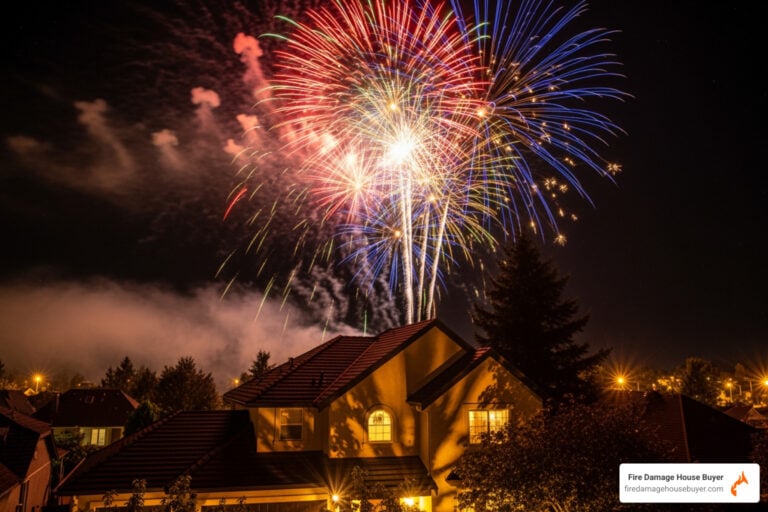
The Reality of Firework-Induced Fires: What Every Homeowner Needs to Know
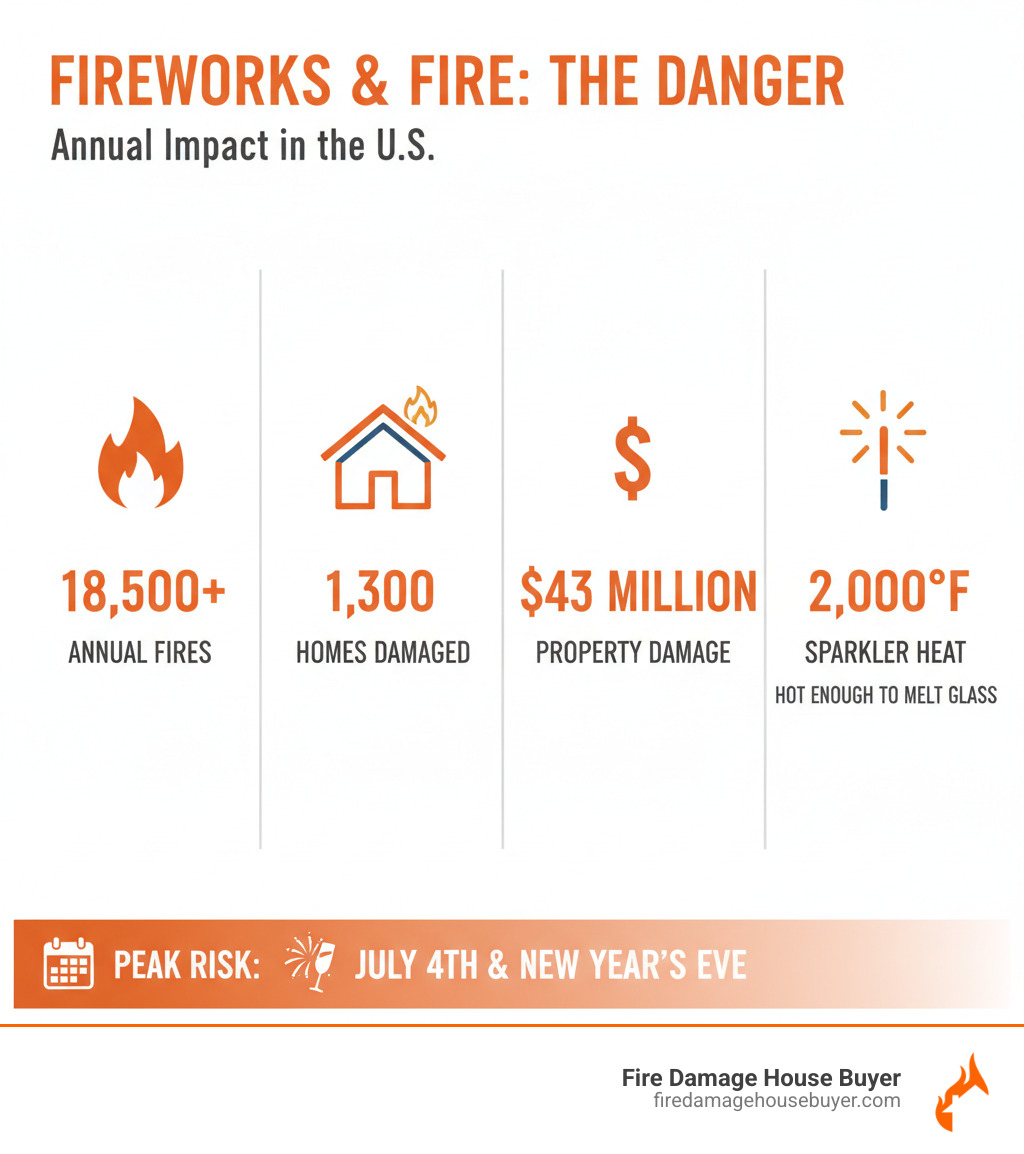
Can fireworks start a fire? Yes, fireworks absolutely can and do start fires. They ignite more than 18,500 fires annually across the United States, leading to 1,300 residential structure fires and $43 million in direct property damage each year.
Quick Answer:
- Yes, fireworks cause fires. Both legal and illegal fireworks pose significant fire hazards.
- 18,500+ fires annually are started by fireworks in the U.S.
- 1,300 residential structures are damaged each year.
- $43 million in property damage occurs annually.
- Sparklers burn at 2,000°F – hot enough to ignite most materials.
- High-risk periods include July 4th and New Year’s Eve.
The evidence is overwhelming. The real questions are how they start fires, what makes your home vulnerable, and what you can do to protect your property. Fireworks generate intense heat and leave behind smoldering embers that can ignite hours later. A single stray spark landing in dry gutters or on a wooden deck can transform a celebration into a catastrophe.
Restoring a fire-damaged home is a staggering financial burden, typically ranging from $20,000 to $200,000 or more. For many homeowners, the path to recovery feels impossible due to denied insurance claims, unavailable contractors, and the immense stress of managing repairs.
I’m Daniel Cabrera, founder of Fire Damage House Buyer. For 15 years, I’ve helped homeowners steer the aftermath of fires, including those caused by fireworks. My experience has shown me how can fireworks start a fire in unexpected ways and how devastating the consequences can be.
The Alarming Reality: Firework Fire Statistics
The statistics are sobering. Can fireworks start a fire? The numbers provide a clear answer: fireworks ignite more than 18,500 fires across the United States every year, causing an estimated $43 million in direct property damage. Of these, approximately 1,300 damage residential structures, forcing families to deal with the nightmare of a house fire.
The timing of these fires isn’t random. More than half of all firework-related incidents cluster around Independence Day and New Year’s Eve. Even legal fireworks pose serious hazards when mishandled or used in unsafe conditions. The National Fire Protection Association provides detailed data on these dangers. A simple sparkler, for instance, burns at 2,000°F—hot enough to ignite almost any common household material.
Most Common Types of Structural Damage
When fireworks start a fire at your home, the damage can be catastrophic. Understanding these common vulnerabilities can help you protect your property.
- Roof Damage: A stray ember can land on your roof, smolder in debris-filled valleys, and burn through shingles and underlayment, compromising the structure.
- Siding and Exterior Walls: Sparks can ignite vinyl or wood siding in seconds, with fire spreading up the walls, sometimes hidden from view.
- Attic Fires: If an ember enters through a vent, it can ignite insulation and stored items, allowing the fire to consume your home from the top down.
- Wooden Decks and Porches: These are highly susceptible to ground-based fireworks. A single spark can ignite cushions, rugs, or the deck itself.
- Shattered Windows: Intense heat or concussive force can break windows, giving flames and smoke a direct entry point into your home.
- Soot and Smoke Damage: Even if the fire is contained, corrosive soot and smoke can permeate every surface, causing lingering odors and damage that requires professional cleaning.
- Water Damage from Firefighting: The water used to save your home can cause secondary damage by soaking floors, walls, and belongings, leading to mold and costly repairs.
Facing the full scope of fire damage restoration and repair is a complex, expensive, and emotionally draining process.
High-Risk Periods Throughout the Year
Firework-related fire risk spikes at specific times and under certain conditions.
- Independence Day: The most dangerous period, accounting for more than half of all firework-related fires.
- New Year’s Eve: The second-highest risk period, with late-night celebrations increasing the chance of accidents.
- Other Major Holidays: Memorial Day, Labor Day, and local festivals also see a significant uptick in firework incidents.
- Dry Summer Months & Drought Conditions: In states like California, Arizona, and Texas, high temperatures and low humidity turn vegetation into tinder. During droughts, the danger is magnified exponentially.
Anatomy of a Disaster: How Can Fireworks Start a Fire?
Understanding exactly how can fireworks start a fire is key to prevention. It’s rarely a single, dramatic explosion. More often, it’s a chain reaction started by a stray ember or hot debris landing in the wrong place.
A firework launches, and everyone enjoys the show. But an unseen, glowing ember drifts onto a roof, into dry grass, or into a gutter filled with leaves. It smolders for minutes or even hours before igniting a flame, which can grow into a major fire before anyone notices. This is how a single firework sparked a 6.7-square-mile forest fire in New Jersey and how another started a three-acre grass fire in a San Francisco park.
The chain reaction is simple: a firework produces hot material that travels through the air. It lands on something flammable—dry leaves, a wooden deck, grass—and if conditions are right, ignition occurs. The delay between the firework and the fire is what makes them so insidious.
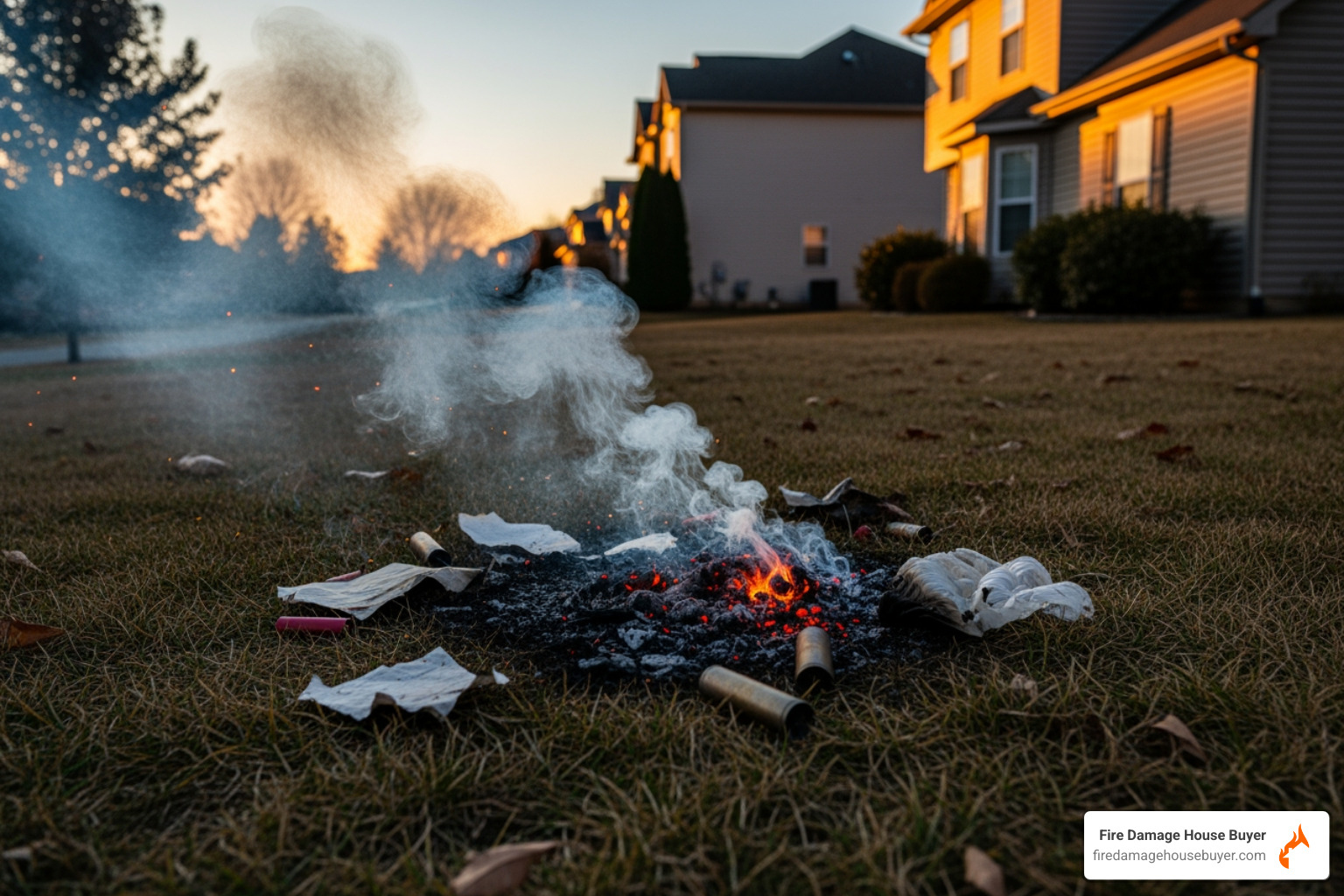
Understanding How Can Fireworks Start a Fire in Dry, Windy Conditions
Environmental conditions are critical. The same firework that’s harmless on a humid evening can be devastating on a dry, windy night. Key risk factors include:
- Dry Vegetation: Grass, brush, and trees act as nature’s kindling, ready to ignite from a single spark.
- Low Humidity: When there’s little moisture in the air, materials like wood siding and decking become far more combustible.
- Wind: This is a major accelerator. Wind carries burning embers long distances and feeds oxygen to a growing fire, turning a small problem into a big one, fast.
- Drought and Hot Weather: Drought makes the entire landscape a tinderbox. Hot weather preheats potential fuels like roof shingles, making them easier to ignite.
These factors create a “perfect storm” where fire ignition is not just possible, but probable.
How Can Fireworks Start a Fire From Seemingly Harmless Sources?
Many assume only large, professional fireworks are dangerous, but this is a costly misconception. Almost any firework can start a fire.
- Aerial Fireworks (Bottle Rockets, Missiles): These are among the most dangerous due to their unpredictable flight paths. They can travel over 150 feet and land on roofs or in yards while still hot.
- Roman Candles: These propel multiple burning pellets, each hot enough to start a fire. Their trajectory can be erratic, posing a risk to nearby structures.
- Sparklers: Don’t be fooled by their size. Sparklers burn at 2,000°F, hot enough to melt some metals. They easily ignite clothing, dry grass, or deck materials.
- Firecrackers: While known for noise, they expel hot paper fragments that can smolder and ignite flammable materials.
- Ground-Based Fireworks (Fountains, Spinners): If these tip over, they can spray sparks directly onto decks, siding, or landscaping, starting a fire within seconds.
Your Home’s Most Vulnerable Points
Even if you don’t use fireworks, your home is at risk from neighbors. Know your home’s weak spots:
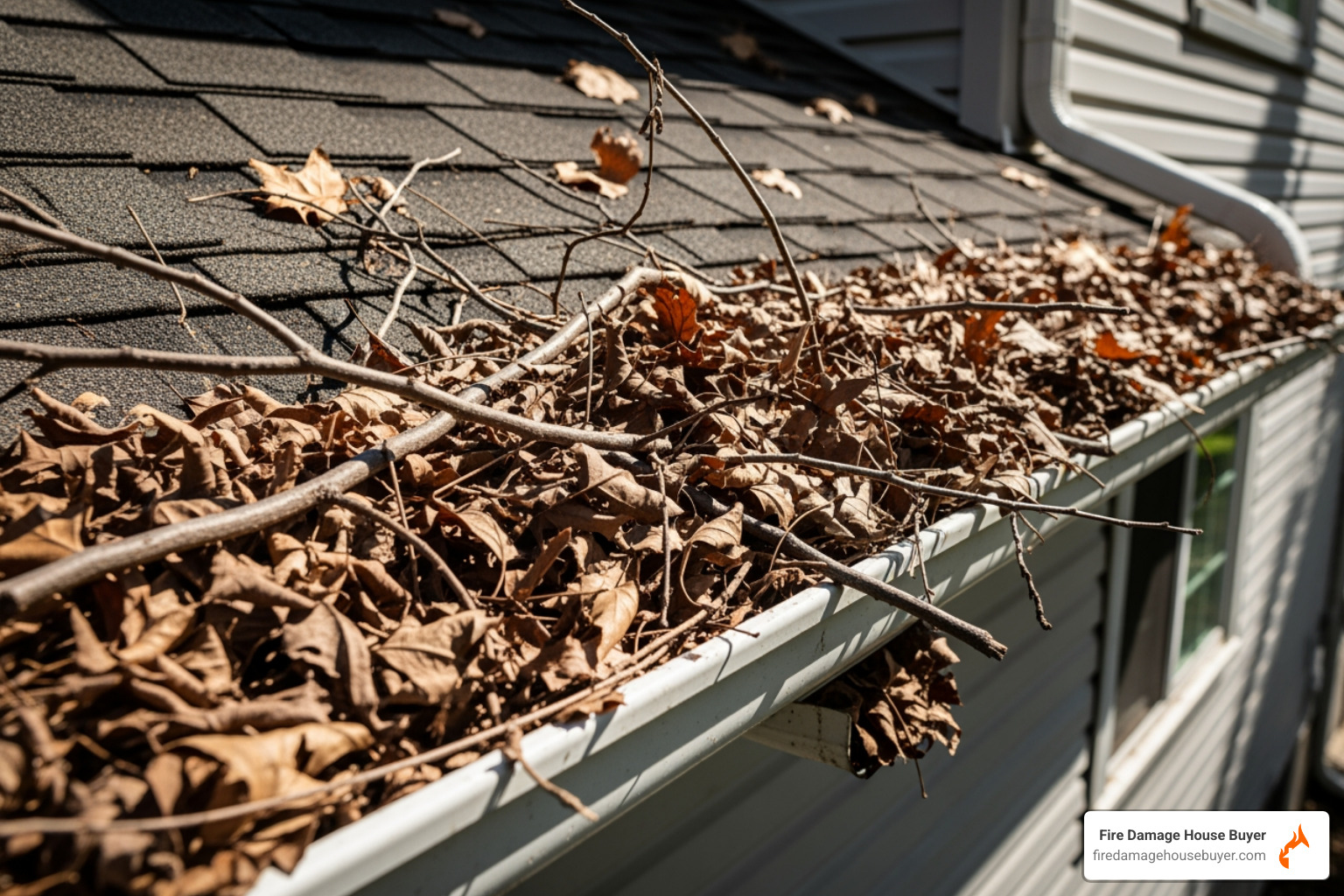
- Roofs and Gutters: This is the most common ignition point. Dry leaves, pine needles, and other debris create a perfect tinderbox for stray embers.
- Unscreened Vents: Attic, soffit, and ridge vents are open invitations for wind-blown embers to enter your home and ignite insulation or stored items from within.
- Gaps in Siding: Small cracks or gaps around windows and doors can trap embers, allowing a fire to start inside your walls, undetected.
- Wooden Decks and Fences: These are highly combustible. Debris underneath decks creates a hidden fire hazard, and the wood itself can be easily ignited.
- Overhanging Tree Branches: Branches over your roof act as a bridge for fire, catching embers and spreading flames directly to your house.
- Landscaping: Dry mulch, ornamental grasses, and other flammable vegetation within 30 feet of your home provide a direct path for fire to reach your structure.
Fortifying Your Home: A Guide to Prevention and Recovery
Protecting your home from firework-related fires isn’t about luck—it’s about taking deliberate, practical steps. A clear prevention plan can make all the difference in keeping your property and family safe.
Essential Prevention and Safe Handling Practices
- Clear Roofs and Gutters: Remove dry leaves, pine needles, and other debris that act as kindling for stray sparks.
- Create Defensible Space: Clear all dead vegetation and flammable materials within at least 30 feet of your home.
- Screen Vents: Install fine mesh, ember-resistant screens on all attic, soffit, and foundation vents to block embers.
- Maintain Safe Distances: Keep aerial fireworks at least 150 feet from structures and ground-based ones at least 25 feet away. If it’s windy, double these distances or skip them entirely.
- Have Water Ready: Keep a garden hose and buckets of water nearby. An ABC-rated fire extinguisher is also essential.
- Properly Dispose of Fireworks: Soak all used fireworks, including duds, in a bucket of water for 24 hours before disposal.
- Ensure Sober Adult Supervision: Never allow children to handle any fireworks, including sparklers, which burn at a scorching 2,000°F.
- Check Local Regulations: Many areas have bans on consumer fireworks, especially during dry conditions. Ignoring them can void your insurance.
Navigating Insurance and the High Cost of Repairs
If your home is damaged by fire, the aftermath is overwhelming. Standard homeowners insurance policies generally cover fire damage, but there’s a catch: if the fireworks were illegal or used unsafely, your claim could be denied. This could leave you responsible for tens or hundreds of thousands of dollars in repairs.
Immediately after a fire, contact your insurance agent and document everything. Understanding your policy is critical, as our guide on does house insurance cover fire damage explains.
The financial reality is staggering. The cost to repair a fire-damaged house quickly adds up, and the process of cleaning up after a house fire is complex and expensive.
Key Restoration Points and Cost Estimates
Restoring a fire-damaged home involves multiple costly steps:
- Smoke and Soot Cleaning: Professional remediation is needed to remove corrosive particles from every surface. Cost: $3,000 – $10,000+.
- Water Damage Mitigation: To prevent mold, professional drying is required. Cost: $2,000 – $15,000+.
- Structural Repairs: Rebuilding roofs, walls, and framing is the biggest expense. Cost: $10,000 – $100,000+.
- Systems Repairs: Rewiring and plumbing repairs are often necessary. Cost: $5,000 – $20,000+.
Total restoration for a moderately damaged home often costs $20,000 to $200,000 and can take months or even over a year, all while you’re displaced from your home.
Why Selling ‘As Is’ May Be the Best Option
Given the overwhelming stress, time, and expense of restoration, many homeowners find it’s not a viable path. Battling insurance adjusters, coordinating contractors, and living in temporary housing for months takes a tremendous toll.
This is why many choose to sell their fire-damaged property “as is.” It’s not giving up—it’s choosing a simpler, faster path forward. At Fire Damage House Buyer, we specialize in this solution.
- No Repairs Needed: We buy your house exactly as it is.
- No Cleaning Required: We handle all the debris and soot removal.
- No Commissions or Fees: The cash offer we make is what you get.
- Fast, Fair Cash Offers: We provide a transparent offer quickly.
- Close On Your Timeline: We can close in as little as a week or give you the time you need.
Our goal is to remove the burden and give you a clear path forward. You can Sell Fire Damaged House to us and start fresh without the hassle of repairs.
Frequently Asked Questions about Firework-Related Fires
We’ve talked with hundreds of homeowners about fire damage. Here are answers to the most common questions about firework risks.
Can legal fireworks still cause house fires?
Yes, absolutely. A firework’s legal status has nothing to do with how hot it burns or how far its sparks travel. Many of the 1,300 annual residential fires are caused by legal consumer fireworks that were mishandled or used in unsafe conditions (e.g., high winds or dry grass). Legal doesn’t mean safe. Strict adherence to safety protocols is always critical.
What should I do if a firework lands on my roof?
Stay calm and act quickly.
- Visually Inspect: From a safe spot on the ground, look for any smoke or flames.
- Wet the Area (If Safe): Use a garden hose to douse the spot from the ground or a sturdy ladder. Do not climb on the roof, especially at night. Your safety comes first.
- Watch for Smoldering: Embers can smolder for hours before igniting. Keep a close watch on the area for at least 30 minutes.
- Call 911 Immediately if You See Smoke or Flames: Evacuate everyone from the house and let the professionals handle it. Don’t hesitate.
What weather conditions significantly increase the risk of house fires from fireworks?
Certain weather conditions create a perfect storm for firework-induced fires. Be extremely cautious or avoid fireworks entirely during:
- Hot, Dry Conditions: When there has been little rain, the landscape is primed to burn.
- Low Humidity: Dry air makes everything more combustible.
- Strong or Gusty Winds: Wind carries embers to unintended targets like roofs and dry vegetation, and rapidly spreads any fire that starts.
- Droughts or Red Flag Warnings: These official alerts indicate extreme fire danger. Using fireworks in these conditions is reckless and often illegal.
If you do end up with fire damage, remember you have options beyond a long and expensive restoration. We’re here to help you move forward with a fair cash offer for your property as-is. You can Sell Fire Damaged House and start your recovery without the stress of repairs.
Conclusion: A Safer Celebration and a Simpler Recovery

We’ve answered the question can fireworks start a fire with a definitive yes. With over 18,500 fires and $43 million in property damage annually, the risk is real. From sparklers burning at 2,000°F to aerials landing on roofs, any firework can ignite a blaze, especially in dry, windy conditions.
Prevention is your best defense: clear debris from roofs and gutters, create defensible space, and always have water handy. The safest choice is to enjoy professional public displays, which offer all the spectacle without the risk to your home.
But accidents happen. If fire strikes, the aftermath is overwhelming. Restoration costs can range from $20,000 to over $200,000, involving months of battling with insurance, coordinating contractors, and living in temporary housing. The legal and financial considerations after a fire only add to the stress.
For many, this process is simply too much. That’s why we founded Fire Damage House Buyer. We offer a straightforward alternative.
Instead of enduring a long, expensive, and stressful restoration, you can sell your fire-damaged house to us as-is for cash. There are no repairs, no cleaning, no commissions, and no waiting. We provide a fast, fair offer and can close on your timeline, allowing you to move forward.
If you’re facing fire damage and feel overwhelmed, there is a simpler path to recovery. You can Sell Fire Damaged House to us and start fresh. Contact us today for a hassle-free solution.