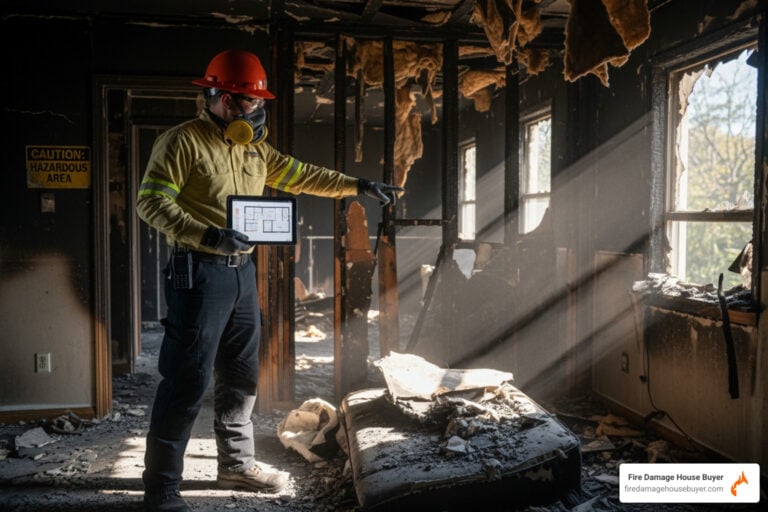
Why the Best Fire Damage Assessment is Critical for Your Recovery
Best fire damage assessment is a comprehensive evaluation that determines the full extent of damage to your property after a fire, guiding repairs and insurance claims. A thorough assessment includes:
- Structural Integrity – Foundation, walls, roof, and supports
- Home Systems – Electrical, plumbing, HVAC, and gas lines
- Smoke and Soot – Residue, odor, and air quality
- Water Damage – Saturation levels and mold potential
- Contents – Documenting personal property for replacement costs
- Reporting – Creating detailed reports for insurance
The aftermath of a house fire is overwhelming. The U.S. Fire Administration reports around 358,300 home fires yearly, causing up to $25.5 billion in annual property damage. While the average cost for a structure fire was $25,545 in 2019, many homeowners face far higher costs due to hidden damage and code upgrades.
A proper assessment goes beyond visible damage like charred walls. The real dangers often lurk unseen: compromised wiring, mold-breeding moisture, weakened support beams, and corrosive soot. Without a thorough assessment, you’re making critical safety and financial decisions in the dark.
This process involves specialists like structural engineers and electricians using equipment like thermal imaging cameras and moisture meters to ensure nothing is missed. This is crucial for your family’s safety and for securing a fair insurance settlement.
But is this lengthy, expensive, and draining process your best option? Many homeowners find the months or years of dealing with contractors and insurance isn’t worth it—especially when a simpler alternative exists.
I’m Daniel Cabrera, and I’ve bought and sold over 275 distressed properties in 15 years, many requiring a best fire damage assessment. My experience shows that while these assessments are vital for restoration, they often reveal complications that make selling your home as-is the smarter financial move.

Navigating the Aftermath: Your First Steps After a House Fire
The moments after a fire are disorienting and overwhelming. According to the National Fire Protection Association, home fires occur every 93 seconds in the United States, affecting over 358,000 families annually. Knowing your first steps is critical for your recovery.
Safety always comes first. Your priorities are securing the property, documenting damage, and contacting your insurance company. With average fire damage costs ranging from $12,000 to over $50,000, these early actions directly impact your safety and financial recovery.
Understanding Your Immediate Priorities
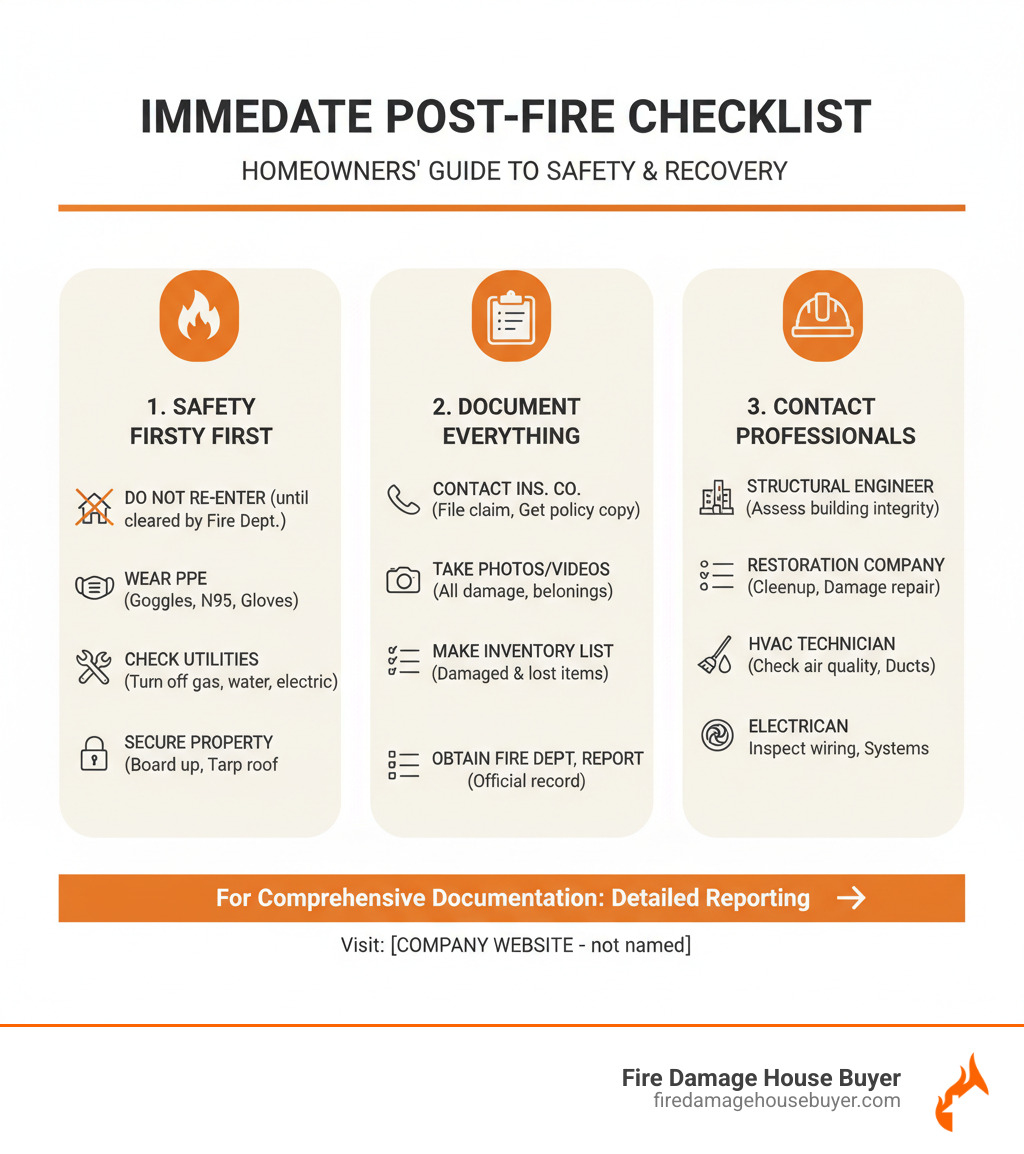
You cannot enter your home until the fire department gives official clearance. Fire-damaged structures are unpredictable, and the U.S. Fire Administration notes that structural collapse and toxic exposure are leading causes of post-fire injuries. It’s not worth the risk.
Once cleared, always wear Personal Protective Equipment (PPE)—including an N95 or P100 respirator, goggles, heavy-duty gloves, and boots—to protect yourself from toxic residue.
Next, secure the property to prevent further damage and theft. Board up broken windows and doors, and tarp the roof if it’s compromised to prevent water damage. Also, notify your local police department that the home is vacant, as fire-damaged properties are often targeted for break-ins.
For more detailed guidance, see our House Fire Damage Restoration Guide.
The Role of the Fire Department Report
One of your most powerful tools is the fire department report. It’s the foundation of your best fire damage assessment and insurance claim, containing details on the fire’s origin, cause, and initial damage estimates.
Most departments submit reports to the National Fire Incident Reporting System (NFIRS), which you can learn about at the Information on the National Fire Incident Reporting System. Contact your local fire department’s administrative office to obtain your copy. The report provides an official, objective account that your insurance company will rely on heavily. Request it as soon as possible to remove guesswork from your recovery process.
Of course, there’s another path: bypassing this complicated process by selling as-is. We’ll explore that option later, after you understand what you’d be avoiding.
The Core of the Best Fire Damage Assessment: A Multi-Point Inspection
A comprehensive best fire damage assessment is a meticulous multi-point inspection that uncovers hidden issues. Professionals use advanced technology like thermal imaging cameras, borescopes, and moisture meters to find problems invisible to the naked eye, such as compromised structures, hidden water damage, and failing systems. This thorough approach is what protects you from costly mistakes and future dangers.
How Professionals Conduct an Exterior and Structural Assessment
An assessment starts with the exterior, checking the roof, chimney, and foundation for cracks, warping, or other damage from intense heat. Inspectors examine siding, windows, and doors for issues that might indicate deeper structural problems.
Inside, the focus turns to the home’s structural skeleton: load-bearing walls, support beams, and floor joists. Fire can severely weaken wooden structures even if they don’t look badly charred. Signs of compromise include cracks, sagging floors or ceilings, and damaged supports. If significant damage is suspected, a licensed structural engineer must be hired to ensure the home is safe, an assessment that can cost $1,500 to $5,000 alone.
Evaluating Your Home’s Critical Systems
Fire and water can create ticking time bombs within your home’s essential systems. A professional evaluation is critical for safety.
- Electrical System: Heat can melt wire insulation and damage outlets and breakers, creating a severe fire risk. Rewiring a fire-damaged home can cost $3,000 to $15,000 or more.
- Plumbing System: Intense heat can melt or warp pipes, while firefighting water can cause corrosion and contamination. Repairs often average $2,500 to $8,000.
- HVAC System: Your ductwork can become a network for distributing smoke and soot, creating persistent odors and health hazards. Cleaning or replacement can cost $2,000 to $6,000 or more.
- Gas Lines: Fire can damage pipes and fittings, creating a risk of leaks or explosions. This inspection must be done by a licensed professional and can be costly to repair.
You can find a comprehensive guide for system inspections in our Checklist, but managing the specialists and costs quickly becomes overwhelming. This is why many homeowners choose to Sell Fire Damaged House as-is instead.

Uncovering Hidden Dangers: Assessing Smoke, Soot, and Water Damage
Often, the flames cause less damage than what comes after. Smoke, soot, and the water used to extinguish the fire create hidden problems that can persist for years. A significant portion of the $25.5 billion in annual fire damage reported by the NFPA stems from these secondary effects.
Smoke and soot don’t respect boundaries, traveling throughout your home and settling into every crevice. Even a small fire can cause widespread contamination.
The Science of Smoke and Soot Damage Assessment
Soot consists of tiny, corrosive particles that cause damage and health risks. The type of soot depends on what burned:
- Wet Smoke (from plastics/rubber): Leaves a sticky, smeary residue with a pungent odor that is difficult to clean.
- Dry Smoke (from wood/paper): Creates a powdery residue that is easier to clean but still causes odor.
- Protein Smoke (from cooking): Is often invisible but leaves a strong, corrosive residue.
These residues are acidic and can permanently etch metal surfaces within hours. According to the EPA, smoke residue also contains carcinogens and respiratory irritants, posing long-term health risks. Porous materials like drywall, carpet, and insulation often absorb these particles so deeply they must be replaced.
How to Perform the Best Fire Damage Assessment for Water Damage
The water that saves your home can also destroy it. Thousands of gallons of water can soak floors, walls, and insulation, leading to severe issues.
- Mold Growth: The IICRC warns that mold can grow within 24 to 48 hours in damp conditions. Immediate drying and dehumidification are critical to prevent widespread contamination.
- Saturated Materials: Wet insulation loses its effectiveness and becomes a breeding ground for mold, almost always requiring complete replacement at a high cost.
- Electrical Hazards: Water and electricity are a deadly combination. The Consumer Product Safety Commission links water-damaged electrical systems to thousands of home fires annually. All affected components must be inspected by a licensed electrician.
To help you understand what you’re facing, here’s how fire damage is typically categorized by restoration professionals:
| Damage Level | Characteristics | Assessment Focus | Typical Cleaning/Restoration Approach |
|---|---|---|---|
| Minor | Limited to one small area or room with light smoke odor and minimal water damage | Localized smoke and soot on surfaces, minimal structural impact, surface-level water damage | Dry cleaning methods using HEPA vacuums, odor absorption with activated charcoal, spot cleaning of contents |
| Medium | Several rooms affected by smoke and soot, moderate structural damage like cosmetic charring, significant smoke odor, moderate water damage including soaked carpets | Moderate smoke and soot penetration into porous materials, noticeable water damage requiring drying, potential for mold growth, HVAC contamination inspection needed | Wet cleaning with specialized detergents, thermal fogging or ozone treatment for odors, removal and replacement of some drywall and insulation, professional drying and dehumidification |
| Major | Extensive fire damage to multiple areas or entire structure, heavy smoke and soot throughout with deeply embedded odors, severe structural damage, widespread water damage | Severe structural compromise including weakened beams and compromised roof, deep smoke and soot penetration with corrosive residues, extensive water damage with widespread mold potential, complete HVAC system replacement needed, comprehensive hazardous materials testing required | Demolition and reconstruction of heavily damaged areas, aggressive odor removal techniques, professional water extraction and mold remediation, specialized hazardous material abatement, off-site cleaning of salvageable contents, full rebuild of significant portions |
This table shows how quickly a situation can escalate into a financially draining ordeal. Many homeowners reach this point and realize there’s a simpler path forward.
Documenting the Damage and Dealing with Insurance
After the fire, the process shifts to meticulous documentation. This phase is crucial for receiving fair compensation from your insurance company, and thorough record-keeping is your best advocate.

Creating a Detailed Fire Damage Report for Your Claim
A detailed fire damage report is the backbone of your insurance claim. It should itemize every loss and include:
- Contents Assessment: A room-by-room inventory of all damaged personal property (furniture, electronics, clothing) with photos, descriptions, age, and estimated value.
- Salvageable vs. Non-Salvageable Items: An expert assessment of what can be restored versus what must be discarded.
- Replacement Costs: Receipts, invoices, or other proof of ownership to support your cost estimates.
- Detached Structures: A separate assessment for garages, sheds, and fences covered by your policy.
This report is essential for your claim. For more insights, see our House Fire Insurance Claim Tips.
Navigating the Best Fire Damage Assessment with Your Insurance Adjuster
Your insurance company will assign an adjuster to assess the damage, but remember they represent the insurer’s interests. You can hire a public adjuster to work exclusively for you, often leading to a higher settlement.
Regardless, thorough documentation is key. Keep records of all communications and provide your detailed damage report, photos, and the fire department’s report. Be prepared to negotiate, as initial offers can be low. Understanding your policy is crucial. For a deeper dive, our Fire Damage Insurance Claims Guide can provide invaluable assistance.
The Crossroads: The High Cost of Restoration vs. A Simple Solution
Once the best fire damage assessment is complete, you face a significant decision: endure the lengthy, costly restoration process, or explore a simpler alternative.
Weighing Your Options: Rebuild or Sell?
Restoring a fire-damaged home is a long, complex, and emotionally draining journey. Calculating the true Cost to Repair Fire Damaged House involves more than initial estimates. Challenges include:
- Unexpected Costs: Hidden damage often surfaces, escalating expenses.
- Months (or Years) of Construction: Long restoration projects leave you displaced and stressed.
- Dealing with Contractors: Managing schedules and workmanship can be a full-time job.
- Uncertainty: Some homes never feel the same, with lingering issues like smoke odors.
- Emotional Toll: The constant reminders and financial strain take a significant toll.
While the average cost for a structure fire was $25,545 in 2019, major damage can easily cost hundreds of thousands of dollars. We’ve seen how challenging this is for families across the country. For a detailed discussion on this tough decision, read our guide on whether to Rebuild or Sell After House Fire.
The Simpler, Faster Alternative to Restoration
The fire damage assessment and restoration process is long, complicated, and expensive. Instead of navigating this difficult path, you can choose a simple, guaranteed solution. Fire Damage House Buyer purchases properties as-is, for cash. This means you can bypass the entire assessment, repair, and insurance claim ordeal. We provide a fair cash offer, handle all the paperwork, and can close in as little as a week, allowing you to move forward with your life without the burden of a damaged home. Sell Fire Damaged House today.