Understanding the Fire Risk of Modern LED Lighting
Do LED lights get hot enough to start a fire? Under normal conditions, no. LEDs don’t generate enough heat to ignite common materials. However, electrical fires can still occur due to faulty wiring, poor-quality components, or improper installation.
Quick Answer:
| Fire Risk Factor | LED Lights | Incandescent/Halogen |
|---|---|---|
| Operating Temperature | 35°C – 55°C (95°F – 131°F) | 100°C – 400°F (212°F – 752°F) |
| Heat-Related Fire Risk | Very Low | High |
| Electrical Fire Risk | Low (with quality products & proper installation) | Moderate to High |
| Primary Danger | Faulty wiring, poor components, incorrect installation | Direct contact with flammable materials, heat buildup |
LEDs are highly energy-efficient, converting up to 90% of their energy into light, unlike incandescent bulbs that waste 90% as heat. This makes them cooler and safer.
However, electrical problems are a leading cause of house fires, with about 15% of residential fires linked to lighting equipment. Most of these incidents involve older technologies or electrical system failures, not the LED bulbs themselves. The real danger isn’t contact heat; it’s what happens when low-quality products fail or installations are done incorrectly. Understanding these risks is key for prevention.
I’m Daniel Cabrera, and in my 15 years of buying and selling fire-damaged properties, I’ve seen the devastation caused by electrical fires. Knowing the answer to do LED lights get hot enough to start a fire is vital, but if you’re already facing fire damage, understanding your options for a quick recovery is just as important.
How LED Lights Work and Why They’re Cooler Than Traditional Bulbs
To understand if do LED lights get hot enough to start a fire, we need to look at the science. The difference between LED technology and traditional lighting is the main reason LEDs are so much safer.
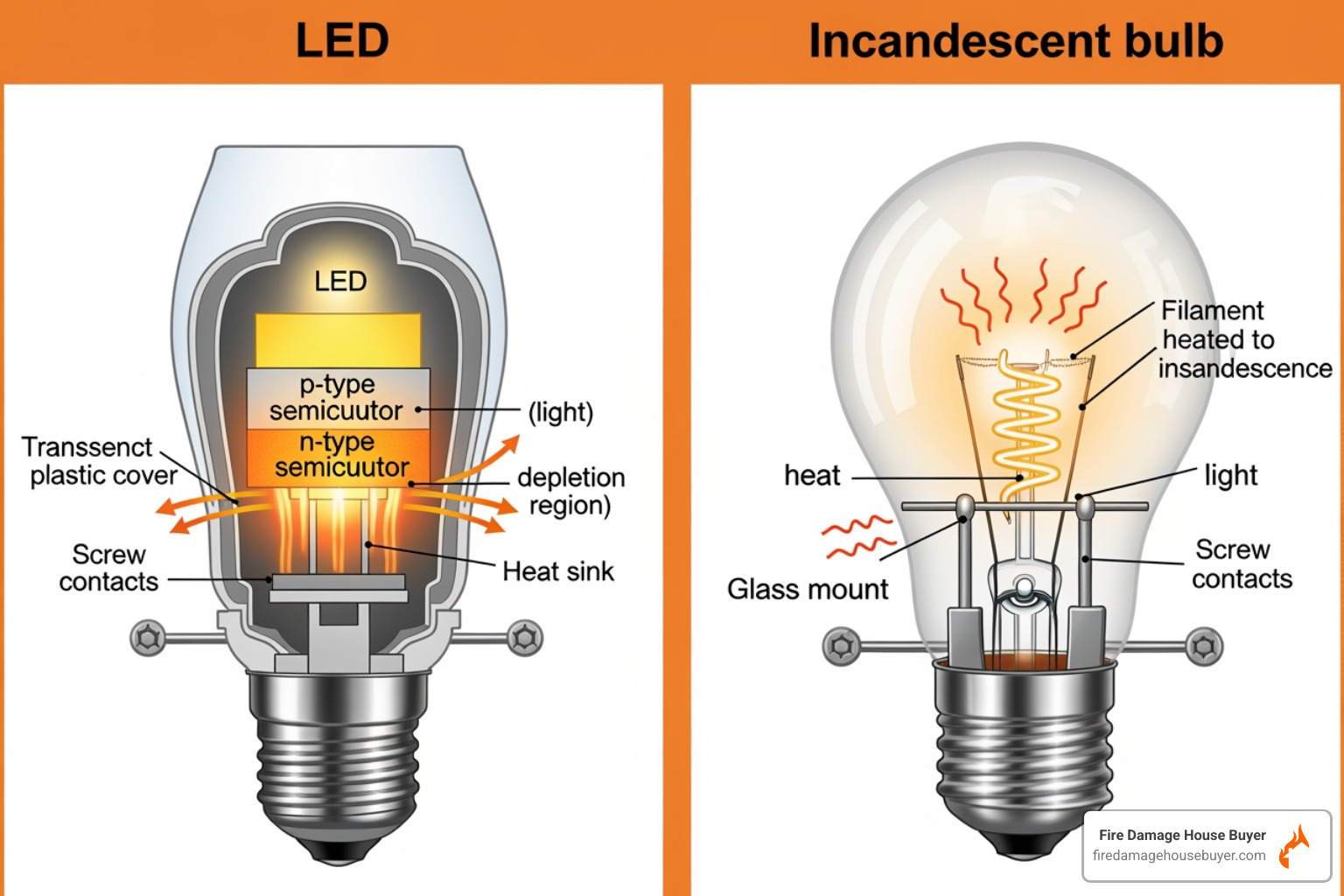
LED stands for “Light-Emitting Diode.” When electricity passes through its semiconductor, it produces light directly via electroluminescence. This is a direct conversion of electricity to light with very little wasted energy.
In contrast, traditional incandescent bulbs work by heating a wire filament until it glows white-hot. About 90% of their energy becomes heat, with only 10% becoming light. Halogen bulbs are a variation that runs even hotter, converting about 80% of their energy into heat.
LEDs flip this equation, converting roughly 90% of their energy into light and only 10% into heat. While they do produce some heat at the semiconductor and driver, it’s minimal. To manage this, LED bulbs have built-in heat sinks—metal fins at the base that pull heat away from sensitive components and dissipate it into the air. This thermal management keeps them cool and extends their lifespan.
Comparing Heat Output: LED vs. Incandescent & Halogen
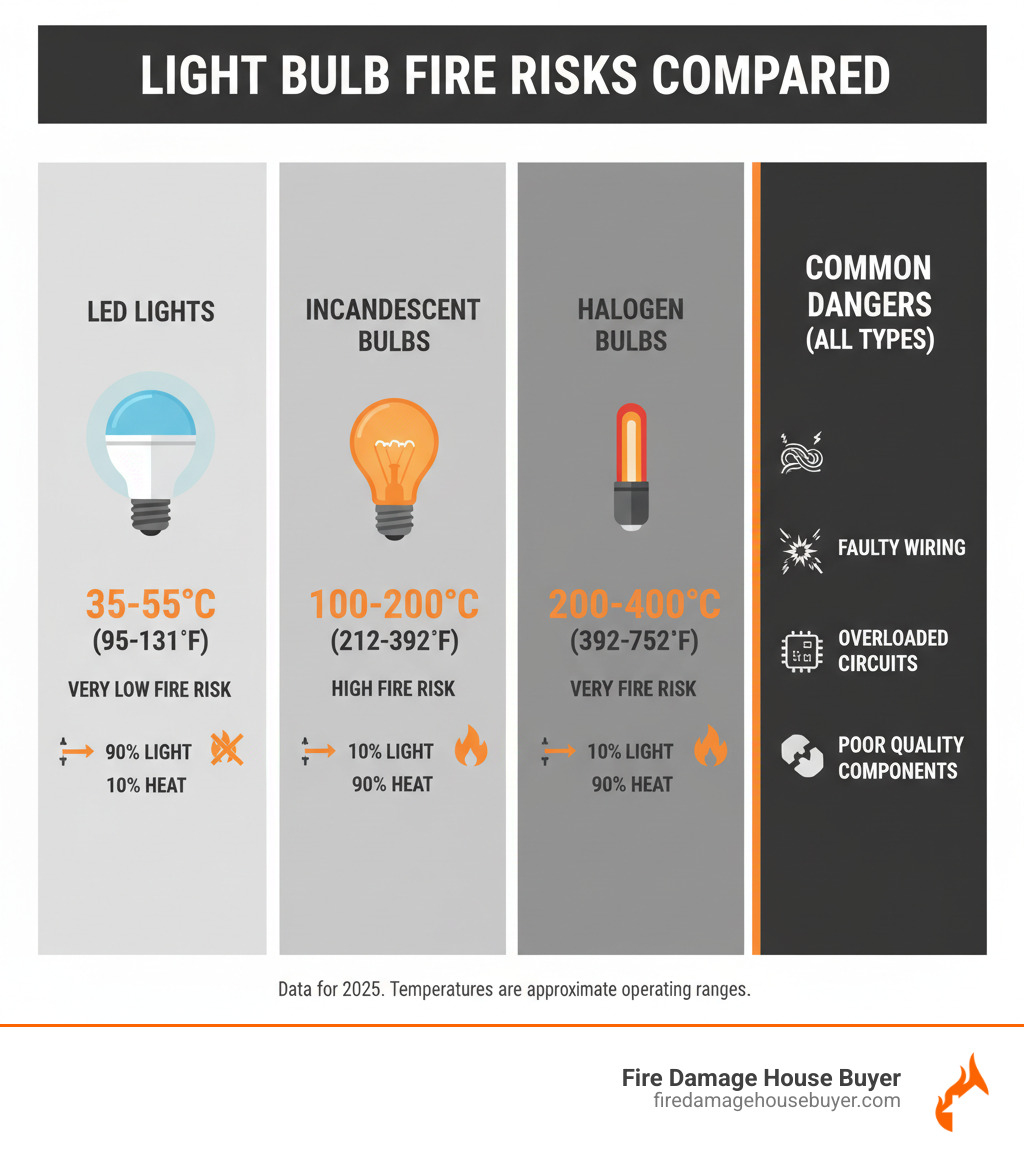
The numbers clearly show how much cooler LEDs run.
| Bulb Type | Operating Temperature (Surface) | Energy Efficiency | Energy-to-Heat Conversion | Fire Risk from Heat |
|---|---|---|---|---|
| LED | 35°C – 55°C (95°F – 131°F) | ~90% to light | ~10% | Very Low |
| Incandescent | 100°C – 200°C (212°F – 392°F) | ~10% to light | ~90% | High |
| Halogen | 200°C – 400°C (392°F – 752°F) | ~20% to light | ~80% | Very High |
The difference is dramatic. An incandescent bulb can cause serious burns, while an LED is just warm to the touch. Common household materials like wood and paper have ignition points far above an LED’s operating temperature (around 300°C).
This means a quality LED bulb won’t get hot enough to start a fire through direct contact. The key safety feature is its low heat conversion rate. However, “normal conditions” is an important qualifier. When wiring fails or cheap components malfunction, fire risk enters the picture due to electrical failures, which we’ll explore next.
Do LED Lights Get Hot Enough to Start a Fire? Unpacking the Real Risks
So, do LED lights get hot enough to start a fire by touching flammable materials? Under normal conditions, no. An LED’s operating temperature of 35°C to 55°C is nowhere near the ignition point of paper, fabric, or wood.
However, low heat doesn’t mean zero risk. The real danger with LED lighting isn’t contact fires; it’s electrical fires. Most incidents involving lighting systems stem from faulty components, improper installation, or existing electrical problems. These are the true fire starters. If you smell burning plastic near a light fixture, as detailed in our guide on why does my house smell like burning plastic, it’s a serious warning sign of an electrical issue. The mechanisms that cause LED systems to overheat are almost always tied to component failures, not the LED’s normal function.
Key Factors That Can Cause an LED Light to Overheat and Become a Fire Hazard
Even cool-running LEDs can become a fire hazard under certain conditions. Here are the main risk factors:
- Poor-quality components: Cheap, uncertified LEDs are a gamble. Manufacturers may use substandard wiring, inadequate heat sinks, and flammable materials. Always look for safety certifications like UL (Underwriters Laboratories) or CE marks, which indicate the product meets safety standards.
- Faulty or old wiring: Damaged or outdated wiring in your home can create resistance, heat, and short circuits, igniting nearby materials. Flickering lights or buzzing can be a sign of wiring issues.
- Incorrect installation: Using LEDs in fully enclosed fixtures when they aren’t designed for it traps heat. The same applies to recessed lighting without proper clearance.
- Overloaded circuits: While LEDs are efficient, adding too many fixtures to a strained circuit can still cause wiring to overheat and melt insulation.
- Incompatible dimmer switches: Using a non-LED dimmer can cause both the switch and the bulb’s driver to overheat, creating a fire risk.
- Poor ventilation: Installing LEDs in tight spaces without airflow prevents heat sinks from working, trapping heat and stressing components.
- Dust and debris buildup: A layer of dust on a fixture acts like a blanket, trapping heat. Regular cleaning is simple but important preventive maintenance.
Are Certain LED Installations (like Strips or High-Power Fixtures) a Higher Risk?
Yes, certain installations require extra care. LED strip lights and high-power LED fixtures can present higher risks if not handled correctly.
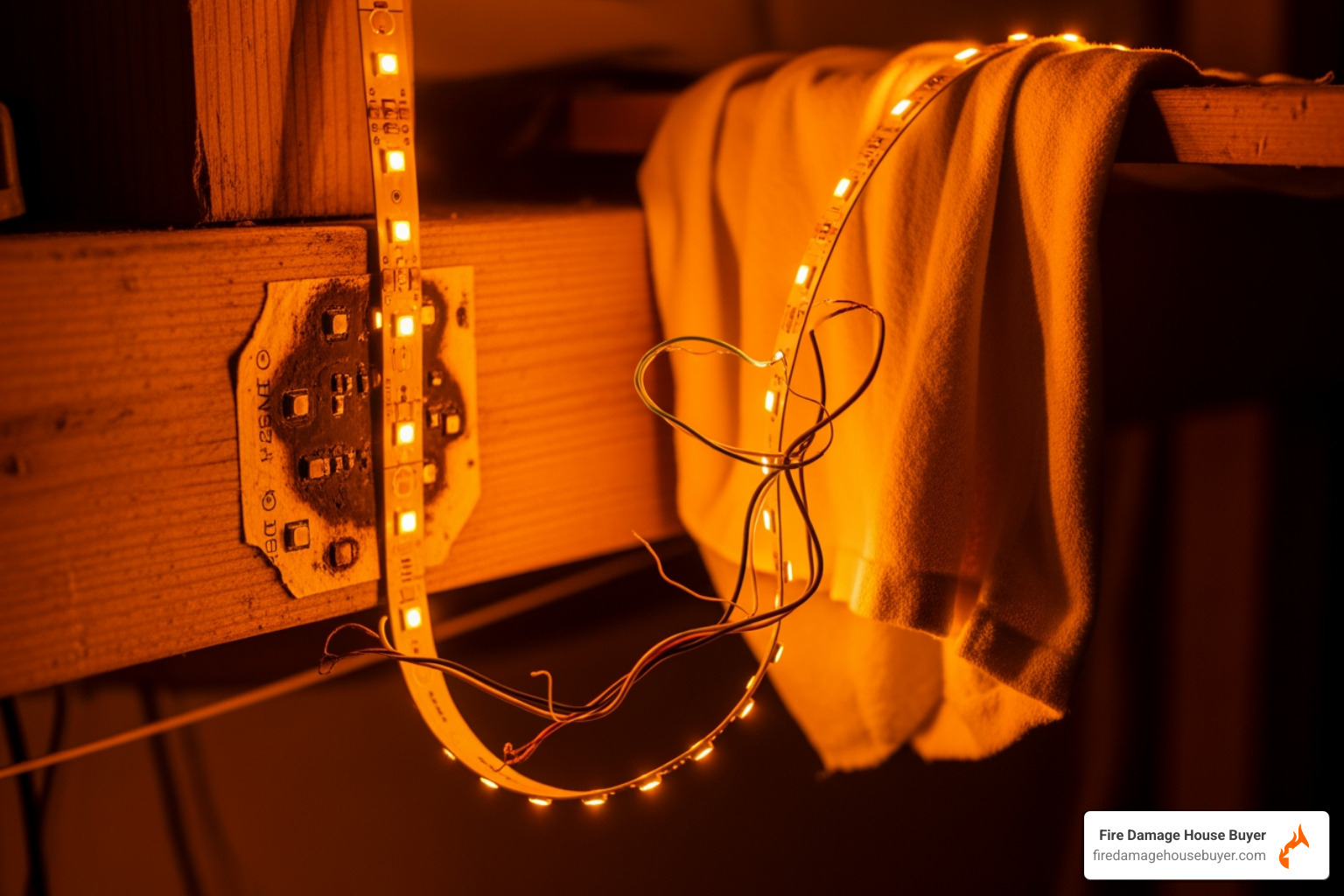
LED strip lights are popular but have specific risks:
- Power Supply: Low-quality external power supplies can overheat or deliver inconsistent voltage.
- Overloading: Chaining too many strips to one power supply can cause it to fail and catch fire. Use a power supply rated for at least 20% more wattage than your load.
- Ventilation: Installing strips in enclosed spaces without heat dissipation (like aluminum channels) traps heat.
- Proximity to Flammables: A failing driver or faulty connection can generate localized heat and ignite nearby materials.
High-power LED fixtures (for grow lights, industrial use, etc.) generate much more heat and have robust cooling systems. If these systems fail or the fixture is installed without proper airflow, overheating is a real danger.
For these complex installations, professional installation is crucial. A qualified electrician understands electrical codes and heat management requirements, ensuring a safe setup in any state, from California to Florida to Texas.
Best Practices for Safe LED Installation and Use
Preventing electrical fires with LED lights is straightforward. It comes down to making smart choices and staying vigilant.
- Choose Certified Products: Always buy LEDs with UL (Underwriters Laboratories) or CE marks. These certifications mean the product has been tested for safety.
- Follow Instructions: Read the manufacturer’s guidelines. If a bulb isn’t meant for an enclosed fixture, don’t use it there.
- Ensure Proper Ventilation: LEDs need airflow. For strip lights, consider using aluminum channels which act as heat sinks.
- Don’t Overload Circuits: Even with efficient LEDs, adding too many lights to one circuit can be dangerous, especially in older homes.
- Use Compatible Hardware: Match your LED bulbs with compatible dimmer switches to prevent flickering, buzzing, and overheating.
- Inspect Fixtures Regularly: Periodically check for frayed wires, discoloration, or loose connections. Also, dust your fixtures to help them cool effectively.
- Keep Flammables Away: Maintain a safe distance between any light fixture and materials like curtains or paper.
What to Do If You Suspect Your LED Lights Are Overheating
Knowing the warning signs and how to react can prevent a disaster.
Warning Signs:
- Flickering, dimming, buzzing, or humming sounds.
- Discoloration, melting, or charring on the fixture or bulb.
- A smell of burning plastic or an electrical odor.
Immediate Steps:
- Immediately turn off the power at the circuit breaker, not just the light switch.
- Once the power is off and the fixture is cool, inspect it for damage like charred wires or melted components.
- Consult a qualified electrician. Do not attempt to fix electrical problems yourself; it’s extremely dangerous.
If your smoke alarm is beeping intermittently, it could be related to an electrical issue. Our article on Why does my house fire alarm keep beeping offers more guidance.
The Aftermath of an Electrical Fire
Even a small electrical fire causes extensive damage that goes far beyond what’s visible.
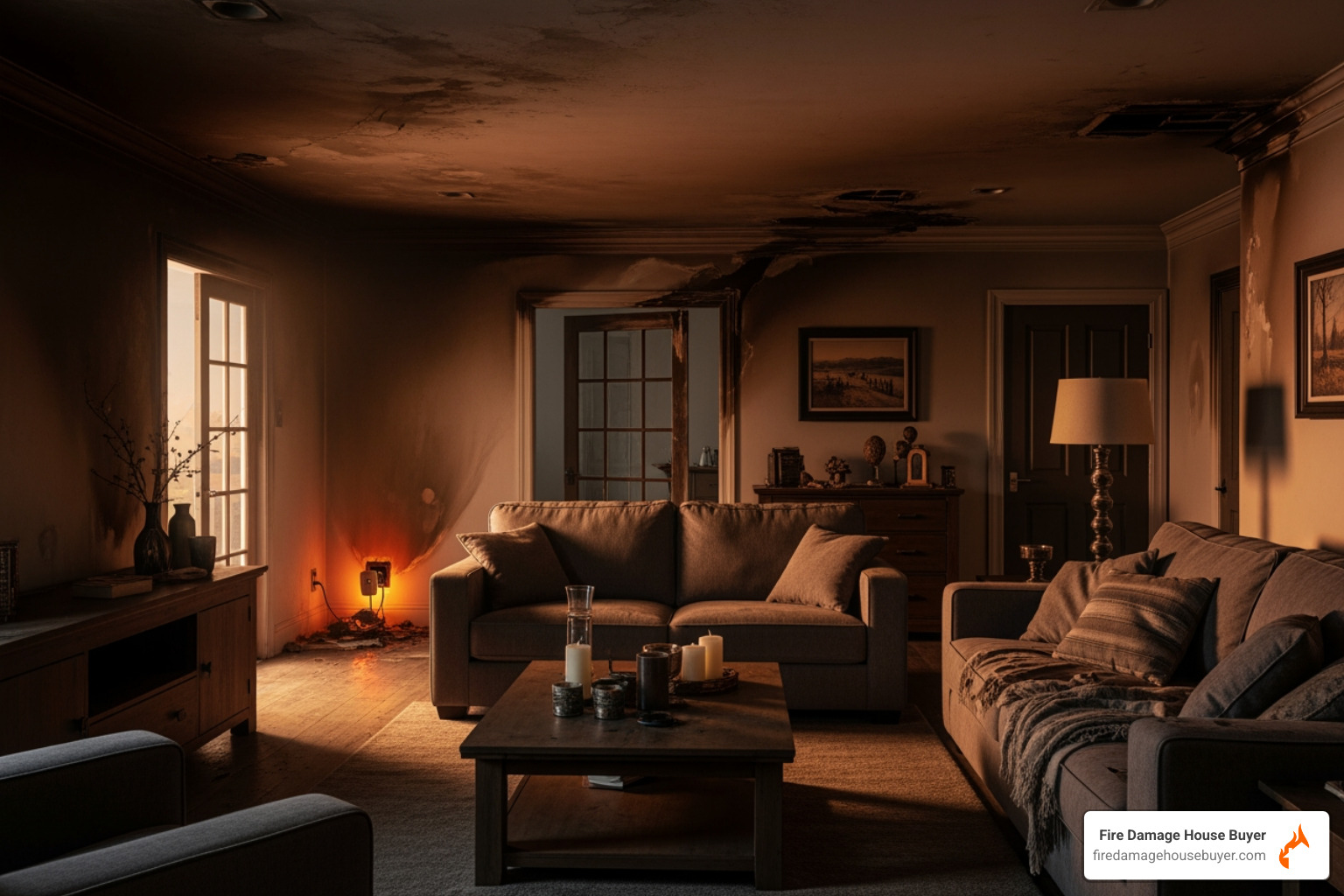
- Soot and Smoke Damage: Corrosive soot coats every surface and penetrates porous materials, while the smoke odor permeates walls, furniture, and HVAC systems. The cleaning up after a house fire is a complex, professional job.
- Hidden Structural Damage: Heat can weaken wooden beams, melt wiring inside walls, and compromise your home’s structural integrity.
- Long-Term Health Risks: Lingering soot and smoke particles in the air can trigger respiratory issues, especially for children, the elderly, and those with pre-existing conditions.
The aftermath of a fire is a complete disruption of your life, filled with safety concerns and an overwhelming recovery process.
The Difficult Choice: Repairing vs. Selling After a Fire
After a fire, homeowners face a difficult choice: rebuild or walk away? The path to restoration is rarely simple, involving months of dealing with contractors and insurance adjusters, all while facing immense uncertainty. You’ll have to ask tough questions like, What happens to your mortgage if your house burns down? The financial and emotional weight can be crushing.
The High Cost and Complexity of Fire Damage Restoration
Understanding the real Cost to repair fire damaged house is critical. Repairs for moderate damage often cost $50,000 to $150,000, and can easily exceed $400,000 for severe cases. But the costs don’t stop there.
- Finding Trustworthy Contractors: Locating specialists in fire restoration is challenging, and hiring the wrong team can lead to shoddy work.
- Navigating Insurance Claims: This can feel like a full-time job, with disputes over coverage and months of negotiations.
- Hidden Damage: Problems like melted wiring, smoke-contaminated HVAC systems, or a weakened foundation often appear mid-project, adding thousands to the bill and weeks to the timeline.
- Emotional and Financial Toll: Beyond repairs, you face costs for temporary housing, replacing belongings, and time off work. The average restoration takes six to twelve months, leaving you in limbo.
Why Selling Your Fire-Damaged House Is a Simpler Path Forward
There is another option that avoids the stress of repairs and lets you move on immediately. When you sell your fire-damaged house to us, you choose certainty over uncertainty.
- Fast Cash Offer: We provide a fair, no-obligation cash offer based on your property’s as-is condition.
- No Repairs or Cleaning: Leave the soot, char, and smoke damage to us. You don’t have to lift a finger.
- No Commissions or Closing Costs: Unlike a traditional sale, you pay no realtor commissions. The offer we make is what you get, minus standard title fees.
- A Quick and Certain Solution: We can close in as little as two to three weeks, but we work on your timeline.
We serve homeowners across the entire country. If you’re facing the overwhelming prospect of fire damage restoration, there is an easier way. Take control and Sell Fire Damaged House to us. Let us handle the mess while you focus on rebuilding your life, not your house.
Frequently Asked Questions about LED Light Fire Safety
We talk to homeowners every day about LED lights and fire safety. Here are answers to the most common questions.
Can you leave LED lights on 24/7 without risk of fire?
High-quality, properly installed LEDs are designed for extended use and have a very low fire risk, making them far safer than traditional bulbs for continuous operation. However, leaving any light on 24/7 will shorten its lifespan. The minimal risk that exists increases with low-quality components, faulty wiring, or poor ventilation. For safety and energy efficiency, it’s always best to turn lights off when not in use.
Do LED lights get hot enough to start a fire on fabric or paper?
No. Under normal circumstances, a functioning LED operates between 35°C and 55°C (95°F to 131°F), which is far below the ignition point of paper (about 230°C/450°F) or fabric. The danger isn’t the bulb’s heat, but a potential electrical fault. A short circuit or malfunctioning driver can generate enough heat to ignite nearby materials. For this reason, always keep flammable items away from any light fixture.
Are cheap, uncertified LED lights a significant fire hazard?
Yes, absolutely. Cheap, uncertified LEDs pose a much higher fire hazard. To cut costs, manufacturers often use substandard components, inadequate heat sinks, and non-flame-retardant plastics. They may also skip crucial safety features like circuit protection. This dramatically increases the risk of overheating and fire.
Always look for products with safety certifications like UL (Underwriters Laboratories) or CE (Conformité Européenne). The small extra cost is insignificant compared to the tens of thousands of dollars needed to repair fire damage.
If you’re already dealing with fire damage, you have options beyond a stressful restoration. Many homeowners choose to Sell Fire Damaged House to move forward quickly.
Conclusion
So, do LED lights get hot enough to start a fire? The direct answer is no—under normal circumstances, their low operating temperature makes them very safe. Unlike old incandescent bulbs, LEDs are designed to produce light, not heat.
However, the fire risk isn’t zero. The real danger comes from poor-quality products, faulty wiring, and improper installation. These issues can lead to electrical failures that cause fires, regardless of the bulb type. Prioritizing electrical safety by using certified products and heeding warning signs like flickering or burning smells is the best way to prevent a disaster.
If you’ve already experienced a house fire, you know the path to recovery is overwhelming. The process involves staggering costs, insurance battles, and months of stressful repairs.
Instead of facing that burden, there’s a simpler alternative. Fire Damage House Buyer provides a fair, fast cash offer for your property as-is. No repairs, no cleaning, and no realtor commissions. We operate in states across the country, including Alabama, California, Florida, Texas, New York, and many more.
Let us take the damaged property off your hands so you can move forward. Sell Fire Damaged House to us today and start your next chapter with peace of mind.