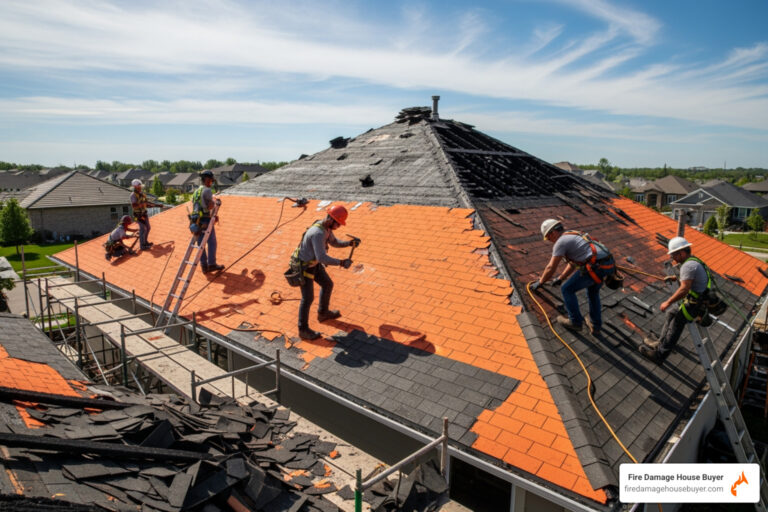
Why Understanding Fire Damage Roof Repair is Critical for Homeowners
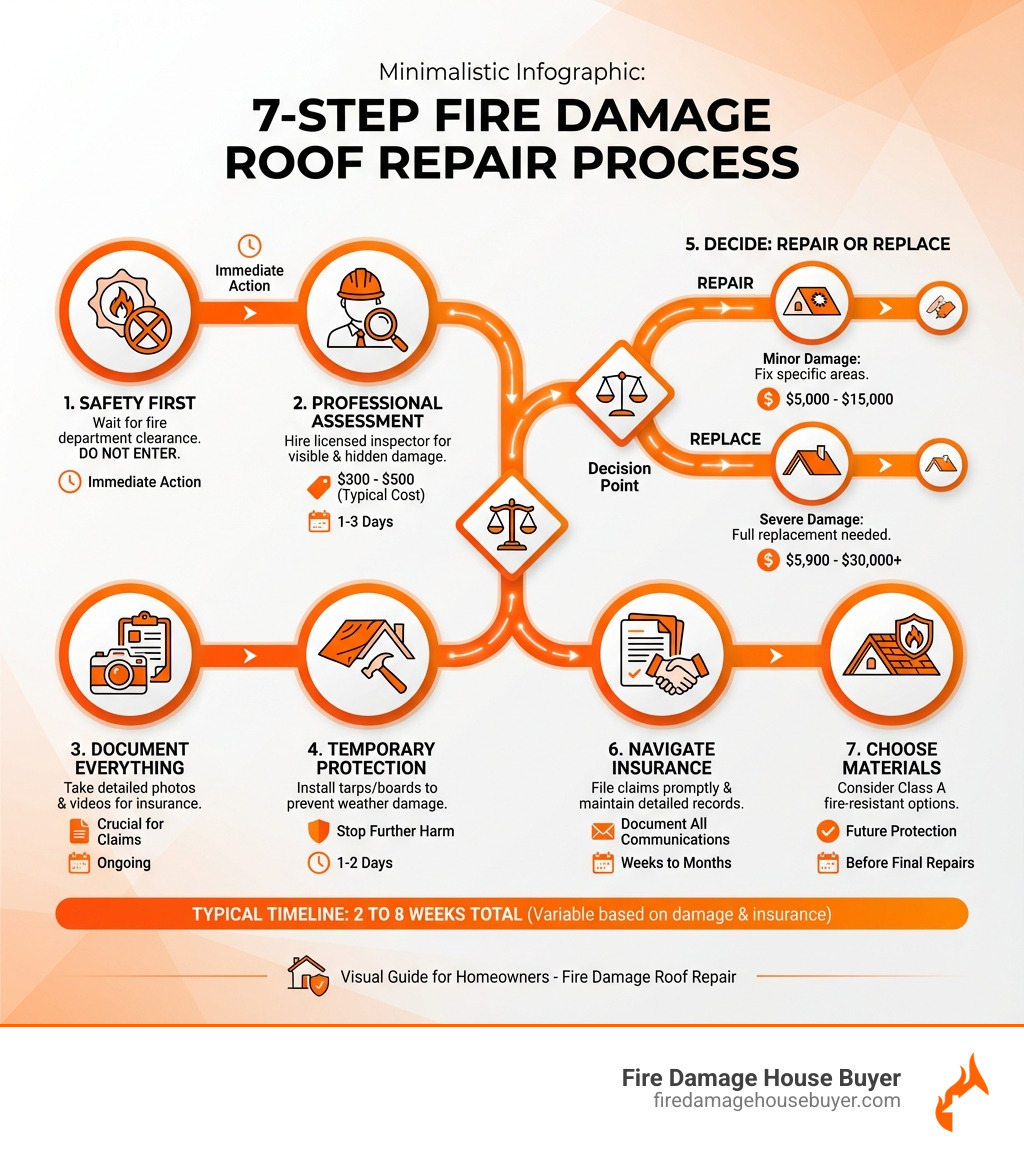
Fire damage roof repair is a complex, multi-faceted process that requires immediate attention and careful planning. If you’re facing this situation right now, here’s what you need to know:
Quick Answer: Essential Steps for Fire Damage Roof Repair
- Safety First – Wait for fire department clearance before entering the property
- Professional Assessment – Hire a licensed inspector to evaluate visible and hidden damage ($300-$500)
- Document Everything – Take detailed photos and videos for insurance claims
- Temporary Protection – Install tarps or boards to prevent further weather damage
- Decide: Repair or Replace – Minor damage may only require repairs ($5,000-$15,000), while severe structural damage necessitates full replacement ($5,900-$30,000+)
- Steer Insurance – File claims promptly and maintain detailed records of all communications
- Choose Materials – Consider Class A fire-resistant materials for future protection
The devastating reality is that in 2022, U.S. fire departments responded to 352,000 home structure fires, causing an estimated $12.1 billion in direct property damage. Your roof—the first line of defense protecting your family—often bears the brunt of this destruction. Even when flames don’t directly reach your roof, the intense heat, corrosive smoke, drifting embers, and the water used by firefighters can compromise its structural integrity in ways that aren’t immediately visible.
The financial impact is staggering. Most homeowners face restoration costs between $10,000 and $100,000, with roof-specific repairs ranging from $5,000 to $30,000 depending on the extent of damage and materials chosen. The process is lengthy, typically taking 2 to 8 weeks for completion, and involves coordinating with insurance adjusters, structural engineers, licensed contractors, and local building authorities—all while potentially living in temporary housing.
Beyond the immediate physical damage, fire-damaged roofs present hidden dangers. Smoke and soot can permeate underlayment materials, creating lingering odors and causing long-term corrosion. Water from firefighting efforts can saturate insulation and wooden supports, leading to mold growth within 24-48 hours if not properly addressed. Structural components like trusses and rafters may appear intact but have been weakened by extreme heat, posing collapse risks. Even minor damage can shorten your roof’s lifespan and lead to costly repairs down the road if not properly remediated.
I’m Daniel Cabrera, founder of Fire Damage House Buyer, and over the past 15 years, I’ve personally bought and sold over 275 houses, many of which required extensive fire damage roof repair or complete replacement. Through this experience, I’ve seen how the complexity and cost of these repairs can overwhelm homeowners who are already dealing with the trauma of losing their home to fire—which is why I’m committed to helping you understand your options, whether that’s navigating the repair process or considering the simpler alternative to Sell Fire Damaged House for cash.
First Steps: Assessing the Damage to Your Roof
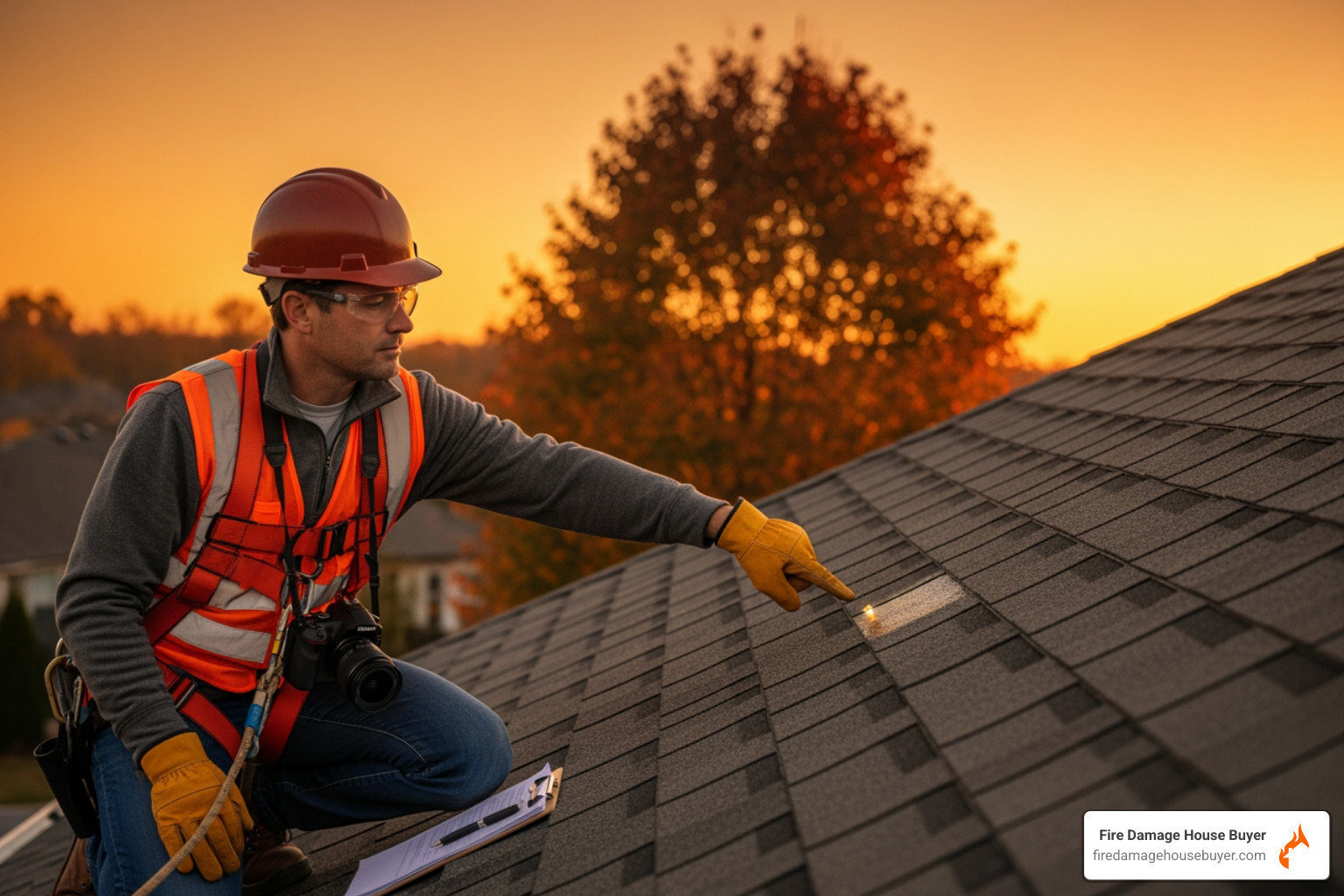
Before any repairs can begin, a thorough assessment is critical. The safety of your family and the structural integrity of your home depend on understanding the full extent of the damage, which often goes beyond what is visible to the naked eye. It’s crucial to wait for clearance from the fire department before entering the property.
Visible vs. Hidden Signs of Fire Damage
When fire strikes, some damage is immediately obvious, while other problems lurk beneath the surface, silently compromising your roof’s integrity.
Visible Damage
You’ll likely notice charred shingles, melted components, or even missing sections of your roof where the flames were most intense. Firefighters often create holes for ventilation, which, while necessary, also contribute to visible damage. Soot and ash deposits are also clear indicators.
Hidden Damage
This is where things get tricky. Even if flames didn’t directly touch your roof, intense heat can cause significant, non-visible damage. Asphalt shingles can blister, curl, or lose granules due to prolonged heat exposure. The waterproofing barrier beneath your shingles, known as underlayment, can become brittle and lose its effectiveness. High temperatures can also loosen adhesives or warp metal flashing around chimneys, vents, and valleys, creating potential leak points.
Inside your attic, you might detect smoke odors, which indicate smoke and soot permeation that can lead to long-term corrosion and lingering smells. The wooden decking beneath your roofing materials might be warped or weakened, even if it’s not visibly charred. We’ve inspected countless roofs after neighborhood fires and finded hidden issues that, if ignored, would have led to premature roof failure.
For homeowners dealing with historical fire damage, such as from a fire decades ago, the challenges are even more complex. Surface charring from past fires can significantly reduce the strength of wooden structural elements by 10% or more, even if the interior wood seems sound. This means older repairs, like sistered supports, might not be adequate, and adding new weight (like plywood sheathing) could further compromise the structure. If you’re unsure about the extent of the damage or what steps to take next, please refer to our guide on what to do after a house fire.
Understanding the Types of Damage
Fire damage isn’t a single entity; it’s a combination of several destructive forces, each impacting your roof in unique ways.
- Heat Damage: This is often the most insidious. Intense heat can cause asphalt shingles to blister, curl, or lose granules, compromising their protective layer. It can weaken the underlayment, make adhesives brittle, and warp metal flashing. Even without direct flame contact, heat can severely shorten the lifespan of your roofing materials.
- Smoke and Soot Damage: Smoke and soot are acidic and corrosive. They can discolor roofing materials, leave lingering odors, and cause long-term degradation. Ash buildup can clog gutters, restricting drainage and potentially leading to water damage.
- Ember Damage: Drifting embers from a fire, especially in wildfire-prone areas, can melt, char, or puncture shingles, creating direct entry points for water.
- Water Damage from Firefighting: While essential for extinguishing the blaze, the water used by firefighters can cause extensive secondary damage. It saturates insulation, leading to mold growth within 24-48 hours, and can rot wooden structural elements. The sheer weight of pooled water can stress a roof, increasing the risk of structural failure.
The Role of a Professional Inspection and Temporary Measures
Given the complexity of fire damage, a professional assessment is non-negotiable.
Professional Assessment
We always recommend engaging a licensed roofing contractor experienced in fire damage, and often a structural engineer, especially if there’s any concern about the roof’s load-bearing capacity. These experts can identify both visible and hidden damage, assess the structural integrity of trusses, rafters, and decking, and provide a detailed report. This documentation is absolutely critical for your insurance claim.
Temporary Measures
While waiting for professional repairs, immediate temporary measures are vital to prevent further damage. This typically involves:
- Tarping: Covering compromised areas of your roof with heavy-duty tarps to prevent rain, snow, or debris from entering your home.
- Boarding Up: Securing any openings created by the fire or firefighting efforts to protect the interior from weather and unauthorized access.
These steps help mitigate additional costs down the line. Ignoring fire damage or attempting complex DIY repairs without experience can lead to expensive corrections and potential denial of insurance claims. For more essential information on recovery, check out our post-fire recovery resources.
The Critical Decision: Repair or Full Roof Replacement?
Deciding whether to repair a section or replace the entire roof is one of the most significant choices you’ll make. An incorrect decision can lead to catastrophic long-term consequences, including persistent leaks, mold growth, and even structural collapse, not to mention issues when you decide to rebuild or sell after a house fire.
When Roof Repairs Might Be Sufficient
Sometimes, not all hope is lost for your existing roof. Repairs can be a viable option if:
- Minimal and Localized Damage: The fire was contained to a very small area, affecting only a few shingles or a minor section of the roof.
- Intact Structural Supports: A professional inspection confirms that the underlying rafters, trusses, and decking are completely sound, without charring, warping, or weakening from heat or water.
- Young Roof Age: Your roof is relatively new and has many years of life left. Replacing only a small, damaged section makes economic sense.
- No Significant Water Damage: Firefighting efforts did not result in widespread water saturation of the roof structure or insulation.
- Decking is Sound: The roof decking shows no signs of charring, softness, or structural compromise.
If these conditions are met, a targeted fire damage roof repair might save you time and money.
Clear Indicators for a Full Roof Replacement
Unfortunately, many fire incidents necessitate a complete roof replacement. This is usually the case if:
- Widespread Damage: Large sections of the roof are burned, missing, or severely compromised. The fire was extensive, affecting materials across a broad area.
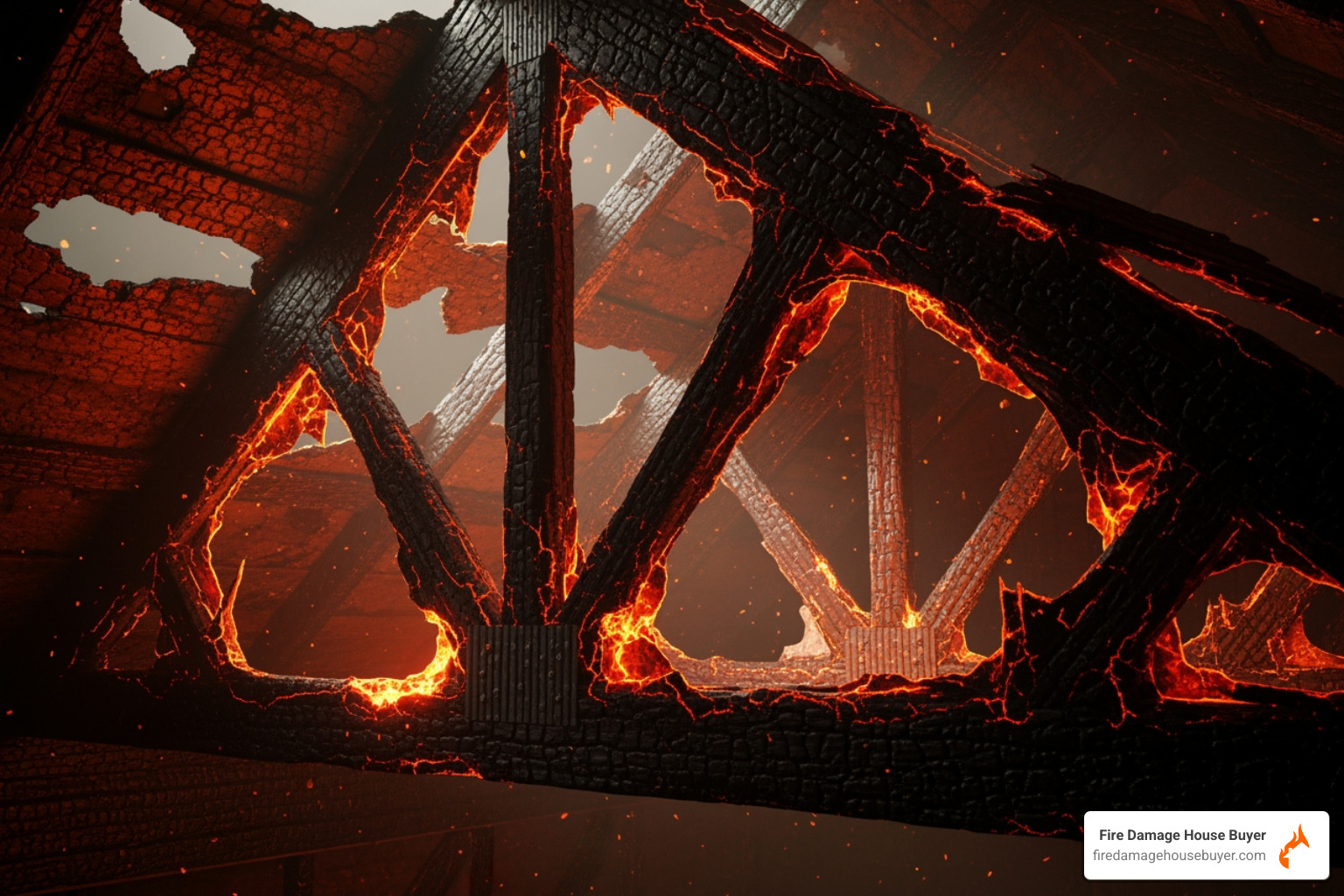
- Charred Rafters or Trusses: The structural integrity of your roof’s skeleton—the rafters and trusses—has been compromised by charring or significant heat exposure. This is a major safety concern, as these elements support the entire roof.
- Soft or Spongy Decking: The roof decking (the wood panels beneath your shingles) is charred, soft, or spongy, indicating severe heat or water damage.
- Significant Water Saturation: Firefighting efforts have left the roof structure and insulation heavily saturated, leading to a high risk of mold, rot, and long-term structural deterioration.
- Old Roof Near End of Lifespan: If your roof was already old and nearing the end of its functional life before the fire, a partial repair might be a temporary fix. A full replacement ensures longevity and avoids future headaches.
- Widespread Smoke Permeation: Even if visually intact, widespread smoke damage can weaken roofing materials over time, cause lingering odors, and compromise the roof’s protective qualities.
- Building Code Requirements: Local building codes in states like California, Florida, or Texas, might mandate a full replacement if a certain percentage of the roof is damaged, or if upgrades to fire-resistant materials are required.
Comparing Roof Repair vs. Full Replacement
| Factor | Roof Repair | Full Replacement |
|---|---|---|
| Initial Cost | Lower (Minor repairs: $400-$1,800; More extensive: $5,000-$15,000) | Higher (Minor structural damage: $5,900-$12,800; Extensive: $15,000-$30,000+) |
| Timeline | Shorter (Days to a week) | Longer (Several days to weeks, depending on structural damage and insurance) |
| Effectiveness | Addresses only specific spots; potential for mismatched materials | Ensures uniform protection & integrity; full system warranty |
| Long-Term Risk | Higher (missed damage, potential for early failure, future leaks) | Lower (new system, improved durability, potential for better fire resistance) |
| Home Value | Minimal impact, might lower if repairs are obvious or mismatched | Can increase value, especially with modern, fire-resistant materials |
The Complex Process of Fire Damage Roof Repair
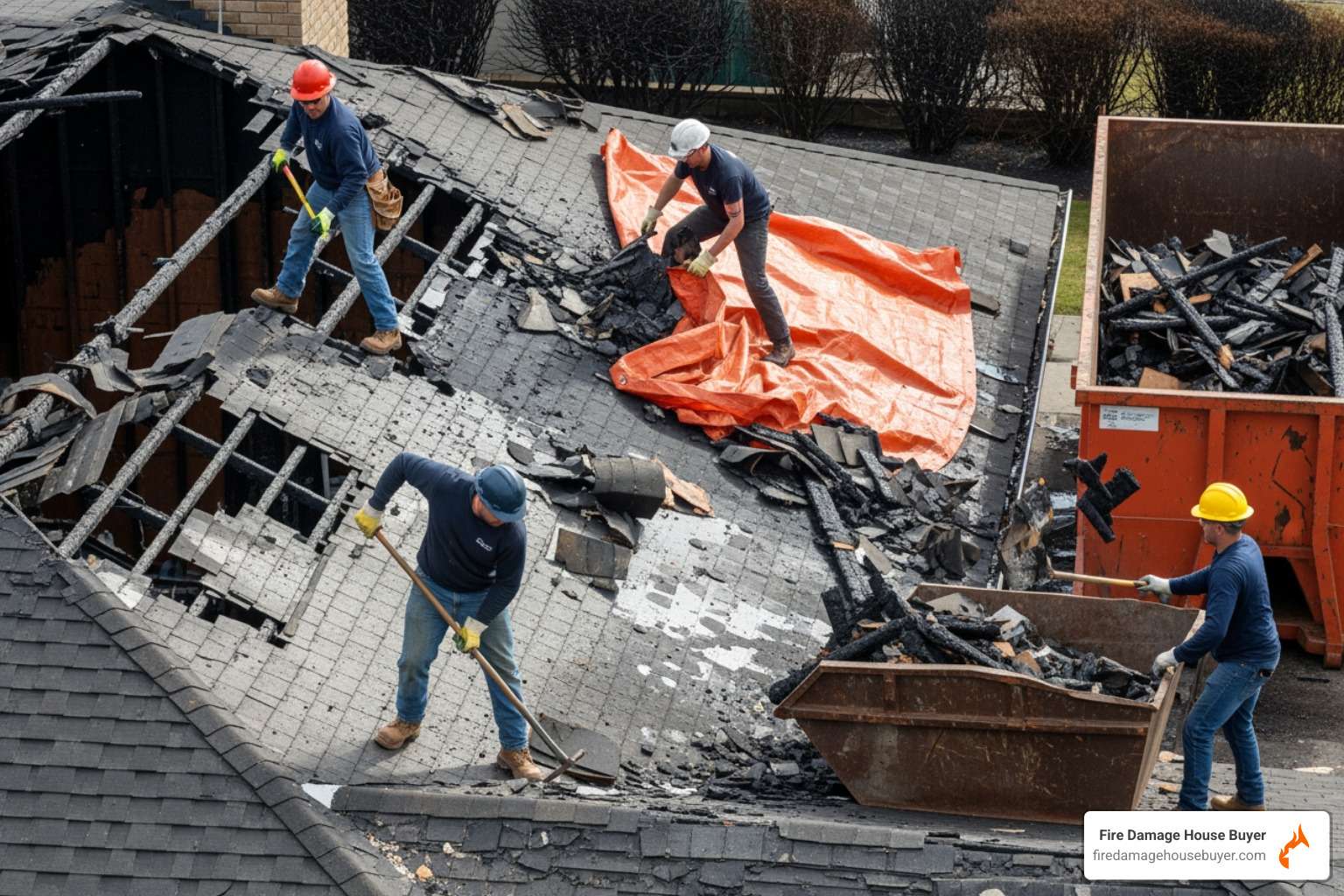
The actual repair or replacement is a multi-stage, labor-intensive process that requires specialized expertise. From structural reinforcement to restoring the final protective layer, each step is crucial for ensuring a safe and durable outcome. This complexity is a major reason many homeowners explore alternatives to rebuilding.
Structural Assessment and Water Mitigation
Before any new materials go up, we must ensure the structure below is sound.
- Engineer’s Report: For any significant fire damage, especially where structural elements like trusses and rafters are involved, a structural engineer’s report is essential. They will assess the load-bearing capacity of the remaining structure and design plans for reinforcement or replacement of weakened or charred beams. This step is critical for safety and compliance with building codes.
- Water Extraction and Drying: Water from firefighting efforts can be just as damaging as the fire itself. Prompt water extraction using professional-grade equipment is necessary to prevent mold growth, which can start within 24-48 hours. Thorough drying of all affected areas, including insulation and wood, is paramount.
- Mold Remediation: If mold has already begun to form due to water saturation, professional mold remediation is required. This involves specialized cleaning and treatment to safely remove mold and prevent its recurrence. You can learn more about this in our guide to clean-up after house fire.
Understanding the Fire Damage Roof Repair Process
Once the structure is deemed safe and dry, the physical fire damage roof repair or replacement can begin.
- Demolition and Debris Removal: All damaged roofing materials, including shingles, underlayment, and any compromised decking, must be carefully removed and properly disposed of.
- Structural Repairs: This involves replacing any fire-damaged or weakened structural elements like beams, trusses, and rafters according to the engineer’s specifications. If the underlying sheathing or decking is charred or compromised, it will also need replacement.
- Underlayment Installation: A new protective underlayment is installed over the decking. This crucial layer provides an additional barrier against moisture.
- Restoring the Roofing System: This involves installing new roofing materials, such as shingles or tiles, ensuring proper overlap and fastening. The term roofing system refers to all components working together, from the deck to the final layer.
- Flashing Installation: New flashing is installed at vulnerable areas like roof valleys, chimneys, skylights, and vents to prevent water penetration. Improper installation here can lead to leaks.
- Insulation and Ventilation: Check the condition of roof insulation materials and replace them if necessary. Proper insulation and ventilation are important for energy efficiency and for preventing future issues like condensation or mold growth.
- Finishing Touches: This includes installing gutters, downspouts, and ensuring all aesthetic elements are restored.
Choosing Materials and Ensuring Efficiency
When rebuilding, you have the opportunity to improve your home’s safety and efficiency.
Fire-Resistant Materials
We highly recommend considering fire-resistant roofing materials. These materials are rated Class A, B, or C based on their ability to withstand fire exposure (ASTM E108/UL 790). Class A offers the highest level of fire resistance and can significantly slow the spread of fire, providing crucial extra time for evacuation and firefighting efforts. Options include:
- Metal Roofing: Highly durable and naturally fire-resistant.
- Clay/Concrete Tiles: Excellent fire resistance, commonly seen in states like California and Arizona.
- Treated Asphalt Shingles: Specifically designed to meet Class A fire ratings.
- Slate Roofing: Naturally fire-resistant and extremely long-lasting.
Insulation and Ventilation
Proper insulation and ventilation are key for both safety and long-term home health. Replacing saturated insulation is a must. Ensuring adequate attic ventilation helps prevent heat buildup, which can contribute to fire hazards, and reduces moisture, preventing mold and improving overall energy efficiency.
Navigating High Costs and Insurance Claims
The financial burden of a fire is immense. In 2022, home fires caused an estimated $12.1 billion in property damage. Navigating the costs of roof repair and the insurance claim process adds another layer of stress to an already difficult situation.
Cost Considerations for Fire Damage Roof Repair
The average cost to repair fire damage to a home can range from $10,000 to $100,000 or more, depending on the severity. Specifically for the roof:
- Roof Replacement Costs: Can range from $5,000 to $15,000 or more for minor structural damage, but can easily exceed $30,000 for more extensive damage requiring structural beam replacement.
If your home is in the San Antonio area, Roof Direct San Antonio offers instant satellite-based roof replacement pricing — you can see your exact cost in minutes without scheduling an inspection. - Material Costs: Asphalt shingle roofs typically cost $7-$10 per square foot to repair after fire damage, while metal, tile, or slate roofs can cost $15-$25 per square foot.
- Labor Rates: Vary by region and the complexity of the job.
- Hidden Costs: Don’t forget about professional inspections ($300-$500), temporary housing, debris removal, permits, and potential code upgrades that may be required during reconstruction.
- Long-Term Consequences: Even minor roof damage from smoke and heat can shorten a roof’s lifespan and lead to costly repairs down the road if not adequately addressed.
These costs can quickly become overwhelming, and it’s important to consider all financial aspects. For a deeper dive into these figures, consult our guide on legal financial considerations after fire.
The Insurance Claim Process
Navigating insurance after a fire is a critical step, but it can be a maze of paperwork and negotiations.
- Document Everything: As soon as it’s safe, document all damage with clear photographs and videos. Create an itemized list of all damaged personal property. This thorough documentation is your strongest asset for your claim.
- Contact Your Provider Promptly: Report the incident to your insurance company as soon as possible. The first 24-48 hours are critical, not just for preventing further damage, but also for initiating your claim.
- Work with an Adjuster: Your insurance company will assign an adjuster to assess the damage. Be prepared to provide all your documentation and professional estimates.
- Understand Your Policy: Review your homeowner’s insurance policy to understand your coverage types, limits, and deductibles. Most policies cover fire damage, but coverage for roofs can sometimes be prorated based on the roof’s age and condition before the fire.
- Potential Disputes: Be aware that disputes can arise. Fire rebuild and insurance cost analysis services can be invaluable, often returning 3-5 times their fee in additional claim settlements by identifying overlooked damage and ensuring accurate pricing.
- Professional Help: Consider hiring a public adjuster, especially for extensive damage, to advocate on your behalf.
For more detailed advice on navigating this process, read our house fire insurance claim tips.
The Simpler Alternative to Costly Repairs
The path to restoring a fire-damaged roof is long, expensive, and filled with uncertainty. Managing contractors, battling with insurance companies, and living in a construction zone can take a significant toll. But there is a straightforward alternative that allows you to move forward quickly.
Instead of facing months of repairs and financial stress, you can sell your house as-is. Fire Damage House Buyer specializes in purchasing fire-damaged properties for cash. This option eliminates the need for any repairs or cleanup, allowing you to bypass the entire restoration ordeal. You get a fair price for your property, close on your timeline, and can begin your next chapter without the burden of a damaged home. If the prospect of a long and costly repair process seems overwhelming, consider a simpler solution.
Get a fair cash offer for your house today and see how it works.