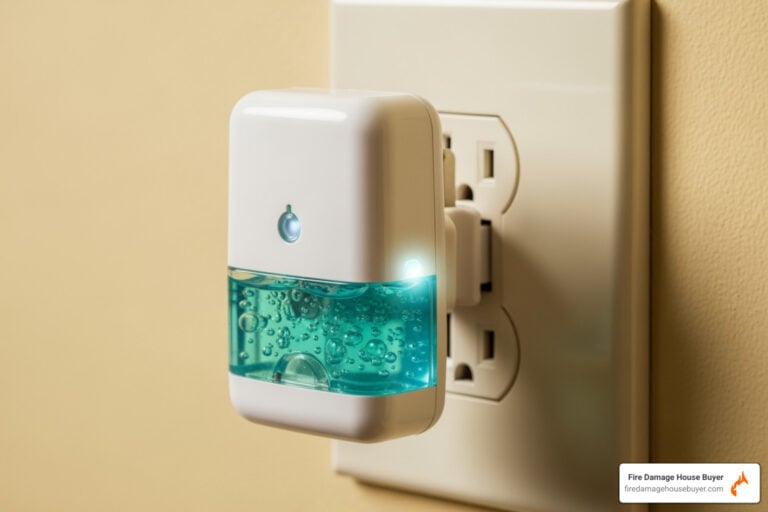
Why Homeowners Are Asking If Plug-In Air Fresheners Are Safe
Are plug in air fresheners safe? While designed for everyday use, they pose significant health and safety risks that homeowners—especially those recovering from a fire—must understand. These devices release Volatile Organic Compounds (VOCs), phthalates, and formaldehyde, which can trigger respiratory issues, worsen asthma, and pose long-term health concerns. Furthermore, overheating units and flammable oils create serious fire hazards, a critical concern in homes with wiring potentially damaged by a previous fire.
If you’ve experienced a house fire, the lingering smoke smell is overwhelming, making a quick fix like a plug-in air freshener tempting. But these devices don’t eliminate odors; they mask them by introducing a chemical cocktail into your air. This can worsen air quality, trigger health problems, and create new fire risks in an already vulnerable home.
Research highlights the widespread use and risk: 73% of Americans use air fresheners weekly, and one study found 86% of tested air fresheners contained phthalates, chemicals linked to hormone disruption. Another study of 2,000 pregnant women showed a link between plug-in use and a higher likelihood of babies with serious lung infections.
For families recovering from a fire, these risks are amplified by damaged electrical outlets and compromised air quality. While you might think you’re improving your home’s atmosphere, you could be adding to the problem. The cost to restore a fire-damaged home already ranges from $10,000 to $50,000 or more. Adding the risks of air fresheners only complicates an already stressful recovery.
My name is Daniel Cabrera, and at Fire Damage House Buyer, I’ve spent 15 years helping families steer the aftermath of house fires. I’ve seen how seemingly harmless products can create hidden dangers, making the question “are plug in air fresheners safe” a crucial one for those trying to restore their homes and lives.
What’s Really Inside Your Plug-In Air Freshener?
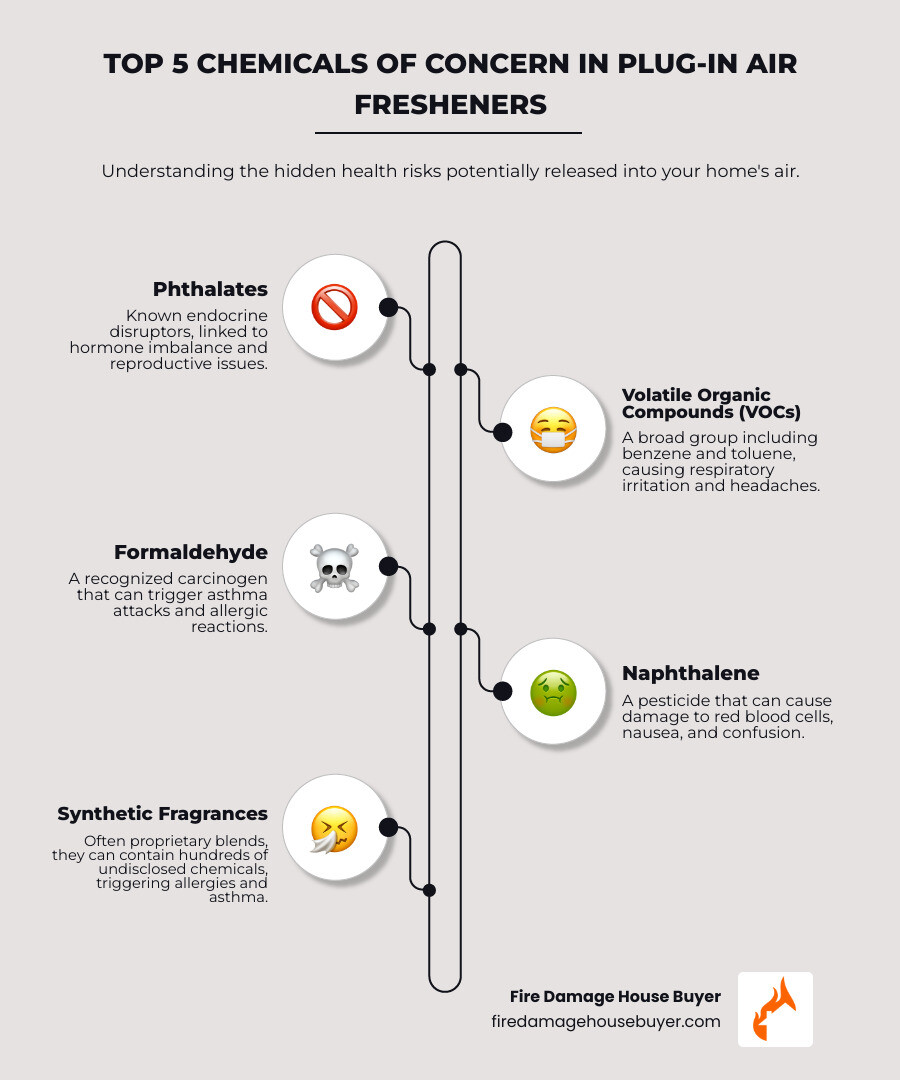
When you use a plug-in air freshener, you’re releasing a complex chemical cocktail. Understanding what’s inside is key to answering: are plug in air fresheners safe?
What are the primary ingredients and their functions?
Plug-ins contain fragrance oils (synthetic chemical mixtures), solvents like ethanol that carry the scent and release volatile organic compounds (VOCs), and a heat-activated wick. An electrical element warms the wick, causing a continuous evaporation of chemicals into your air.
Are there known carcinogens or endocrine disruptors?
Yes. Phthalates are used to make scents last longer, and the Natural Resources Defense Council (NRDC) found them in 86% of tested air fresheners, even when unlisted. Phthalates are endocrine disruptors linked to reproductive and developmental issues. Formaldehyde, a known carcinogen, is also often present, along with other offenders like Benzene and naphthalene. The problem is that the word “fragrance” on a label can hide dozens of these undisclosed, harmful compounds.
How do plug-ins work compared to other air freshener types?
Unlike sprays, plug-in air fresheners use heat for a continuous release of chemicals. This constant, low-level exposure is uniquely risky, especially in a home recovering from fire damage where air quality is poor and electrical systems may be stressed. For homeowners facing restoration costs of $10,000 to $50,000 or more, adding more pollutants is a step backward. Selling your home as-is may be a safer, more practical fresh start.
The Hidden Health & Safety Risks of Plug-In Fresheners
We all want our homes to smell fresh and inviting, especially after dealing with smoke and odors from a fire. But the convenience of plug-in air fresheners comes with a hidden cost to our health and safety. These devices don’t just add a scent—they actively release chemicals into your indoor air, a major concern especially after a fire has already compromised your home’s environment.
What are the potential health risks from inhalation?
Breathing in synthetic fragrances means inhaling a chemical cocktail that can cause immediate and long-term problems.
Respiratory irritation and worsening asthma are common. The Volatile Organic Compounds (VOCs) in air fresheners can trigger asthma attacks and irritate airways. Dr. Bruce Jarnot, a Board Certified Toxicologist, specifically warns that plug-ins pose risks to “sensitive individuals, including asthmatics.” Many people also experience allergic reactions, headaches, nausea, and dizziness.
The most concerning are the long-term exposure effects. While research is ongoing, prolonged exposure to these chemicals may affect hormone balance and heart function. Ryan Marino, a Medical Toxicologist and MD, warns that some ingredients can be toxic, though the “full extent of air freshener use on human health is not fully understood.” For a home already dealing with smoke particles, adding more chemical irritants is a significant health risk.
Are plug-in air fresheners safe for children and pets?
If you have kids or pets at home, the question are plug in air fresheners safe becomes even more urgent. Children and pets face greater risks from these products for several reasons that many homeowners don’t consider.
Both children and pets breathe closer to the floor, where heavier chemical particles concentrate, leading to higher exposure. Their developing respiratory systems are more sensitive to these irritants. A study even linked plug-in use during pregnancy to a higher rate of serious lung infections in babies.
Accidental ingestion is another serious danger. Curious children or pets may swallow liquid refills or evaporating beads, which can be highly toxic. Even skin contact can cause irritation or allergic reactions. If you suspect poisoning, immediately use the webPOISONCONTROL online tool for help or call Poison Control at 1-800-222-1222.
Can plug-in air fresheners cause a fire?
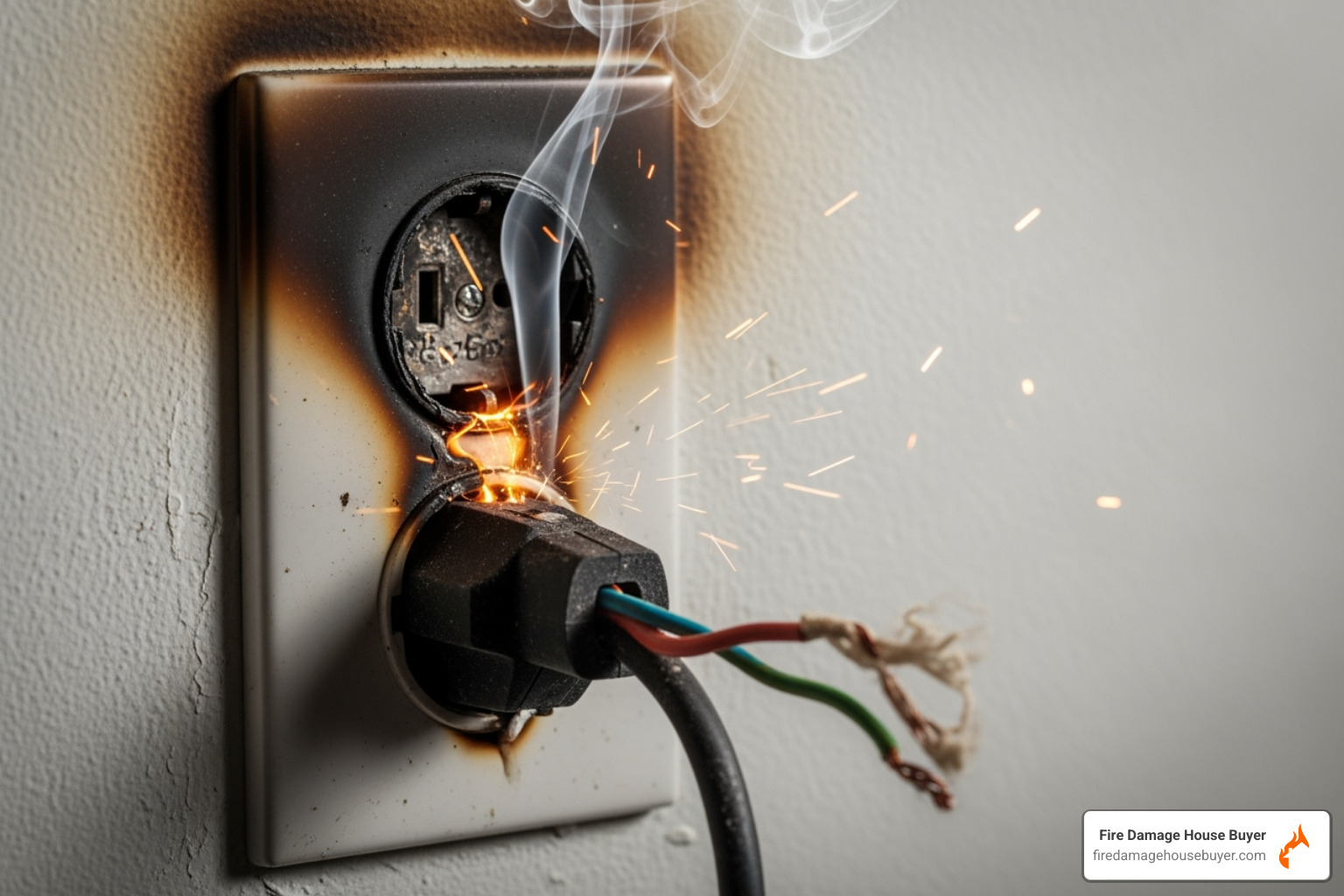
Yes, plug-in air fresheners can and do cause fires. This is a documented hazard that is especially dangerous in homes that have already experienced fire damage.
Overheating units are the main cause. The device heats flammable fragrance oil 24/7, and a malfunction can cause the plastic to melt or the oil to ignite. Electrical malfunctions in the device or the wall outlet add to the risk. This is a major concern in homes where a previous fire may have caused hidden damage to the electrical system.
The fragrance oils themselves are flammable, acting as fuel. A Texas family’s house fire was believed to be caused by an overheating plug-in, leading to extensive destruction. Statistics show that from 2010 to 2021, plug-in air fresheners caused approximately 1,900 house fires in the United States, averaging about 173 fires per year.
For homeowners already facing the stress and expense of fire restoration—which often costs $10,000 to $50,000 or more—the risk of starting another fire with an air freshener is one you can’t afford to take. The Consumer Product Safety Commission has issued warnings about these products for good reason.
So, are plug-in air fresheners safe to use?
After everything we’ve covered about chemicals, health risks, and fire hazards, you might be waiting for a simple yes or no answer to the question: are plug in air fresheners safe? Here’s the honest truth: not entirely, and they carry significant risks that every homeowner should understand.
This is especially important if you’re recovering from a fire. You’re already dealing with damaged structures, compromised air quality, and the stress of deciding what comes next. The last thing you need is to unknowingly introduce more hazards into your home while trying to make it feel livable again.

What do regulatory bodies say about air freshener safety?
Government oversight of air fresheners is surprisingly loose. The biggest issue is the “fragrance” loophole, which allows companies to hide dozens of chemicals—including potential carcinogens and endocrine disruptors—under the single ingredient “fragrance.” These proprietary blends are protected as trade secrets.
While the Consumer Product Safety Commission (CPSC) has issued warnings about high phthalate levels and the EPA has noted concerns about VOCs, there is no pre-market approval required for most chemicals in these products. This lack of regulation is concerning for any consumer, but especially for those managing the complex and costly restoration of a fire-damaged home, which can run from $10,000 to $50,000 or more.
How can consumers identify potentially harmful products?
With limited labeling, identifying harmful products is difficult. The best approach is to look for transparency. Choose brands that voluntarily disclose all their ingredients. Avoid products with vague terms like “fragrance” or “parfum.” While looking for “phthalate-free” labels and third-party certifications can help, even these aren’t a guarantee of complete safety, as an NRDC study found phthalates in 86% of tested products, even when unlisted. This research takes time you may not have while dealing with fire damage, which is why many find that selling their fire-damaged house is a more practical choice.
Are ‘all-natural’ or ‘organic’ options truly safer?
This is where marketing gets tricky. You’d think that products labeled “all-natural” or “organic” would be safer alternatives, but that’s not always the case. In fact, these labels can sometimes be more misleading than helpful.
“Natural” doesn’t mean “safe.” Companies often practice what’s called “greenwashing”—adding one or two natural ingredients to an otherwise synthetic formula and then marketing the product as natural or organic. Dr. Bruce Jarnot, a Board Certified Toxicologist, specifically cautions against being swayed by “all-natural” marketing claims. He notes that even these products can contain unlisted carcinogenic ingredients that pose risks to sensitive individuals.
Essential oils present their own risks. Yes, they come from plants, but that doesn’t make them harmless. Many essential oils can be toxic if ingested, cause skin irritation, or trigger respiratory problems in people with asthma or allergies. Ryan Marino, MD, a Medical Toxicologist, warns that consumers should remain skeptical of all air freshener products, regardless of how they’re marketed, because the full extent of their health effects isn’t fully understood.
For pets, essential oils can be particularly dangerous. Cats, for example, lack certain liver enzymes needed to metabolize many essential oils, making even small exposures potentially toxic. Dogs and birds can also suffer respiratory distress from concentrated essential oil vapors.
The bottom line? Approach all air freshener marketing with healthy skepticism. Whether a product claims to be synthetic or natural, prioritize those with complete ingredient transparency. And remember that no air freshener—natural or otherwise—actually eliminates the source of odors. They only mask them.
If you’re dealing with persistent smoke smell after a fire, masking it with any air freshener is a temporary fix at best. The smoke particles are still embedded in your walls, carpets, and ductwork. Professional restoration can address these issues, but it’s expensive and time-consuming. For many homeowners, the simpler path is to sell their fire-damaged house and move forward without the hassle and health risks of a lengthy restoration process.
Safer Ways to Restore Your Home’s Air After a Fire
After a house fire, the desire to rid your home of smoke odor is completely understandable. But instead of masking smells with potentially harmful chemicals, our focus should always be on eliminating odors and restoring true air quality. This is especially important when considering the extensive cleanup and potential renovation costs, which can range from $10,000 to $50,000 or more. Adding new chemical pollutants to a damaged environment can hinder recovery and add to the health burden.

How can you naturally improve your home’s scent after a fire?
The healthiest approach to a fresh-smelling home involves addressing the root cause of odors. When homeowners ask are plug in air fresheners safe for post-fire recovery, the real question should be: why mask a problem when you can solve it?
Start by removing the source of odors. This is paramount. After a fire, this means thoroughly cleaning or removing all smoke-damaged items. For everyday odors, it means cleaning pet messes, emptying garbage, and promptly dealing with dampness. Air fresheners only cover up the problem, letting the source continue to fester and potentially worsen over time.
Baking soda and white vinegar are your best friends here. Place open dishes of baking soda around rooms to absorb odors naturally. Sprinkle it on carpets and upholstery, let it sit for a few hours, then vacuum it up. You can even keep an open box in your refrigerator. For surfaces, boil a pot of water with white vinegar to naturally deodorize the air. Use a vinegar-water solution to wipe down counters, walls, and floors. These simple household staples work wonders without introducing harmful chemicals.
Proper ventilation is non-negotiable. Open windows daily for at least 15-30 minutes to circulate fresh air and flush out indoor pollutants. Use exhaust fans in kitchens and bathrooms. This simple act drastically improves indoor air quality and costs nothing. In a fire-damaged home, where air quality is already compromised, this becomes even more critical.
If you still want a pleasant scent in your home, consider genuinely safer alternatives. Potpourri bowls with dried fruits and spices, fresh flowers, or dried lavender can provide natural fragrance without the chemical cocktail. Some homeowners find success with high-quality soy candles that have natural fragrances and 100% cotton wicks, though these should be used occasionally and with caution.
Professional remediation becomes necessary when odors persist. If you’ve cleaned thoroughly and smoke smells remain, it’s a sign that the source hasn’t been fully removed. Masking musty odors with air fresheners could prevent you from detecting mold or other serious issues that require expert intervention. This is when professional cleaning up after a house fire services become essential.
What’s the best way to remove persistent smoke odor?
Persistent smoke odor after a fire is one of the toughest challenges homeowners face, and it’s certainly not something an air freshener can fix. Smoke particles are microscopic and penetrate nearly every surface, requiring a multi-faceted approach that goes far beyond what any consumer product can offer.
The first step is addressing the source, which means removing all fire-damaged materials. This includes drywall, insulation, carpets, and furnishings that are unsalvageable. Every affected surface needs to be cleaned with specialized techniques. Professional cleaning services use equipment like ozone treatments, thermal fogging, or hydroxyl generators, which neutralize odor molecules rather than just covering them up.
Your HVAC system must be thoroughly inspected and cleaned, as it can harbor smoke particles and circulate odors throughout the home for months or even years. Many homeowners don’t realize that their heating and cooling system can become a distribution network for smoke smell, undoing all their other cleanup efforts.
After cleaning, some surfaces may need to be sealed with odor-blocking primers to prevent residual smoke odors from leaching through. This is specialized work that requires knowledge of which products work best on different materials.
The limits of air fresheners for post-fire odor are clear: they are utterly ineffective and can introduce additional health risks without solving the core problem. True odor removal requires diligent cleanup and, often, professional restoration. Our complete house fire damage restoration guide offers detailed steps on how to approach this complex process.
For many homeowners, the reality of what it takes to properly remove smoke odor becomes overwhelming. Between the cost, the time, and the uncertainty of whether you’ll ever truly eliminate the smell, it’s worth considering whether restoration is the right path. Sometimes the simplest solution is to Sell Fire Damaged House as-is and start fresh elsewhere, without the burden of endless cleaning and the temptation to rely on quick fixes like air fresheners that ultimately do more harm than good.
Frequently Asked Questions about Plug-In Air Freshener Safety
Can plug-in air fresheners cause cancer?
While no study offers a conclusive link, the presence of known carcinogens is a major concern. Plug-ins can emit formaldehyde and benzene (human carcinogens) and often contain phthalates (linked to hormone disruption and potential cancer risks). The primary worry is long-term, continuous exposure from devices running 24/7. Health experts often recommend the precautionary principle: why take the risk when safer alternatives exist?
Are plug-in air fresheners safe for pets like dogs and cats?
No, plug-in air fresheners are generally not considered safe for pets. Animals are more vulnerable due to their smaller size and sensitive respiratory systems. Phenols, common in air fresheners, can cause liver damage in cats. Even “natural” essential oils can be toxic to pets, and birds are at even greater risk. There’s also the danger of accidental ingestion. If you suspect pet poisoning, contact your vet or the ASPCA Animal Poison Control Center immediately.
Can you leave a plug-in air freshener on all the time?
Leaving a plug-in on 24/7 is not recommended due to fire risk. These devices continuously heat flammable oils, and overheating can cause a fire. An estimated 173 house fires per year in the United States are linked to these devices, a risk multiplied in homes with fire-compromised electrical systems. Manufacturers even suggest replacing the base unit every 12 months. For safety, unplug them when you’re away or asleep. Given the risks, especially in a post-fire home facing restoration costs of $10,000 to $50,000 or more, selling your fire-damaged house as-is is often a safer, more practical solution.
Conclusion
The question of are plug in air fresheners safe reveals a complex picture. While they offer a convenient way to mask odors, they introduce a host of chemicals into our indoor environments, posing potential health risks to us, our children, and our pets. Beyond the chemical exposure, the fire hazards associated with overheating units are a very real concern, particularly in homes that have experienced fire damage where electrical systems may be vulnerable.
For homeowners dealing with the aftermath of a fire, the challenge of lingering odors is immense. It’s tempting to seek quick fixes, but masking odors with plug-in air fresheners is counterproductive. It not only fails to eliminate the source of the smoke smell but also introduces new pollutants and fire risks into a home already in recovery.
The path to a truly fresh and safe home after a fire involves diligent cleaning, professional restoration, and often, significant investment in repairs. The complexity and cost of full restoration—ranging from $10,000 to $50,000 or more—can be overwhelming. We understand the emotional and financial toll that fire damage takes.
If you’re facing this difficult situation, you have options. Instead of pouring money and effort into a lengthy and stressful restoration process, selling your fire-damaged house “as is” for cash may be the best solution. We specialize in helping homeowners like you steer this process, offering a fast, hassle-free sale without the need for repairs, commissions, or endless showings. We buy houses in any condition, anywhere in the country, from Alabama to Wyoming.
Let us help you move forward. Learn how to sell a fire-damaged house today.