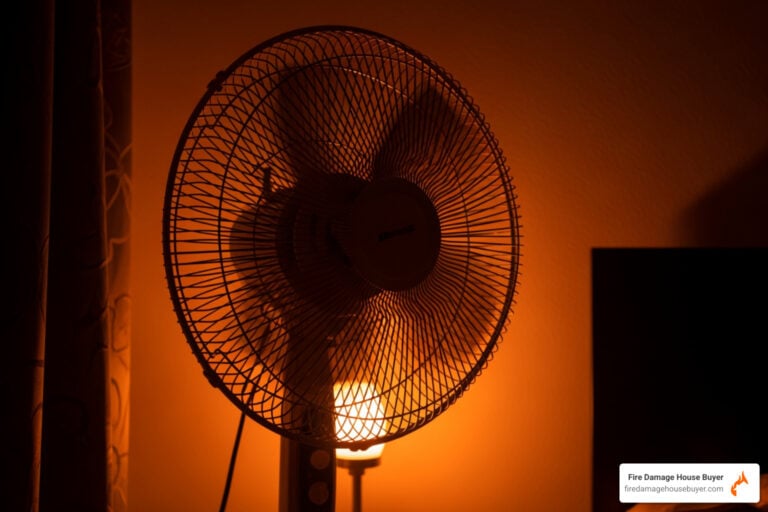
The Hidden Fire Hazard Lurking in Your Home
Can leaving a fan on all night cause a fire? Yes, it can—though the risk is relatively low with modern, well-maintained fans. The primary dangers stem from motor overheating, electrical faults, and dust accumulation. According to Consumer Product Safety Commission data, an estimated 2,200 house fires per year in the United States are caused by electric fans, leading to hundreds of injuries and millions in property damage.
Quick Answer: Key Risk Factors
- Motor Overheating – Stalled blades, blocked vents, or continuous operation
- Electrical Faults – Frayed power cords, loose connections, or short circuits
- Dust & Lint Buildup – Debris restricting motor ventilation and acting as fuel
- Poor Placement – Fans near curtains or surrounded by combustible materials
- Age & Maintenance – Older fans (10+ years) or neglected units
A malfunctioning fan can spark a devastating house fire while a family sleeps, a stark reminder of an often-overlooked safety concern. While fans are common, especially overnight during summer, older data highlights their potential danger. Between 1990 and 1998, portable electric fans were linked to approximately 4,500 residential structure fires, causing over 20 deaths and about $55 million in property loss.
The good news? Most fan-related fires are entirely preventable with a basic understanding of how they occur and a few simple safety checks. Knowing what to look for can mean the difference between a restful night’s sleep and a catastrophic fire.
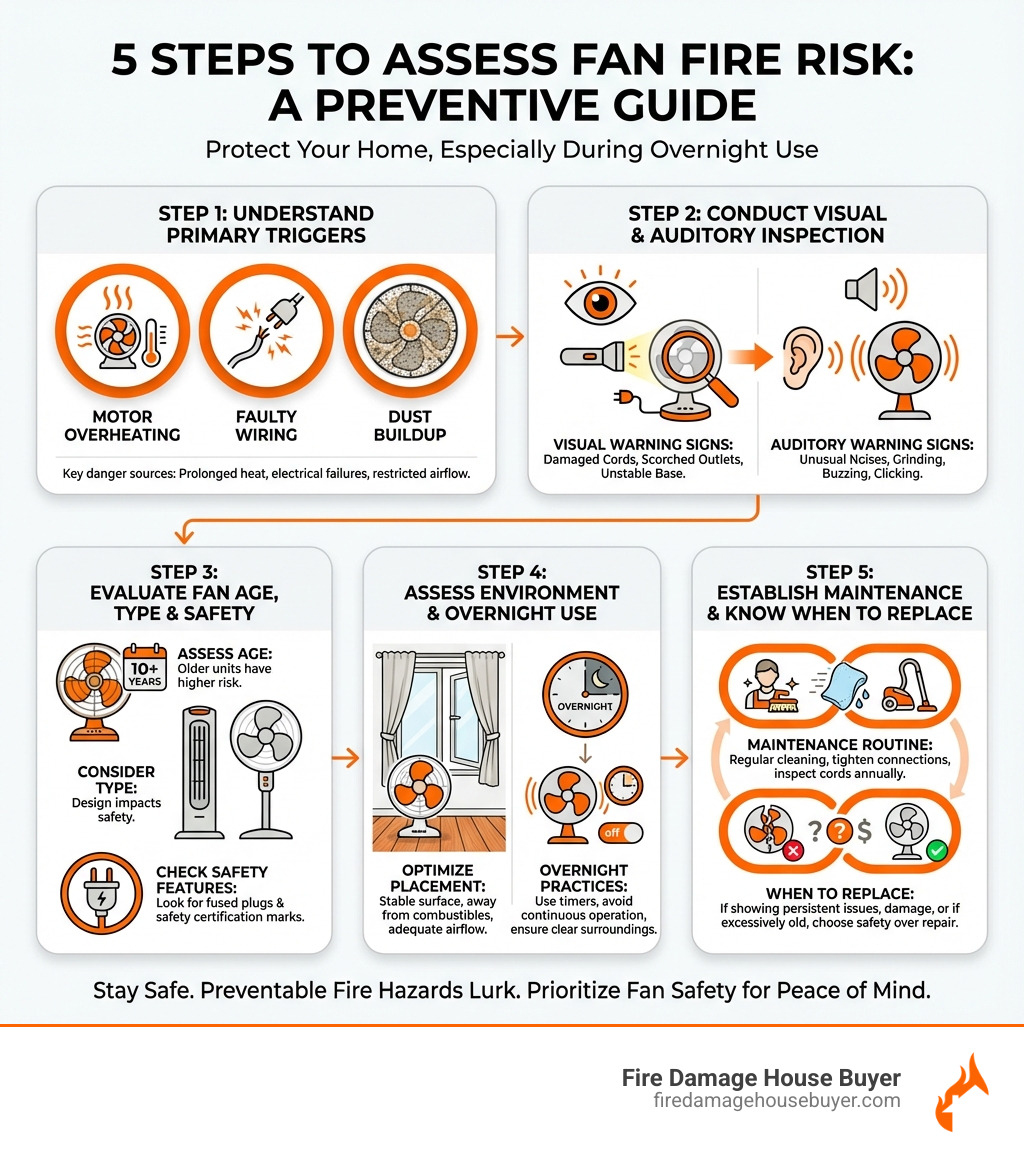
This guide walks you through five straightforward steps to assess your fan’s fire risk. We’ll cover failure modes, visual inspections, fan types, environmental factors, and maintenance routines. You’ll learn to spot warning signs, decide when to replace a fan, and use them safely overnight.
I’m Daniel Cabrera. With 15 years of experience buying and selling fire-damaged properties, I’ve seen minor appliance risks lead to major disasters. I’ve witnessed cases where can leaving a fan on all night cause a fire became a harsh reality for families. My goal is to help you prevent that.
We recommend reading the following articles if you want a deep down into some specific topics:
Step 1: Understand the Primary Fire Triggers in Electric Fans
When we ask if can leaving a fan on all night cause a fire, it’s crucial to understand how these devices become hazards. The main causes are motor overheating, electrical faults, and dust accumulation. These issues can significantly increase fire risk, as highlighted by CPSC data showing 2,200 house fires per year in the United States are caused by electric fans. For a broader look at home fire sources, see our guide on what causes house fires.
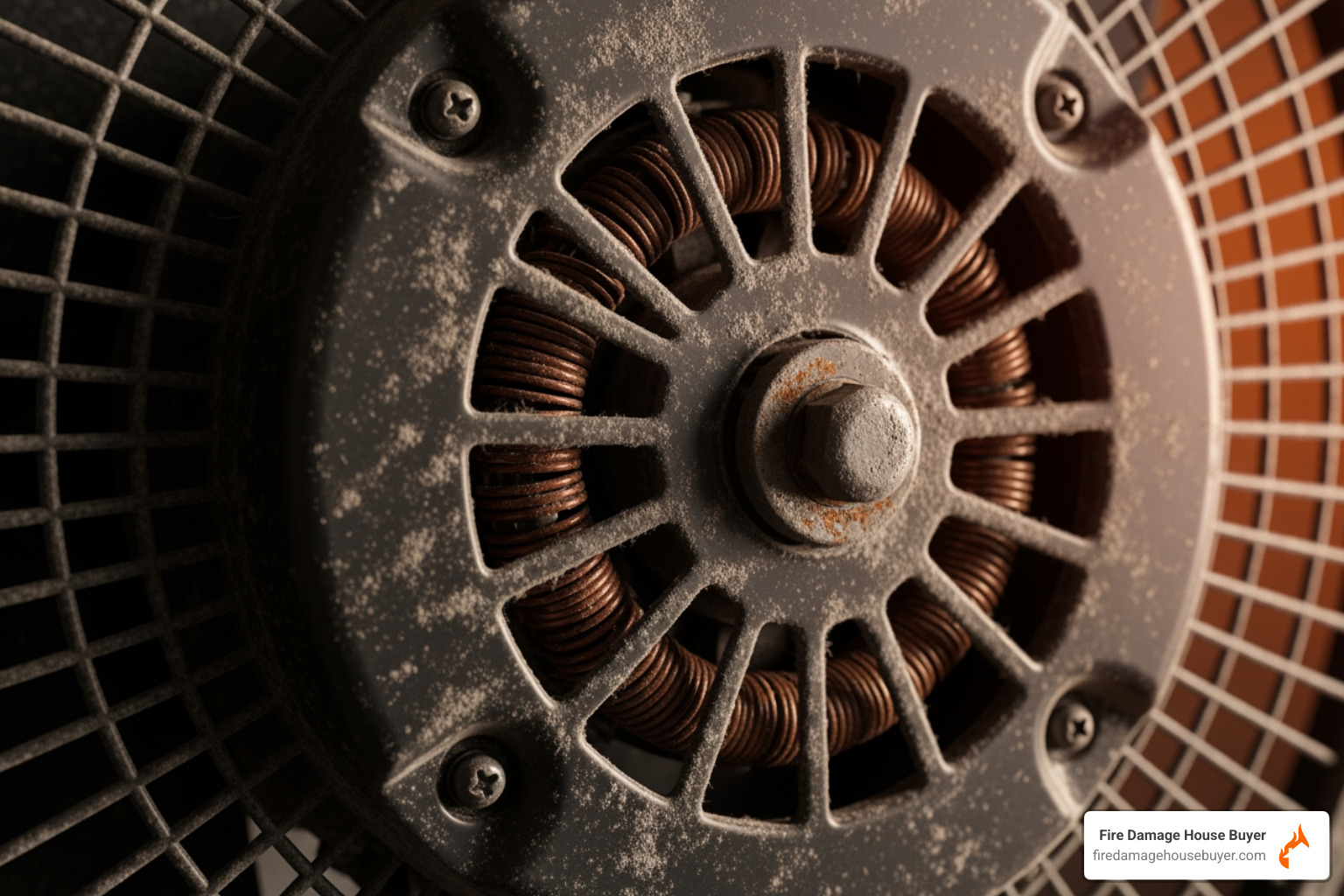
How Fan Motors Overheat and Ignite
A fan’s motor generates heat during operation. Normally, this heat dissipates safely, but several factors can lead to dangerous overheating:
- Motor Restriction: Obstructed blades (by curtains, bedding) or a seized motor force it to work harder, generating excessive heat.
- Blocked Air Vents: Vents clogged with dust and lint trap heat inside the motor housing, causing it to build up to dangerous levels.
- Continuous Operation: Prolonged use, especially for older models, wears down components and can lead to overheating. As fire officials note, fans are “not made to run 24/7.”
- Combustible Dust: Accumulated dust and lint act as fuel. If the motor gets hot enough, this debris can ignite.
- Plastic Casing: Overheating can ignite internal dust, causing the plastic casing to melt and drip, spreading the fire.
These motor-related incidents are a significant contributor to fan fires, as detailed in reports like the Data on fan-related fires from the CPSC.
The Dangers of Faulty Wiring and Power Cords
Beyond the motor, a fan’s electrical components are another common fire source. Faulty wiring and damaged power cords are responsible for many electrical fires.
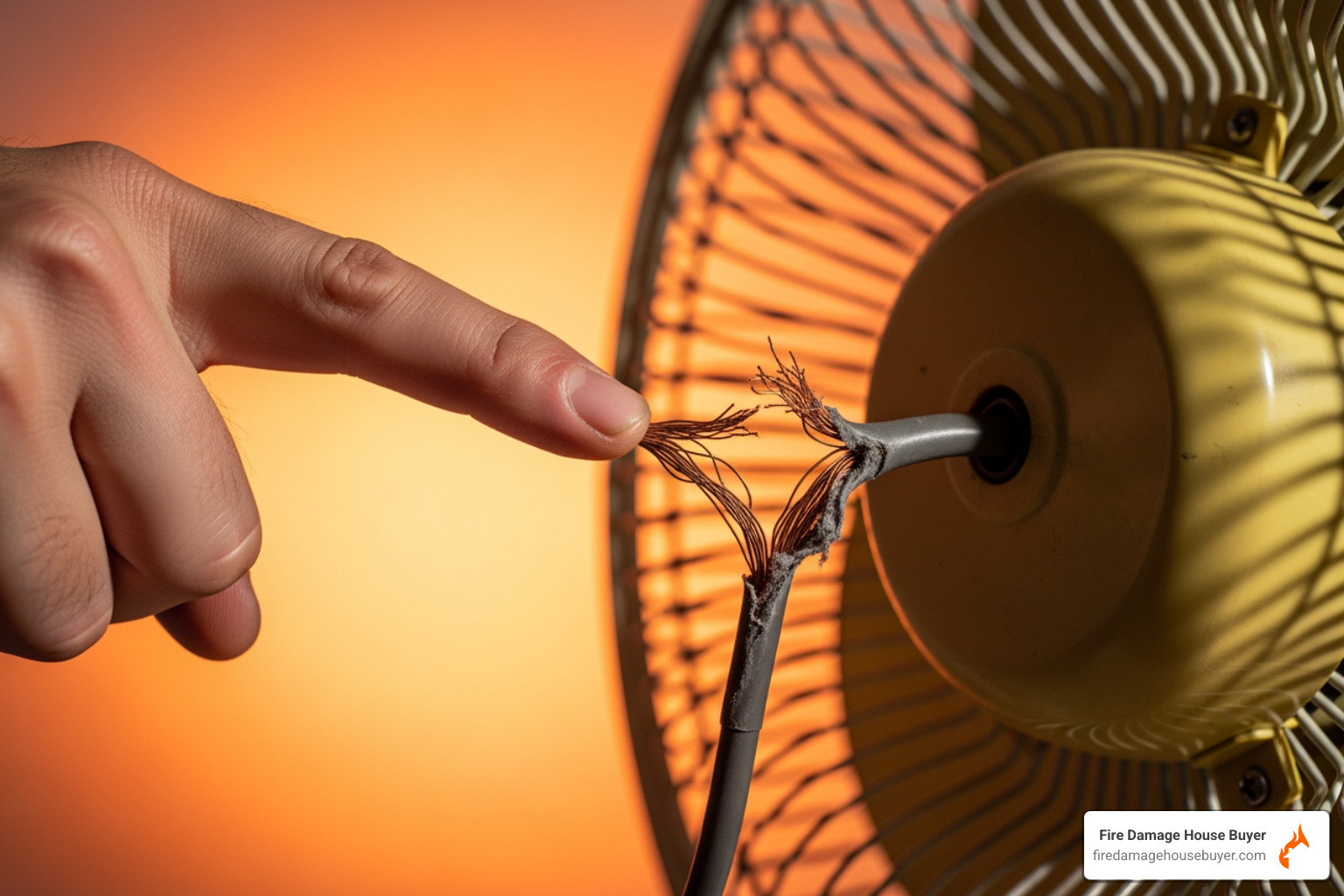
- Frayed Insulation and Damaged Plugs: Frayed or cracked cords expose live wires that can short circuit or arc. Damaged plugs or burn marks also signal dangerous electrical issues.
- Internal Shorts: Wear and tear or manufacturing defects can cause short circuits within the fan’s internal wiring, creating intense heat.
- Overloaded Circuits: Plugging a fan into an already overloaded circuit can cause wiring to overheat, creating a fire risk.
- Extension Cord Risks: Using improper or damaged extension cords is hazardous. They can overheat if not rated for the fan’s power draw.
- Power Cord Deterioration from Oscillation: The constant movement of oscillating fans can wear down the power cord over time, leading to insulation breakdown and shorts.
- Electrical Arcing: Loose connections or damaged wiring can cause electricity to jump across a gap, generating extreme heat that can ignite nearby materials.
Step 2: Conduct a Visual and Auditory Inspection for Warning Signs
Many fan-related fire hazards provide warning signs before they escalate. Knowing what to look, feel, listen, and smell for is key to preventing a disaster.
What to Look and Feel For
A quick inspection can reveal a lot about your fan’s health. Check these points:
- Cord and Plug: Inspect the entire power cord for frays, cracks, or exposed wires. Check the plug for burn marks, discoloration, or melting, which indicate overheating.
- Fan Housing: Look for any discoloration, melting, or warping on the plastic casing, especially around the motor. This is a clear sign of internal heat problems.
- Blades and Base: Ensure the blades are secure and don’t wobble excessively, as this strains the motor. The base should be stable to prevent tipping.
- Dust Buildup: Check the motor housing and vents for significant dust and lint accumulation, which blocks airflow and causes overheating.
- Flickering Lights: Notice if lights in the room flicker when the fan is turned on, as this can signal a wiring issue.
What to Listen and Smell For
Your nose and ears are excellent safety tools. Pay attention to:
- Grinding or Scraping Noises: These sounds can indicate worn-out bearings or obstructed blades, which generate friction and heat.
- Loud Humming or Buzzing: An unusually loud hum or buzz, beyond the normal operating sound, can signal an electrical fault in the motor.
- Burning Smells: Any smell of burning rubber, plastic, or an acrid odor is a critical sign of an overheating motor. Unplug the fan immediately.
- Electrical or Ozone Smell: A sharp, metallic smell can indicate dangerous electrical arcing or a short circuit.
If you notice any of these warning signs, unplug the fan right away and stop using it. Do not attempt to use it again until it has been replaced. Ignoring these signals can have severe consequences. For information on what to do after a fire, our guide on being safe to stay after fire can be helpful.
Step 3: Evaluate Your Fan’s Age, Type, and Safety Features
Not all fans are created equal; their fire risk varies based on age, design, and safety features. Understanding these differences helps identify which fans are more prone to causing fires and what safety features to look for.
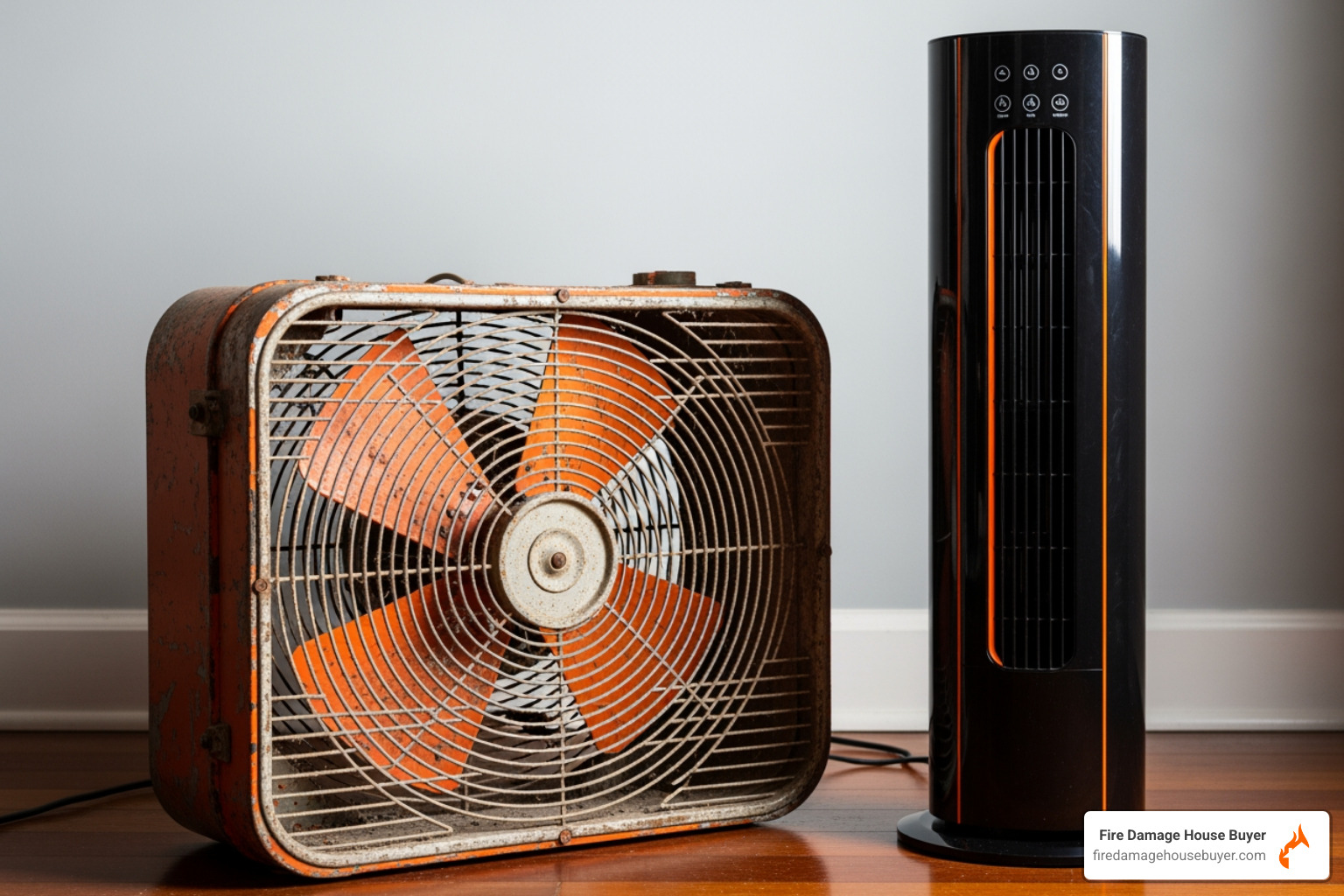
Are Older Fans More Dangerous Than Newer Models?
When it comes to fans, age is a significant risk factor. Generally, older fans are more dangerous for several reasons:
- Wear and Tear: Over years of use, internal components like motor bearings and wiring insulation degrade, increasing the likelihood of electrical faults.
- Degraded Wiring: Insulation on older wiring can become brittle and crack, exposing live wires and increasing short circuit risk.
- Lack of Modern Safety Features: Older fans typically lack thermal cutoff fuses or flame-retardant materials found in contemporary models.
- Material Fatigue: Plastic components in older fans can become brittle and less heat-resistant, making them more likely to melt and spread fire.
- Average Fan Lifespan: The average life expectancy of an electric fan is about 10-15 years. Beyond this, the risk of component failure rises significantly.
Modern fans are designed with superior safety engineering, including automated thermal cutoffs and flame-resistant materials, making them inherently safer than very old models. While a new fan isn’t immune to issues, it generally presents a lower risk.
[TABLE] Comparing Fire Risks by Fan Type
Different fan types have unique characteristics that influence their fire risk:
| Fan Type | Primary Fire Risks | Key Safety Considerations |
|---|---|---|
| Box Fan | Motor overheating from being placed on carpet/bedding; Plastic housing can melt and spread fire. | Always place on a hard, stable surface; Keep vents clear. Check for UL or ETL certification. |
| Pedestal Fan | Tipping over; Power cord damage from oscillation; Dust on exposed motor. | Ensure a stable, heavy base; Check cord for wear at pivot points; Position cord away from traffic. |
| Tower Fan | Internal electrical faults; More difficult to clean, leading to dust buildup; Often have smaller motors that can overheat faster if obstructed. | Purchase reputable brands; Follow manufacturer’s cleaning instructions; Ensure vents are clear. |
| Ceiling Fan | Faulty installation wiring; Motor overheating from continuous use; Wobbling can stress connections; Electrical arcing in junction boxes. | Professional installation is critical; Balance blades regularly; Inspect wiring connections in the ceiling periodically. |
When buying a new fan, look for safety certifications like UL (Underwriters Laboratories) or ETL (Electrical Testing Laboratories). These marks validate safety elements like component quality and fire-resistant materials. Modern fans often include:
- Thermal Protection Systems: Automatically shut off the fan if the motor overheats.
- Automatic Shut-off Capabilities: Timers or tip-over switches turn off the unit under certain conditions.
- Thermally Protected Motors: Built with integrated protection against excessive heat.
- Smart Technology Integration: Sensors can monitor performance and allow for automated scheduling to reduce prolonged, unsupervised operation.
Investing in a quality fan from a reputable brand with these features is a smart move for improved safety.
Step 4: Assess Your Environment and Answer: Can Leaving a Fan On All Night Cause a Fire?
Now, let’s address the elephant in the room: can leaving a fan on all night cause a fire? The answer is nuanced, but largely depends on the fan itself and the environment it’s in. While a modern, well-maintained fan running in an ideal setting poses a low risk, certain environmental factors and usage habits can dramatically increase the danger.
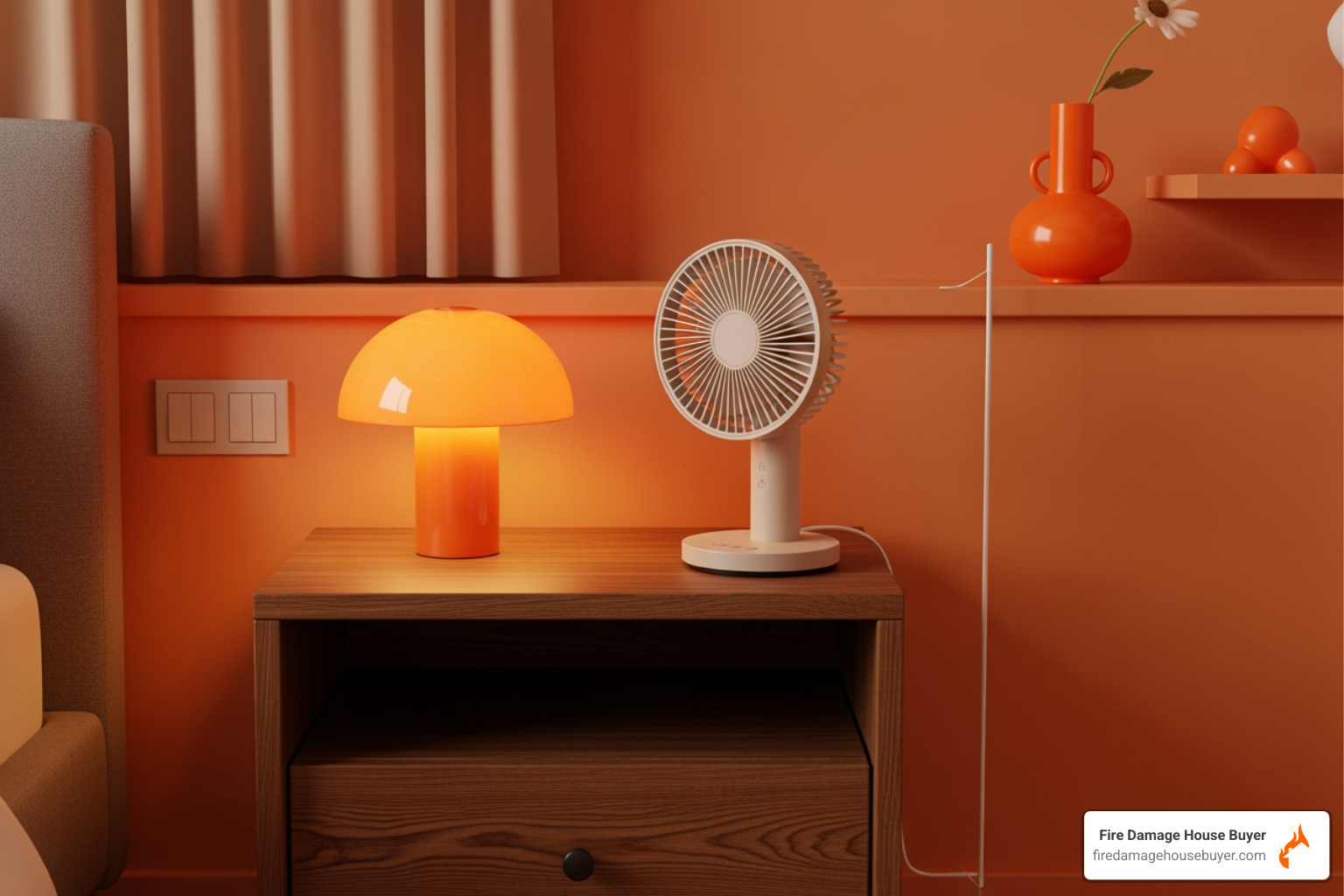
Best Practices for Using Fans Safely, Especially Overnight
We understand the desire for a cool breeze during those long, hot nights. Here’s how we can minimize the risk:
- Stable Surface Placement: Always place your fan on a flat, stable surface where it cannot easily be knocked over. This prevents damage to the fan and ensures its blades won’t be obstructed if it falls.
- 3-Foot Clearance Rule: Keep fans at least three feet away from all combustible materials such as curtains, bedding, clothes, paper, and furniture. This distance helps prevent ignition if the fan overheats or sparks.
- Avoiding Curtains and Bedding: For window fans or fans placed near beds, ensure curtains or bedding cannot get caught in the blades, which can cause the motor to stall and overheat.
- Plugging Directly into a Wall Outlet: Whenever possible, plug your fan directly into a wall outlet. Avoid overloading power sockets.
- Never Using Extension Cords for Fans: This is a crucial one. We strongly advise against using extension cords or power strips for fans, especially older, high-wattage models, as they can overheat and cause fires. If an extension cord is absolutely unavoidable, ensure it is heavy-duty, rated for the fan’s power draw, and used only temporarily.
- Giving the Fan a Rest: While modern fans are robust, continuous operation for many days or months without a break can reduce their overall lifetime and increase wear. If you can, turn off the fan when you leave the room or when temperatures cool down. Using a timer can also help manage usage and reduce energy costs, impacting energy efficiency.
- Health Considerations: Beyond fire safety, continuous fan use overnight can sometimes lead to dry eyes, throat, and nasal passages due to increased air circulation and reduced moisture. For those with allergies, fans can also circulate dust mites and other allergens. Consider using a humidifier if dryness is an issue, and keep your fan clean to minimize circulating dust.
How Your Home’s Environment Affects Fan Safety
Your home’s specific conditions play a significant role in fan safety:
- High Humidity Risks: Fans placed in environments with high humidity levels, like bathrooms (especially exhaust fans), can experience accelerated corrosion and electrical failures. Moisture combined with dust and lint creates a particularly hazardous environment for motor overheating.
- Poor Ventilation Issues: If a fan is placed in a cramped space without adequate airflow around its motor housing, it can’t dissipate heat effectively, leading to overheating.
- Overloading a Single Circuit: If you have many electrical appliances running on the same circuit, adding a fan, especially a high-wattage one, can overload it. This can cause circuit breakers to trip or, more dangerously, lead to overheating of electrical wiring within the walls.
- Why Bedrooms are the Most Common Location for Fan Fires: CPSC data indicates that bedrooms are the location for the majority of fan-related fires. This is often due to fans being left on overnight, placed near flammable bedding or curtains, or simply being older models running for extended periods while occupants are asleep and unable to detect warning signs.
Understanding these environmental factors and applying best practices can significantly reduce the risk of a fan fire. It’s a small price to pay for peace of mind and safety, especially when we consider how hot does a house fire get and the devastation it can cause.
Step 5: Establish a Maintenance Routine and Know When to Act
Our final step in assessing fan fire risk is perhaps the most proactive: establishing a regular maintenance routine and knowing precisely what to do if your fan starts acting suspiciously. How does regular maintenance help prevent fan fires? It’s simple: by keeping components clean, functional, and free from obstructions, we drastically reduce the chances of overheating and electrical faults.
Your Simple Fan Maintenance Checklist
Think of this as your fan’s annual check-up, with frequent minor inspections in between:
- Unplug before cleaning: This is non-negotiable for electrical safety. Always unplug the fan from the wall before attempting any cleaning or inspection.
- Use compressed air for vents: Dust and lint are silent killers for fan motors. Use compressed air to blow out dust from the motor housing and vents. For bathroom exhaust fans, a thorough cleaning every three months is recommended to prevent hazardous dust and lint accumulation, especially given the moist environment.
- Wipe down blades and housing: Use a damp cloth to clean the fan blades and exterior housing. This prevents dust from being recirculated and reduces overall buildup.
- Check cord for damage monthly: Make it a habit to quickly inspect the power cord for frays, cracks, or loose connections once a month, especially if the fan is in continuous use.
- Tighten any loose screws on the base or cage: Loose parts can cause vibrations, noise, and put undue stress on the motor. A quick tighten can resolve these issues.
- Inspect for wear and tear: Look for any other signs of physical damage, such as cracks in plastic, bent grilles, or loose oscillating mechanisms.
- Consider energy-efficient models: When it’s time to replace, opting for energy-efficient fans with features like timers can help manage usage and reduce energy costs, contributing to overall safety by preventing unnecessary prolonged operation.
What to Do if You Suspect Your Fan is a Fire Risk
This is where decisive action is critical. If your fan exhibits any of the warning signs we discussed in Step 2 (burning smell, grinding noises, excessive heat, frayed cords, etc.), we need to act immediately:
- Unplug immediately: This is the first and most important step. Disconnecting power removes the immediate hazard.
- Do not attempt to repair it yourself: Unless you are a qualified electrician, do not try to fix internal wiring, motors, or power cords. Electrical components can be complex and dangerous to tamper with.
- Why replacing a fan under $50 is a better investment than risking a fire: For most portable fans, the cost of professional repair often outweighs the cost of a new, safer model. Considering the potential for property damage and personal injury, replacing a questionable fan, especially an older or inexpensive one, is a far wiser investment than risking a fire. The average cost to fix a fire-damaged house can range from thousands to hundreds of thousands of dollars, making a new fan a negligible expense in comparison. Our guide on how much does it cost to fix fire damaged house illustrates the potential financial burden.
- Discard Safely: Once unplugged and deemed unsafe, the fan should be discarded responsibly. Ensure the cord is cut to prevent accidental re-use.
By following these maintenance and action steps, we can significantly reduce the risk of a fan-related fire in our homes. And should the unthinkable happen, dealing with the aftermath of a fire, including the lingering how to get rid of fire smoke smell in house, can be an overwhelming challenge.
Frequently Asked Questions About Fan Fire Safety
Are newer fans less likely to cause fires than older models?
Yes, newer fans are generally safer. They must meet modern safety standards and often include features like thermal cutoff fuses and flame-retardant materials, which were uncommon in older models. These innovations, paired with rigorous safety certification requirements (like UL or ETL), create a marked improvement in fire prevention capabilities. However, even new fans can be a risk if used improperly, neglected, or if they have a manufacturing defect. Regular maintenance remains crucial, even with these improved safety features.
How often should I clean my fan to prevent fires?
A thorough cleaning at the beginning of the season (e.g., before summer) and a quick dusting every 1-2 weeks during heavy use is recommended. For fans in dusty environments, homes with pets, or specialized fans like bathroom exhaust units, more frequent cleaning (monthly for exhaust fans) is necessary to prevent hazardous buildup on the motor and vents. Dust and lint accumulation can restrict airflow, causing the motor to overheat, which is a leading trigger for fan-related fires.
What should I do if my fan starts making an unusual noise or smell?
Unplug it immediately and stop using it. A burning smell (like rubber or plastic) or a grinding/buzzing noise is a critical warning sign of motor failure, worn bearings, or an electrical fault. These conditions can lead to dangerous overheating and potential fire. Do not plug it back in or attempt to use it. The safest and most responsible action is to discard the fan and replace it with a new, certified model. Do not attempt to repair it yourself unless you are a qualified professional.
Conclusion: From Prevention to Recovery After a House Fire
We’ve explored the potential risks of fan usage, especially when considering “can leaving a fan on all night cause a fire.” The five steps—understanding risks, inspecting for warnings, evaluating your fan, assessing its environment, and performing maintenance—are your best defense against a fan-related fire. By being diligent with safety checks and maintenance, you can significantly reduce the chances of your fan becoming a hazard.
However, even with the most diligent precautions, accidents can happen, and the consequences of a house fire can be devastating. We’ve seen the destructive aftermath, not just of the property itself, but the emotional and financial toll it takes on homeowners.
If you’re facing the aftermath of a fire, the process of restoration and repair can be incredibly expensive, time-consuming, and stressful. Navigating insurance claims, dealing with contractors, and lengthy reconstruction is often an overwhelming burden for homeowners. The average cost to restore a fire-damaged house can range from tens of thousands to well over a hundred thousand dollars, depending on the extent of the damage. This doesn’t even account for the time and emotional stress involved.
There is a simpler path forward. Instead of facing months of uncertainty and financial strain, you can Sell Fire Damaged House as-is for a fair cash price to Fire Damage House Buyer. We handle all the complexities, offering cash purchases with no repairs needed, no commissions, and fast closing times throughout many states in the US. This allows you to move on quickly and with certainty. If you’re facing the difficult reality of a fire-damaged property, Get a no-obligation cash offer today!