Why Understanding Candle Fires Matters for Every Homeowner
Candle fires are a significant cause of residential fires, but the good news is they are almost entirely preventable. While the warm glow of a candle creates a cozy ambiance, the open flame can ignite nearby items in seconds, turning tranquility into tragedy.
The statistics are sobering. Candles cause an average of 20 home fires every day in the U.S., leading to thousands of fires, hundreds of deaths and injuries, and over $250 million in property damage annually. The top causes are simple mistakes: placing candles too close to flammable materials (60% of fires) and leaving them unattended (21%).
Bedrooms are the most common starting point for these fires, and December sees a major spike due to holiday decorations. The financial toll is devastating, with restoration costs ranging from $3,000 for minor smoke damage to over $50,000 for severe structural repairs.
Understanding these risks is the first step toward prevention. I’m Daniel Cabrera, and over my 15 years buying and selling fire-damaged properties, I’ve seen the heartbreaking impact of candle fires. Through my work with over 275 distressed properties, I’ve learned that prevention is always better—and far less expensive—than restoration.
The Sobering Reality of Home Candle Fires
According to the National Fire Protection Association (NFPA), candle fires cause an average of 74 to 165 deaths and 558 to 1,525 injuries each year. The financial impact is staggering, with annual property damage between $257 million and $470 million. Alarmingly, the injury rate for candle fires is nearly three times higher than for other home fires, making it crucial to understand the causes.
Primary Causes of Candle-Induced Fires
Most candle fires happen because of simple, preventable mistakes. Understanding the primary causes is key to avoiding them.
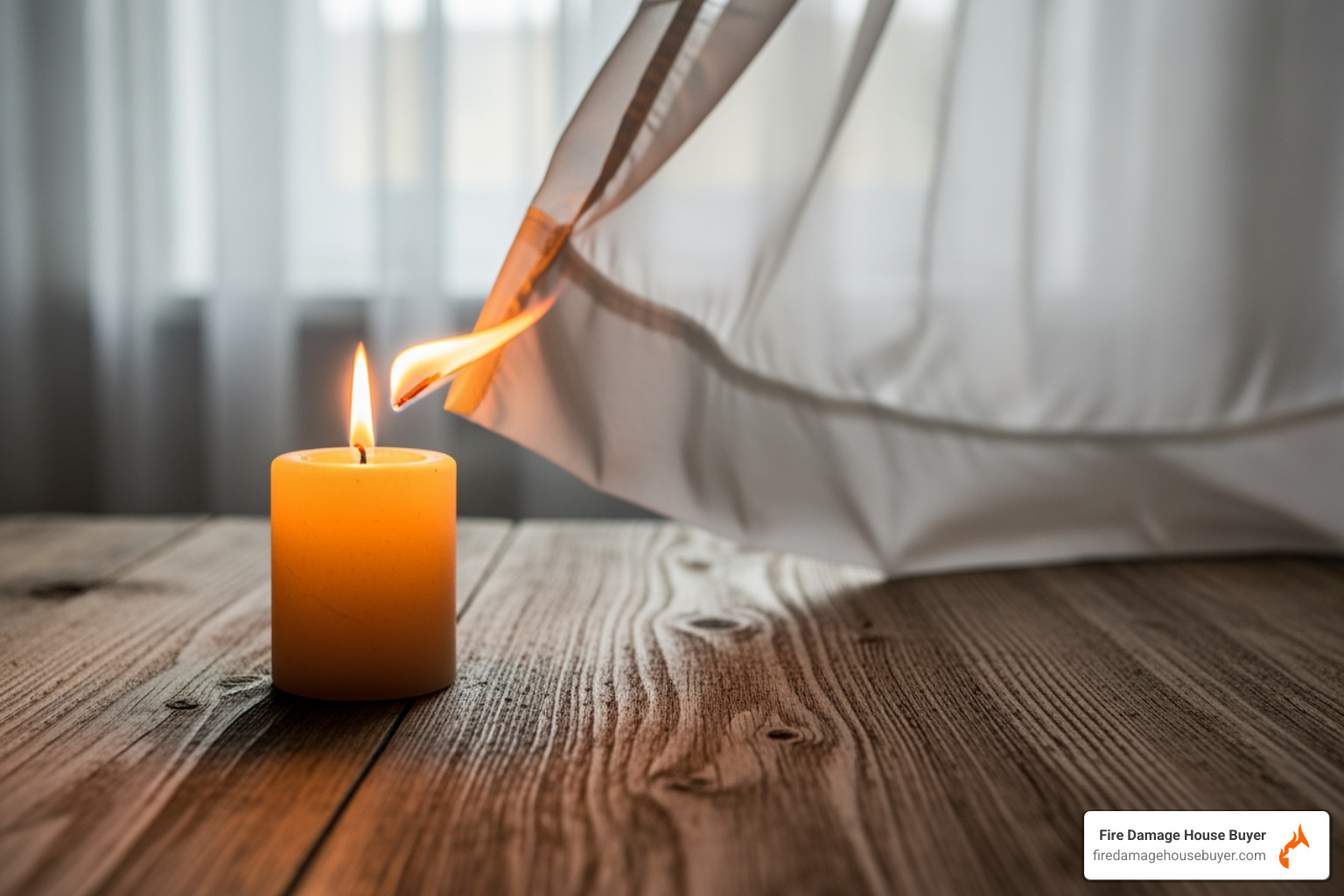
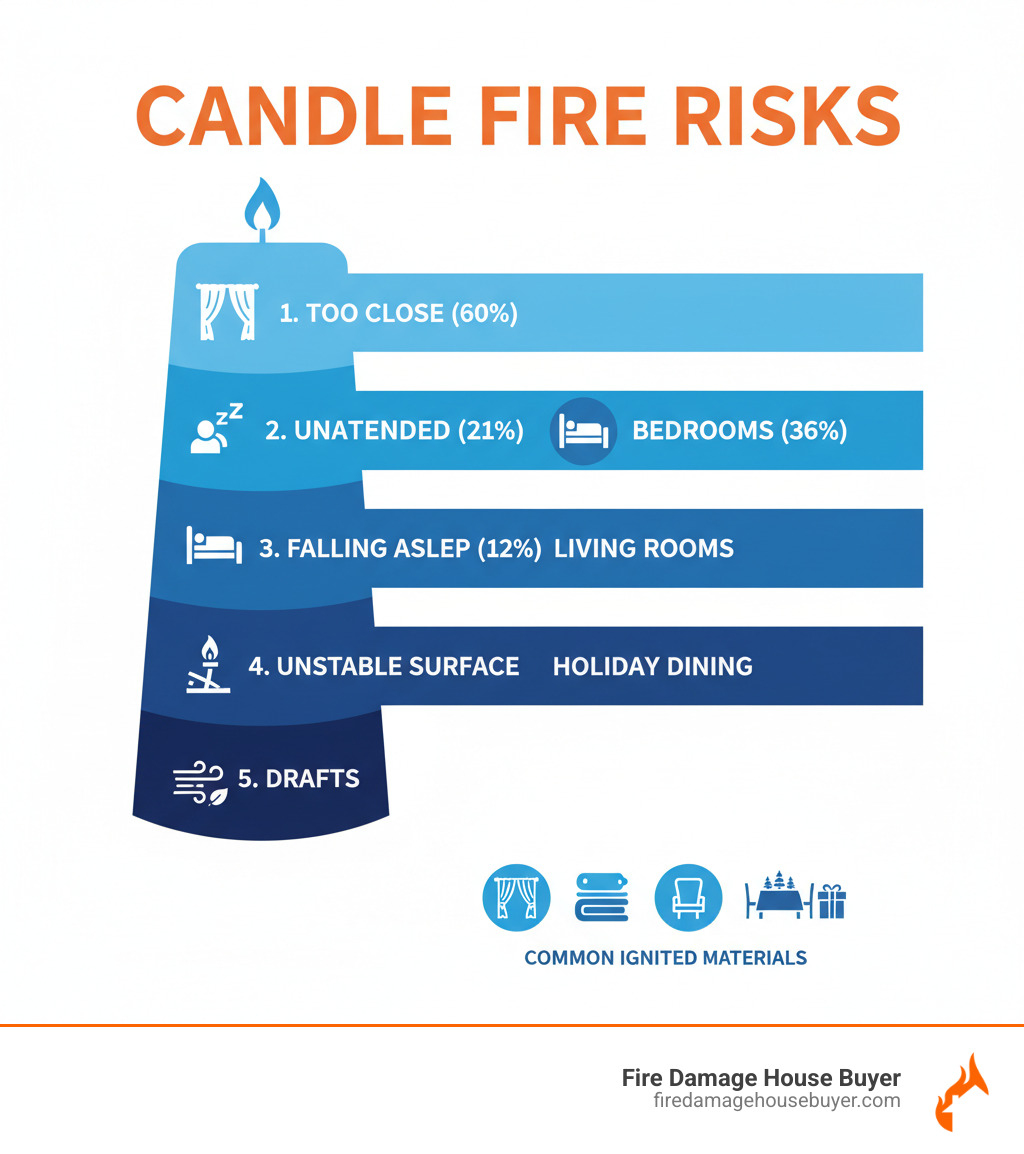
- Flammable Materials: The leading cause, responsible for nearly 60% of candle fires, is placing a candle too close to combustibles like curtains, magazines, or bedding.
- Unattended Candles: About 21% of home candle fires occur when candles are left burning in an empty room.
- Falling Asleep: A significant number of fires, deaths, and injuries happen when someone falls asleep with a candle burning, especially in bedrooms.
- Misuse and Negligence: Other common causes include forgetting to extinguish a candle before leaving home, using unstable holders, or placing them in drafty areas.
Commonly ignited items include furniture, mattresses, bedding, curtains, and decorations.
High-Risk Scenarios and Locations
Certain locations and situations significantly increase the risk of candle fires.
- Bedrooms: Over a third of candle fires start in bedrooms. The combination of flammable bedding and the risk of falling asleep makes this the most hazardous location.
- Living Rooms: Upholstered furniture, drapes, and decorations make living rooms another high-risk area.
- The Holiday Season: December is the peak month for candle fires due to increased use and flammable holiday decorations.
- Power Outages: Using candles for light during a power outage is risky. Opt for battery-operated flashlights and lanterns instead.
If you’re already dealing with the aftermath of a fire, you can find helpful information at More on post-fire recovery resources.
5 Essential Steps for Safe Candle Use
The good news is that most candle fires are preventable. Following a few straightforward safety measures allows you to enjoy candles without putting your home and family at risk.
Step 1: Choose and Place Candles Wisely
Proper placement is the most critical step in preventing candle fires.
- Use Sturdy Holders: Always place candles in sturdy, heat-resistant holders made of metal, ceramic, or thick glass that won’t burn and can catch dripping wax.
- Find a Stable Surface: Set candles on a flat, stable surface where they won’t be easily knocked over.
- Follow the “One-Foot Rule”: Keep burning candles at least 12 inches away from anything flammable, including curtains, bedding, books, and decorations.
- Avoid Drafts: Keep candles away from open windows, fans, or high-traffic areas to prevent the flame from flickering wildly.
- Keep Out of Reach: Place candles where they are completely out of reach of children and pets.
Step 2: Maintain Your Candles Correctly
Proper candle maintenance is a key safety practice that also impacts indoor air quality.
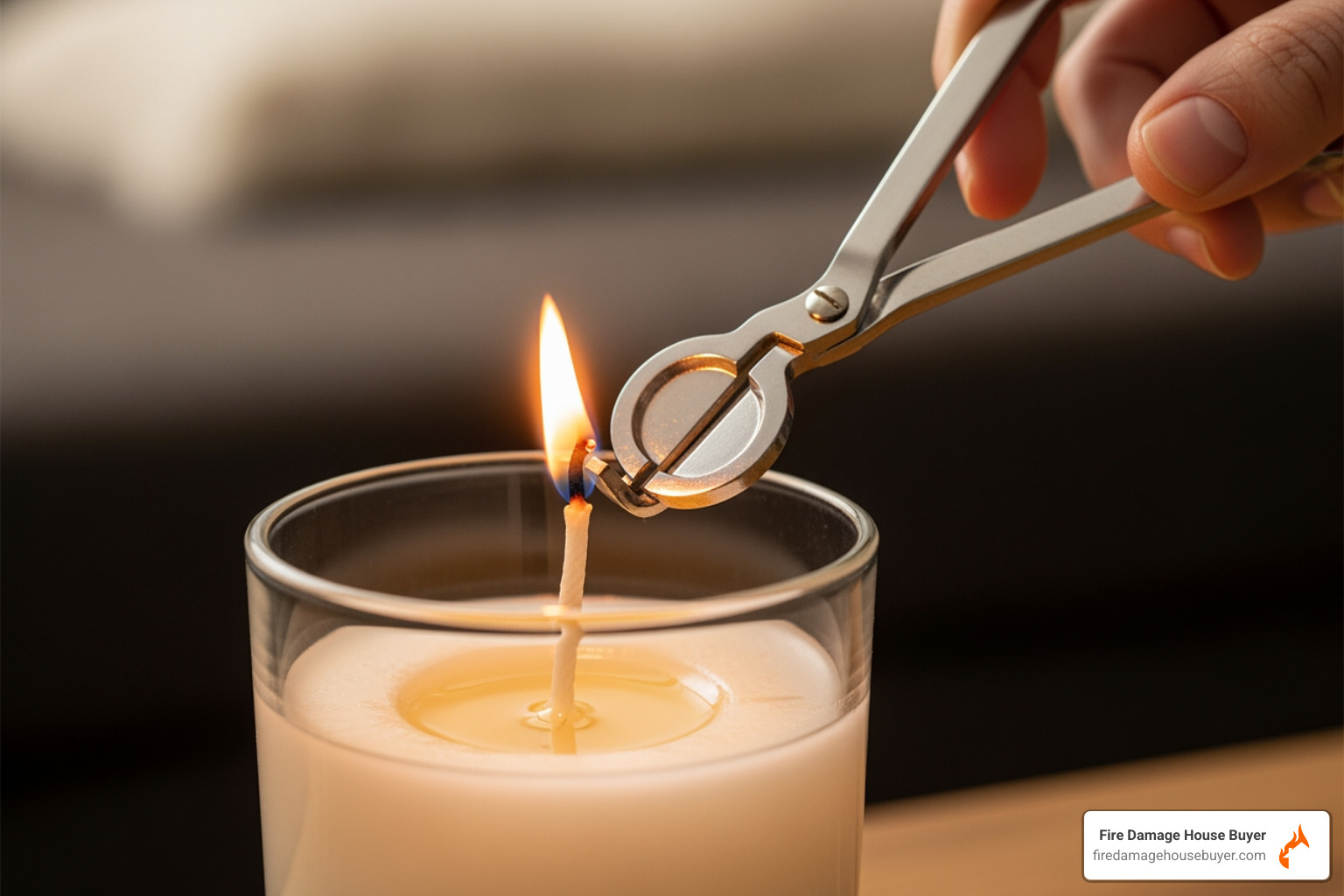
- Trim Wicks: Before every use, trim the wick to 1/4 inch. A long wick creates a large, hot flame and excess soot.
- Keep Wax Pool Clean: Remove any wick trimmings or debris from the wax pool to prevent them from igniting.
- Extinguish Safely: Use a candle snuffer to extinguish a flame. Never use water, as it can cause the hot wax to splash and spread the fire.
- Don’t Burn It All the Way: Stop burning a candle when about half an inch of wax remains to prevent the container from overheating.
For more on potential health concerns, see these tips on the health risks of improperly burned candles.
Step 3: Practice Constant Vigilance and Consider Safer Habits
Your attention is the most important safety tool.
- Never Leave a Burning Candle Unattended: If you leave a room, blow out the candle. It only takes seconds for a fire to start.
- Extinguish Before Sleeping: Falling asleep with a candle burning is a major cause of candle fires, accounting for 15% of deaths and 18% of injuries. Make it a habit to extinguish all candles before bed.
- Use Alternatives During High-Risk Times: During the holidays or power outages, consider using flameless LED candles. They provide ambiance without the risk and are the safest choice in homes with children and pets.
When Prevention Fails: Responding to a Candle Fire
Even with perfect vigilance, accidents can happen. When a candle fire starts, knowing what to do in the first few seconds can mean the difference between a minor scare and a devastating loss.
What to Do (and Not Do) in a Candle Emergency
If a candle fire starts, stay calm and act quickly.
- For Small, Contained Fires: If the fire is just the candle, smother it by sliding a metal lid over the container. If a small nearby object has caught fire, press a damp cloth over the flames.
- NEVER Use Water: Throwing water on a wax fire will cause burning wax to splatter, spreading the flames and potentially causing severe burns.
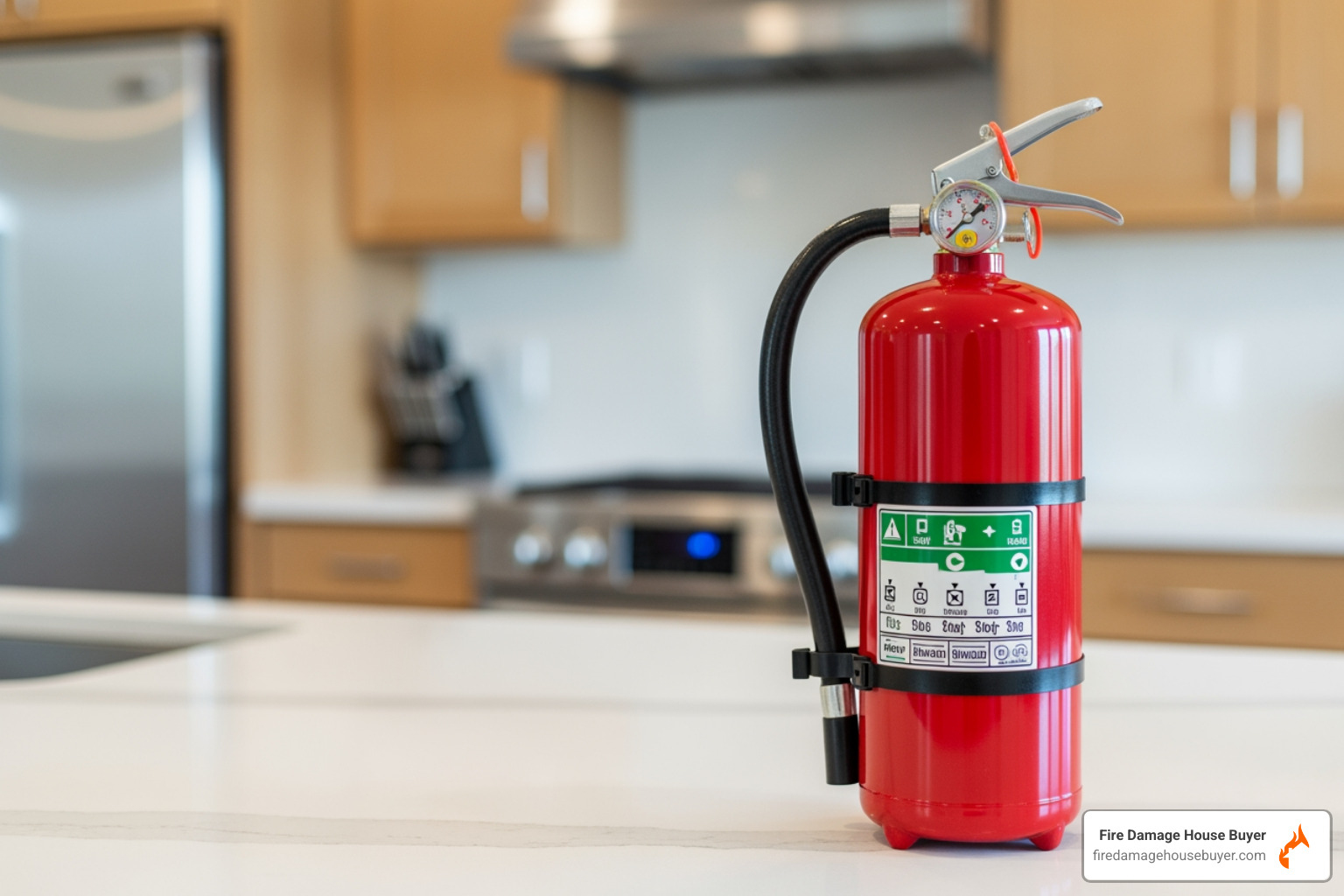
- For Spreading Fires: If the fire is growing, use a fire extinguisher. Remember the PASS acronym: Pull the pin, Aim at the base of the fire, Squeeze the handle, and Sweep side to side.
- When in Doubt, Get Out: If the fire grows rapidly or smoke fills the room, evacuate immediately. Get everyone out, close doors behind you, and call 911 from a safe location.
After the fire is out, our Guide to cleaning up after a house fire can help you with the next steps.
The Aftermath: Navigating Insurance and Restoration Decisions
After a fire, your first call should be to your insurance company. Understanding Does house insurance cover fire damage? is crucial. Then comes the difficult choice: restore your home or move on?
Key Restoration Points and Cost Estimates
Restoring a home after a fire is a complex, costly, and time-consuming process.
- Professional Assessment: Experts must evaluate visible and hidden damage, including structural issues, compromised wiring, and smoke penetration.
- Specialized Cleaning: Soot and smoke require professional cleaning and deodorization to prevent ongoing damage and lingering odors.
- Extensive Rebuilding: Restoration often involves replacing drywall, flooring, insulation, and electrical systems.
The financial reality is sobering. Minor smoke damage can cost $3,000-$10,000. Moderate damage typically runs $10,000-$50,000, while severe structural damage can easily exceed $50,000. The process can take months or even over a year, often requiring you to live elsewhere.
Why Selling May Be the Simpler Solution
After a fire, many homeowners find that the stress, time, and cost of restoration are overwhelming. Dealing with contractors, insurance adjusters, and living in temporary housing for months can take a heavy emotional and financial toll.
There’s another way. Fire Damage House Buyer offers a simple alternative. We buy fire-damaged houses as-is. This means:
- No Repairs: You don’t have to clean or fix anything.
- No Commissions: You save on realtor fees.
- Fast Cash Offer: We provide a fair, no-obligation cash offer quickly.
- Quick Closing: We can close in days or weeks, not months.
We work with homeowners across the country, including in states like California, Texas, Florida, New York, and Illinois. We understand the challenges you’re facing and make the process of selling your damaged property as simple and stress-free as possible.
Sometimes the best way to move forward is to start fresh. Let us help. Sell Fire Damaged House to us and get your no-obligation cash offer today.
Beyond the Flames: Hidden Risks and Regulatory Oversight
Beyond the immediate danger of fire, some candles pose hidden health risks, while various agencies and technologies work to keep you safe.
Health and Safety Risks Beyond the Fire
- Lead Wicks: Though now banned in the U.S., older or imported candles may contain lead-core wicks, which release toxic lead vapor when burned. If the wick’s core leaves a grey mark on paper, discard the candle.
- Indoor Air Quality: Burning any candle releases soot and volatile organic compounds (VOCs) into the air. This can worsen indoor air quality, especially in poorly ventilated spaces.
- Toxic Fumes: Some synthetic fragrances and decorative elements on candles can release harmful chemicals when burned.
For more on the lasting effects of fire, including health concerns from smoke and soot, explore our fire damage restoration guide.
The Role of Safety Agencies and Technology in Preventing Candle Fires
- Safety Agencies: The National Fire Protection Association (NFPA), U.S. Consumer Product Safety Commission (CPSC), and US Fire Administration (USFA) provide safety guidelines, issue product recalls, and publish research on candle fires.
- Smoke Detectors: A working smoke detector is your most critical safety tool. It provides the early warning needed to evacuate safely. Test yours monthly and change the batteries annually.
- Safer Alternatives: Modern technology offers great alternatives. Flameless LED candles provide ambiance without any fire risk, while smart plugs can automatically turn off electric wax warmers.
These resources provide layers of protection, but accidents can still happen. When they do, the aftermath can be overwhelming.
Frequently Asked Questions about Candle Fires
Over the years, I’ve talked with countless homeowners who have questions about candle fires—and honestly, they’re often the same questions that keep people up at night. Let me share what I’ve learned through my experience with fire-damaged properties and the research that backs it up.
What makes bedroom candle fires so dangerous?
Here’s a sobering fact: bedrooms account for over a third of all candle fires. That’s more than any other room in your home. But why are bedroom fires so particularly dangerous?
Think about what’s in your bedroom. You’ve got bedding, curtains, clothing draped over chairs, maybe some books on the nightstand—all highly flammable materials packed into one space. Now add in the fact that most bedroom candle fires happen when people are sleeping or about to fall asleep. Those crucial first moments when you could react and extinguish a small flame? They’re lost because you’re unconscious.
The statistics bear this out: sleep was a factor in 10% of home structure candle fires, but it accounted for 15% of deaths and 18% of injuries. When a fire starts while you’re asleep, your reaction time is dramatically slower. You might not wake up until the smoke detector sounds—or worse, until the smoke itself wakes you. By then, the fire has had precious minutes to grow and spread.
How far should candles be from flammable objects?
This one’s simple, but it’s the most important rule in candle safety: always keep a burning candle at least 12 inches (one foot) away from anything that can burn. That means furniture, drapes, bedding, books, decorations, paper, clothing—everything.
I call this the “one-foot rule,” and it’s not arbitrary. Flames can reach, flicker, and generate heat beyond what you might expect. A draft can push a flame sideways. Heated air rises and can ignite materials above the candle. That 12-inch buffer zone gives you a crucial margin of safety.
Here’s why this matters so much: placing combustibles too close to candles is the leading cause of candle fires, accounting for nearly 60% of all incidents. More than half of all candle fires happen simply because someone thought, “Oh, it’s probably fine there.” It wasn’t fine. Those few inches made all the difference between a peaceful evening and a devastating fire.
Can different types of candle wax affect fire risk?
I get asked this question a lot, especially with the rise in popularity of soy and beeswax candles. People want to know if choosing a “natural” wax makes their home safer.
The honest answer? The type of wax—whether it’s paraffin, soy, or beeswax—has minimal impact on fire risk. Yes, different waxes have different melting points and burn times. Soy tends to burn cooler and slower than paraffin. Beeswax has a higher melting point. But these differences affect burn quality, not fire danger.
The real culprits behind candle fires are human behaviors, not wax chemistry. Leaving a candle unattended, placing it too close to flammable materials, forgetting to trim the wick, or falling asleep with a candle burning—these are the factors that turn a peaceful candle into a house fire. You could have the most expensive, pure beeswax candle on the market, but if you place it next to your curtains and walk away, you’re creating a fire hazard.
Focus your energy on safe candle practices rather than obsessing over wax types. That’s where you’ll make a real difference in protecting your home and family.
Conclusion
While candles create a wonderful atmosphere, their risks are undeniable. Candle fires cause daily devastation, but most are preventable through simple safety habits like maintaining a one-foot clear zone and never leaving a flame unattended.
However, accidents can happen to anyone. If you’re facing the aftermath of a fire, the path forward can be daunting. The cost and stress of fire damage restoration and repair are immense, with bills often running from $10,000 to over $50,000 and repairs taking months.
This is where we can help. Instead of enduring a long, expensive, and emotionally draining restoration, you have another option. Fire Damage House Buyer offers a simple, fast alternative.
We allow you to Sell Fire Damaged House for cash, completely as-is. There are no repairs, no cleaning, and no commissions. We provide a fair cash offer and a quick closing, allowing you to bypass the stress of rebuilding and move forward with your life. Let us help you find a fresh start.