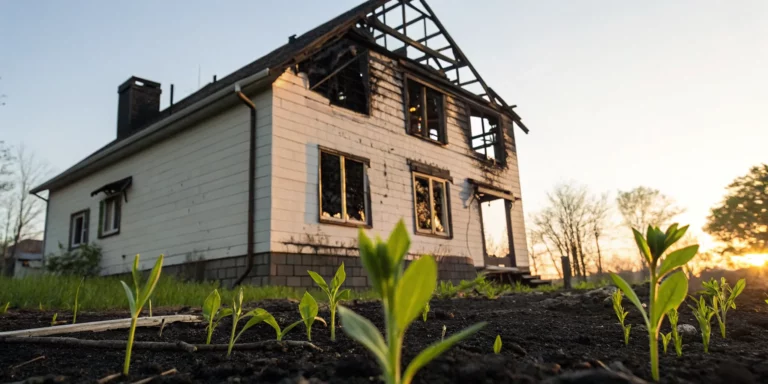
When valuing your home after a fire, a few common mistakes can cost you dearly. Many homeowners underestimate the extent of hidden smoke and water damage or assume that a full insurance payout means their property’s value is completely restored. Relying on guesswork or incomplete information can lead to unrealistic expectations and poor financial decisions. The key to avoiding these pitfalls is knowing exactly how to determine the value of a fire damaged house the right way. We’ll walk you through the crucial steps, from getting a professional assessment to understanding market realities, so you can protect your investment and move forward with confidence.
Key Takeaways
- Look beyond the physical damage to find your home’s true value: Your property’s worth isn’t just about repair costs; it’s a combination of the land’s value, local market conditions, and the details of your insurance settlement.
- Don’t rely on a single number for valuation: The insurance payout is not your home’s market value. A realistic assessment requires input from professionals who can identify hidden structural issues and provide accurate repair estimates.
- Weigh the real cost of rebuilding versus selling as-is: A full restoration costs significant time, money, and emotional energy, and rarely restores 100% of your home’s pre-fire value. Selling your property as-is offers a direct, stress-free path to a fresh start.
What Determines Your Home’s Value After a Fire?
After a fire, figuring out what your home is worth can feel like a huge puzzle. It’s not as simple as just looking at your pre-fire appraisal. The final value is a mix of several key elements, from the physical damage to the market conditions in your neighborhood. Understanding these factors will give you a clearer picture of your property’s current standing and help you make informed decisions about what to do next. We’ve seen firsthand in our work with homeowners how confusing this can be, so let’s break down the main components that shape your home’s post-fire value.
The Scope of Structural Damage
The most obvious factor is the extent of the damage. This goes beyond what you can see on the surface. A small kitchen fire is very different from a blaze that compromises the roof and support beams. Assessors will look at the structural integrity, the severity of smoke and soot contamination, and any water damage from firefighting efforts. Generally, fire damage can reduce a home’s value by 20% to 40% of its pre-fire worth. The more significant the structural harm, the higher the repair costs, which directly lowers the property’s market value for potential buyers.
Your Home’s Location and Local Market
Remember the old real estate mantra: location, location, location? It still holds true, even after a fire. The land your home sits on has inherent value, and that value doesn’t just disappear. A fire-damaged house in a highly sought-after neighborhood or a booming city can still fetch a surprisingly high price. This is because buyers might be more interested in the lot and the location than the structure itself. A strong local market with high demand can help cushion the financial blow, making your property more attractive despite the necessary repairs.
The Status of Your Insurance Claim
Your homeowner’s insurance plays a big role in this equation. While your policy is designed to cover fire damage, the claims process can be slow and complicated. The status of your claim—whether it’s still pending, has been partially paid, or is fully settled—will influence your home’s value. A buyer will want to know what repairs are covered and if any funds from the settlement can be transferred. Unfortunately, insurance sometimes doesn’t cover all the costs, leaving financial gaps. This uncertainty can impact the offers you receive, which is why some homeowners prefer the certainty of a direct cash offer.
Your Home’s Pre-Fire Condition
To figure out what your home is worth now, you have to know what it was worth before the fire. This pre-fire value is the starting point for any appraisal. From there, an appraiser or buyer will subtract the estimated cost of all necessary repairs. This includes everything from rebuilding walls and replacing electrical systems to smoke remediation and cosmetic fixes. If your home was in excellent condition before the incident, you’ll start from a higher baseline. The worse the damage, the more those repair costs will chip away at that initial value.
How to Assess the Full Extent of the Damage
After a fire, figuring out the true extent of the damage is the first and most important step toward understanding your home’s value. It’s about looking past the visible charring to uncover issues that might not be immediately obvious. Fire damage is often a triple threat, bringing along smoke and water damage that can hide within walls, seep into flooring, and compromise your home’s structure.
A careful assessment will give you a realistic picture of what you’re dealing with, which is essential whether you plan to file an insurance claim, hire contractors, or sell your property as-is. This process can feel overwhelming, but breaking it down into manageable steps makes it much clearer. If you’d rather skip the uncertainty, you can work with a buyer who specializes in fire-damaged homes and understands how the process works. A thorough evaluation is your foundation for making a confident, informed decision about your next move.
What to Look for in a Visual Inspection
Once it’s safe to enter your home, a detailed visual inspection is your starting point. Go room by room and document everything with photos and notes—this will be invaluable for insurance claims and discussions with potential buyers. Look beyond the obvious burn marks. Check for soot and smoke residue, which can leave a sticky, acidic film on walls, ceilings, and personal belongings. Notice any discoloration on surfaces, as heat can damage paint and finishes even without direct contact with flames. Also, inspect for warped floors, melted light fixtures, and cracked windows. A thorough visual inspection helps you gain a clear understanding of the fire’s immediate impact on your property.
Tools Professionals Use for Assessment
While your own inspection is helpful, professionals use specialized equipment to uncover hidden problems. A fire damage evaluation isn’t just about what you can see; it’s about ensuring the home is safe and structurally sound. Experts often employ non-destructive testing methods to find issues lurking beneath the surface. For example, they might use thermal imaging cameras to detect moisture trapped in walls or ceilings from firefighting efforts. Moisture meters can pinpoint the exact location and saturation level of water damage. They may also use air quality testing equipment to check for harmful particles left behind by smoke, ensuring the indoor environment is safe to breathe. These tools provide a complete picture that a simple visual check can’t capture.
Finding Hidden Smoke and Water Damage
Smoke and water are invasive and can cause significant damage long after the fire is out. Smoke particles are tiny enough to penetrate drywall, insulation, and your home’s HVAC system, leaving behind persistent odors and corrosive soot. If not properly cleaned, this residue can continue to damage surfaces and affect air quality. At the same time, the water used to extinguish the fire can lead to a whole new set of problems. It can saturate wood, drywall, and insulation, creating the perfect environment for mold and mildew to grow. Professionals perform specific moisture and water damage testing to find these hidden wet spots before they lead to rot and structural decay.
Checking the Foundation and Structure
The most critical part of any fire damage assessment is evaluating the home’s structural integrity. Intense heat can do serious harm to the core components of your house, including support beams, walls, and even the foundation. High temperatures can cause wood to lose its strength, steel beams to warp, and concrete to crack or spall. When you inspect the property, look for major cracks in the foundation, sagging ceilings or floors, and distorted window or door frames. These are all red flags that indicate potential structural failure. Because this type of damage is so severe and expensive to repair, it’s crucial to have a structural engineer assess the property to determine if the home is still sound.
How Much Does a Fire Decrease a Home’s Value?
After a fire, one of the most pressing questions you’ll face is, “What is my house worth now?” It’s a tough reality to confront, but understanding the potential impact on your home’s value is a critical step in deciding what to do next. The decrease isn’t a single, fixed number; it’s a range that depends entirely on the extent of the damage. Appraisers and buyers will look at everything from cosmetic smoke stains to foundational integrity, and the final figure will reflect the cost, time, and effort required to make the home livable again. To give you a clearer picture, the impact is typically broken down into three categories: minor, moderate, and severe. Each level corresponds to a different range of value reduction based on the estimated cost and complexity of repairs. Knowing where your property falls can help you set realistic expectations, whether you’re planning to file an insurance claim, tackle repairs, or explore other options for selling your home as-is.
Minor Damage: A 10-20% Drop
When a home has minor fire damage, you can generally expect a 10-20% reduction in its market value. This category usually covers issues that are more superficial. Think of a small kitchen fire that was put out quickly, leaving behind smoke stains on the walls and ceiling, a lingering odor, and some charring on the cabinets. While the home’s core structure is intact, the value is still affected. Repairs involve intensive professional cleaning, sealing and repainting surfaces to eliminate odors, and replacing things like countertops or flooring. These costs, combined with the property’s fire history, contribute to the drop in value.
Moderate Damage: A 20-40% Drop
For homes with moderate fire damage, the decrease in value is more significant, typically falling between 20-40% of its pre-fire worth. This level of damage goes beyond the surface and starts to affect the home’s systems or structure in a limited area. For example, a fire that was contained to one or two rooms but was intense enough to damage electrical wiring, plumbing, and parts of the roof would be considered moderate. The repairs are far more extensive and expensive, often requiring licensed contractors to rebuild sections of the home. Because this damage can touch upon the home’s structural integrity, the impact on its value is much greater.
Severe Damage: A 40%+ Drop
In the most serious cases, severe fire damage can cause a home’s value to plummet by 40% or more. This is when the fire has caused extensive structural damage, rendering the house unsafe or uninhabitable. The foundation may be compromised, load-bearing walls may be destroyed, and the roof structure could be gone. At this point, the cost of repairs may be close to or even exceed the cost of rebuilding entirely. The property’s value is often reduced to the value of the land itself, minus the significant cost of demolition and debris removal. Facing this situation is overwhelming, which is why many homeowners explore a direct cash sale to avoid the complexities of a rebuild.
Who Can Help Determine Your Property’s Value?
Figuring out what your home is worth after a fire can feel like a huge puzzle, but you don’t have to solve it alone. Several professionals can provide the pieces you need to see the full picture. Relying on a single opinion, like just the insurance payout, often won’t capture the true market value of your property in its current state. To get a clear and realistic valuation, you’ll want to gather insights from a few different experts, as each one looks at your home through a unique lens.
A real estate appraiser focuses on market trends, a structural engineer inspects the home’s bones, a contractor estimates rebuilding costs, and an insurance adjuster calculates the loss based on your policy. Understanding what each professional does helps you gather the right information to make an informed decision. Juggling these appointments and reports can be overwhelming, especially when you’re already dealing with so much. For a more direct assessment, you can work with a company that specializes in fire-damaged homes. Our simple process is designed to give you a fair cash offer quickly, based on a comprehensive evaluation that considers all these factors for you.
Cash Home Buyers
Cash home buyers are often the most direct route to understanding your property’s as-is value. Companies that specialize in fire-damaged houses are experienced in assessing the full scope of damage and can provide a firm offer without requiring you to make any repairs. They calculate their offer based on the property’s current condition, the estimated repair costs, and its potential market value after renovation. This gives you a real-world number that reflects what an investor is willing to pay right now. Working with a specialized buyer means you get a fast, practical valuation and an opportunity to sell quickly without the usual hassles.
Real Estate Appraisers
A licensed real estate appraiser determines a property’s value by comparing it to similar homes that have recently sold in your area. However, valuing a fire-damaged home this way can be tricky, as it’s often difficult to find truly comparable properties. An appraiser will start with the pre-fire value and then subtract the estimated cost of repairs and other negative factors. While their report is an important official document, especially for lenders, it’s just one piece of the puzzle. Their valuation provides a formal opinion of market value but may not fully align with the actual costs you’d face during a rebuild.
Structural Engineers and Contractors
To understand the physical and financial impact of a fire, you need input from the people who fix it. A structural engineer is essential for assessing the integrity of your home’s foundation, frame, and load-bearing walls. They can identify critical issues that aren’t visible to the naked eye. Following that, a general contractor can provide a detailed estimate of what it would cost to repair everything—from smoke remediation and electrical work to new drywall and roofing. Their quotes are vital for calculating the “cost to cure,” which is a major factor in your home’s post-fire valuation.
Insurance Adjusters
Your insurance adjuster plays a key role, but it’s important to understand their perspective. Their job is to assess the damage to determine how much the insurance company will pay out according to your policy. This valuation is based on the cost of repairs or replacement, minus your deductible. While this number is crucial for your financial recovery, it isn’t the same as your home’s market value. The insurance settlement is meant to cover repairs, but it doesn’t always reflect what a buyer would be willing to pay for the property in its damaged state.
How Professionals Value a Fire-Damaged Home
Figuring out what your home is worth after a fire isn’t just guesswork. Professionals rely on established methods to arrive at a fair and accurate number. They don’t just look at the obvious damage; they consider the local market, repair costs, and hidden issues you might not see. Understanding their process can give you a much clearer picture of your property’s true value and help you make informed decisions. Let’s walk through the main approaches they use to determine what your fire-damaged home is worth.
Adjusting a Comparative Market Analysis (CMA)
A Comparative Market Analysis, or CMA, is a standard tool in real estate that involves looking at the sale prices of similar, recently sold homes in your neighborhood. For a fire-damaged property, however, the process gets a tweak. Instead of comparing your home to the pristine house that just sold down the street, a professional will look for other homes that sold with similar levels of damage. This provides a much more realistic baseline for what buyers in your area are willing to pay for a property that needs significant work. It helps understand the market dynamics for distressed properties and grounds the valuation in real-world data, moving it from a guess to an educated estimate.
Using the Cost Approach Method
Another key strategy is the Cost Approach. Think of it as working backward. A professional first determines what your home would be worth if it were fully repaired and in top condition. Then, they meticulously calculate the total cost of all necessary repairs—from structural work and electrical rewiring to cosmetic fixes like drywall and paint. This estimated cost of restoration is subtracted from the home’s potential, fully-repaired value. The final number gives a solid valuation based on the investment required to bring the property back to life. This method is especially useful for insurance purposes and for buyers who plan to renovate.
What Appraisers Look For
A professional appraiser provides an essential, unbiased assessment of your property’s value. Their job is to go beyond the surface-level charring and soot. They conduct a detailed inspection to evaluate the full extent of fire, smoke, and water damage, which often seeps into walls and floors. More importantly, they are trained to spot hidden dangers that can drastically affect value, like compromised electrical systems, hidden mold growth, or foundational cracks. These comprehensive fire damage evaluation techniques ensure that the final valuation reflects the home’s true condition, protecting both you and potential buyers from future surprises.
Should You Repair Your Home or Sell As-Is?
After a fire, one of the biggest decisions you’ll face is whether to undertake repairs or sell your property as it is. This choice isn’t just about finances; it’s about your time, energy, and what you need to move forward. Repairing the home might seem like the best way to recover its value, but it involves a long and often unpredictable road of construction, permits, and managing contractors. On the other hand, selling as-is offers a direct path to a fresh start, letting you bypass the stress and uncertainty of a major renovation project.
The right answer depends entirely on your circumstances. Do you have the funds, time, and emotional bandwidth to oversee a complete restoration? Or does the thought of a quick, clean break feel like the relief you need right now? There’s no single correct path, but understanding what each option truly entails will help you make a clear-headed decision that works for you and your family. We’ll walk through the key factors to consider, from the hard numbers of repair costs to the less tangible costs of your time and effort.
Weighing the Cost of Repairs
Before committing to a full restoration, it’s crucial to look at the numbers realistically. Even minor fire damage can cause a home’s value to drop by 10-20%, while severe structural issues can lead to a 40-60% reduction. The cost to fix that damage can be staggering. Basic fire restoration often starts around $4.50 to $6 per square foot, but for a home with significant damage, you could easily be looking at costs of $75,000 or more. You have to ask yourself if the final sale price will truly outweigh the massive upfront investment and financial risk involved in a large-scale renovation project.
Factoring in Your Time and Effort
The financial cost of repairs is only part of the story. A full restoration is a demanding, full-time job that can take months, if not longer. You’ll be coordinating with contractors, dealing with building permits, and facing inevitable delays. This process can be incredibly stressful, especially when you’re also handling the emotional aftermath of a fire. Selling your home as-is offers a completely different experience. Many homeowners prefer a streamlined process that allows them to close in as little as seven days. This path gives you the freedom to move on quickly without the prolonged burden of managing a construction project.
Understanding the Market for As-Is Homes
You might worry that no one would want to buy a fire-damaged property, but there is a dedicated market for homes in as-is condition. Real estate investors, house flippers, and builders are actively looking for properties like yours. They see the potential in the land and the structure, and they have the resources and expertise to handle the repairs themselves. Even homes with severe damage can attract strong interest if the location is desirable. Many other homeowners have found that selling to a cash buyer is a straightforward and reliable way to get fair value for their property without making any repairs.
How Does Insurance Impact Your Home’s Value?
After a fire, your insurance policy becomes one of the most critical factors in your financial recovery and, by extension, your home’s value. While insurance is designed to help you rebuild, the process can be complicated and lengthy. The final settlement you receive, the current status of your claim, and any gaps in your coverage all play a significant role in determining what your property is worth and what your next steps can be.
The amount your insurer agrees to pay directly impacts your ability to make necessary repairs. A smaller-than-expected settlement can leave you with a partially restored home, which will have a lower market value. Even if you have a great policy, delays in the claims process can stall your recovery, leaving you in limbo. Understanding how your specific insurance situation affects your home’s valuation is key to making a clear-headed decision about whether to repair the damage or sell the property as-is. It helps you see the true financial picture, separate from the emotional stress of the situation.
How Your Settlement Affects Property Value
Your insurance settlement is the foundation of your home’s post-fire value. Ideally, the payout covers the full cost of repairs, restoring the property to its original condition. However, homeowner’s insurance doesn’t always cover all the costs, especially if your policy has limitations. The final amount you receive will dictate your budget for restoration. If the settlement falls short, you’ll have to decide whether to pay for the remaining repairs out of pocket or leave them undone. Any unrepaired damage will directly lower your home’s market value. This is why the settlement negotiation is so critical; it sets the ceiling for your property’s potential restored value and influences how fire damage changes your home’s value in the eyes of appraisers and buyers.
The Impact of Your Claim’s Status
The status of your insurance claim creates a cloud of uncertainty that can affect your property’s value. An open or disputed claim makes it difficult for a potential buyer to know the true condition of the house and what repairs will be covered. This uncertainty often leads to lower offers or can scare buyers away entirely. After a fire, you should contact your insurance agent right away to get the process started. A settled claim, on the other hand, provides clarity. Even if the payout wasn’t what you hoped for, a closed claim means all parties know exactly where they stand. It allows you to present a clear picture to buyers: either the repairs have been completed, or the price reflects the known, unrepaired damage.
Dealing with Gaps in Your Coverage
Unfortunately, many homeowners discover after a fire that their insurance policy has gaps. Standard policies might not cover expenses like bringing the property up to current building codes, replacing landscaping, or hauling away debris. Understanding what your homeowners’ insurance covers is essential for knowing your potential out-of-pocket costs. These uncovered expenses can add up quickly, creating a financial burden that you may not be prepared for. Each gap in coverage represents money you’ll either have to spend on repairs or deduct from your home’s asking price. This is often where the idea of selling as-is becomes a practical solution, allowing you to bypass the complexities and unexpected costs of a partial insurance payout.
Common Valuation Mistakes to Avoid
Figuring out your home’s value after a fire is a tough process, and it’s easy to make missteps along the way. When you’re dealing with so much, you just want a clear, fair number. But a few common mistakes can lead to an inaccurate valuation, leaving you with less than you deserve or with unrealistic expectations. Knowing what these pitfalls are can help you protect your investment and make the best decision for your situation. From overlooking damage that’s not immediately visible to putting too much faith in an insurance check, let’s walk through the most common errors homeowners make and how you can steer clear of them.
Underestimating Hidden Damage
After a fire, it’s natural to focus on the most obvious destruction—the charred walls or burned belongings. But the most significant damage is often hidden from view. Fire can compromise your home’s structural integrity, weakening beams, joists, and foundations. Smoke and soot can seep into drywall and ventilation systems, while water from firefighting efforts can lead to mold and rot. Even a small fire can cause widespread issues that drastically lower your home’s market value. It’s a mistake to only account for the cosmetic problems you can see, as the unseen repairs are often the most expensive and have the biggest impact on your property’s worth.
Skipping a Professional Valuation
Trying to determine your home’s value on your own can be a costly mistake. A fire-damaged property is complex, and a true valuation requires an expert eye. Without professional input, you’re essentially guessing. To get an accurate picture, you really need opinions from a team of specialists, including real estate appraisers, contractors, and structural engineers. They have the tools and experience to assess the full scope of the damage and estimate repair costs correctly. Our team at Fire Damage House Buyer simplifies this by providing a professional, all-cash offer based on a thorough evaluation, so you don’t have to coordinate with multiple experts on your own.
Assuming Repairs Restore Full Value
Many homeowners believe that if they complete all the necessary repairs, their home’s value will return to what it was before the fire. Unfortunately, that’s rarely the case. Even with high-quality, professional restoration, a fire-damaged home typically only regains about 80-90% of its pre-fire value. You also have to consider that property disclosure laws require you to inform future buyers about the fire. This history, often called a “stigma,” can make potential buyers hesitant and may lead to lower offers, even if the home is in perfect condition. Banking on a full recovery of value is an optimistic but often unrealistic expectation.
Relying Solely on Your Insurance Payout
Your homeowner’s insurance is a critical lifeline after a fire, but the settlement amount isn’t a market valuation. The payout is based on your policy coverage and is meant to cover the cost of rebuilding or repairs—it doesn’t reflect what a buyer would actually pay for the property. The insurance claim process can also be long and complicated, and you might find that your policy doesn’t cover everything. Relying on this number alone can give you a skewed sense of your home’s worth. It’s better to view the insurance settlement as one part of your financial recovery, not the definitive statement on your property’s value.
How to Communicate Your Home’s Value to Buyers
Talking about your home’s value after a fire can feel tricky, but it’s all about clear communication. Your goal is to present a complete and honest picture of the property—both its current state and its future potential. While traditional buyers might be hesitant, specialized cash buyers are experienced in assessing fire-damaged homes and can see the value through the damage. The key is to be prepared with the right information and present it confidently. When you understand the process, you can have productive conversations that lead to a fair offer, allowing you to move forward without the stress of drawn-out negotiations.
Being Transparent and Meeting Disclosure Rules
Honesty is non-negotiable when selling a fire-damaged home. You are legally required to disclose the history of the fire, the extent of the damage, and any repairs you’ve completed. Trying to hide or downplay the damage will only lead to legal trouble and destroy trust with potential buyers. Instead, be upfront from the very beginning. Provide a clear, factual account of what happened. This transparency sets a foundation of trust and ensures that any potential buyer is making an informed decision. For a cash buyer, this information isn’t a deal-breaker; it’s a necessary part of their valuation process.
Using Professional Reports and Documents
Words alone aren’t enough; you need to back up your claims with professional documentation. Gather every report you have, including assessments from your insurance adjuster, structural engineers, and fire restoration specialists. An independent appraisal can also provide an objective view of the property’s current market value. These documents give your asking price credibility and show buyers you’ve done your due diligence. Presenting a folder with organized, professional reports demonstrates that you’re serious and helps move the conversation from subjective opinions to objective facts, which is exactly what experienced buyers and specialized companies want to see.
Showcasing Your Property’s Potential
While you must be honest about the damage, you can also frame the property in terms of its potential. For the right buyer, your home isn’t a disaster—it’s an opportunity. Highlight the features that remain valuable, such as the lot size, the location, the neighborhood, or the structural foundation if it’s still sound. For investors, a damaged property is a blank canvas for a renovation or a complete rebuild. By focusing on what the property could be, you appeal to buyers who are equipped to handle the repairs and are looking for exactly this kind of project. These are the buyers who understand the inherent value and are ready to make a fair cash offer.
How to Get the Best Possible Value for Your Home
After a fire, figuring out your next steps can feel overwhelming, especially when it comes to your home’s value. The path you choose will depend on your finances, timeline, and personal capacity to handle a major project. Getting the best possible value doesn’t always mean getting the highest price—it means finding the solution that best fits your life right now. Let’s walk through the key decisions you’ll need to make to move forward confidently.
Deciding Between Restoration and an As-Is Sale
Your first major decision is whether to repair the damage or sell your home as-is. If your primary goal is to get the highest possible sale price and you have the time and money for extensive repairs, restoring your home before listing it on the traditional market might be the right path. However, this process can take months, or even years, and often comes with unexpected costs.
On the other hand, selling your property as-is to a cash buyer offers a much faster, more straightforward solution. Companies that specialize in fire-damaged homes can close in as little as a week. This option allows you to bypass the entire repair process, avoid paying real estate agent commissions, and receive cash quickly. Our simple process is designed to remove the stress from this difficult situation.
Considering the Timing of Your Sale
If you decide to repair your home and sell it on the open market, timing can play a role in the final sale price. Real estate markets have peak seasons, typically in the spring and summer, when more buyers are looking. Selling during these times could lead to a better offer. You’ll need to watch local market trends and plan your restoration timeline accordingly to list your home when conditions are most favorable.
For homeowners who can’t wait or don’t want to gamble on market fluctuations, selling as-is to a cash buyer removes timing from the equation. We buy homes year-round, regardless of market conditions. This provides certainty and speed, allowing you to get your money and move on with your life without waiting for the perfect selling season to arrive.
Finding the Right Way to Sell
To make an informed choice, start by getting a clear picture of your home’s current value and the potential cost of repairs. You can do this by hiring a professional real estate appraiser and getting quotes from licensed contractors. Once you have these numbers, you can weigh them against your personal priorities. If you need to sell quickly and want to avoid the stress and financial burden of a massive renovation project, a cash buyer is an excellent choice.
Even with significant damage, your property has value, especially to investors who are prepared to handle the rebuild. The key is to work with a buyer who understands the complexities of fire-damaged homes. By being transparent and choosing a reputable partner, you can ensure a fair and efficient sale. You can see what other homeowners have said about their experience by reading our company reviews.
Related Articles
- Rebuild or Sell After a House Fire? 7 Powerful Tips (2025)
- How to Price a Fire Damaged House: 5 Crucial Tips
- Fire Damaged House Calculator: How to Price Your Home
- How Hot Does a House Fire Get? Top Facts in 2025
Frequently Asked Questions
Is my insurance settlement the same as my home’s market value? This is a great question and a common point of confusion. Your insurance settlement is calculated based on your policy to cover the cost of repairs, not what a buyer would pay for the house today. Think of it as your budget for restoration. The market value, on the other hand, is what your property is worth in its current, damaged state. The two numbers are related, but they are rarely the same.
If I repair my home completely, will it be worth the same as it was before the fire? It’s a tough reality, but even a perfectly restored home often doesn’t regain its full pre-fire value. You’re required to disclose the fire to future buyers, and this history can sometimes make them hesitant, which can affect the final sale price. While repairs will certainly increase the value from its damaged state, it’s wise to expect that it might not reach 100% of its former worth.
What does selling my home “as-is” actually mean for me? Selling “as-is” means you sell the property in its current condition without making any repairs or updates. You don’t have to worry about cleaning up, hiring contractors, or dealing with construction. The buyer, like our company, takes on all the responsibility and risk of the restoration. It’s a direct path to receiving cash for your property and moving on without the long, stressful process of a rebuild.
Do I need to have professional inspections done before contacting you? Not at all. While having reports from structural engineers or contractors can be helpful, it isn’t necessary to get an offer from us. Our team is experienced in assessing fire-damaged properties and will conduct our own evaluation as part of our process. We handle the assessment so you can get a clear, straightforward cash offer without having to coordinate with multiple experts yourself.
How do you determine the cash offer for my fire-damaged home? We look at several factors to create a fair offer. Our team assesses the property’s location, its pre-fire condition, and the full extent of the damage—including issues that might be hidden. We then calculate the cost of repairs and consider the home’s potential market value after a full renovation. This comprehensive approach allows us to give you a firm, all-cash offer that reflects your home’s true as-is value.