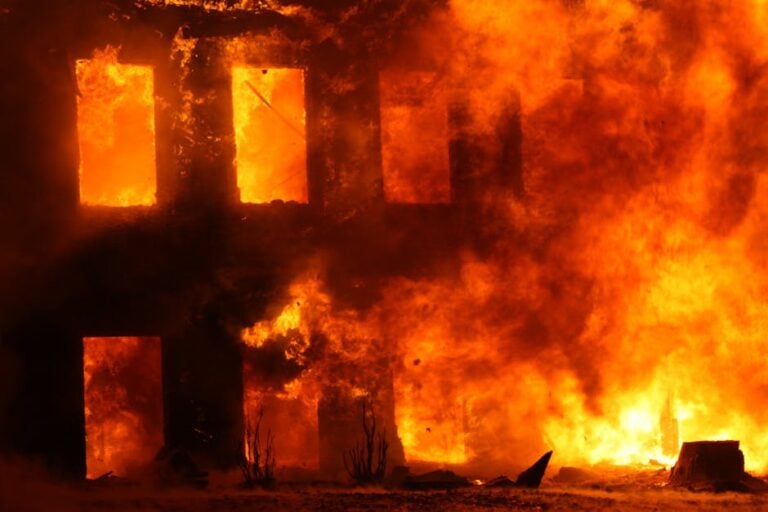
Understanding the Devastating Heat of House Fires
House fire temperature is a critical factor determining the damage to your home and the danger to your family. The reality is shocking: in just 30 seconds, a small flame can become an out-of-control fire, and in five minutes, your entire house could be engulfed.
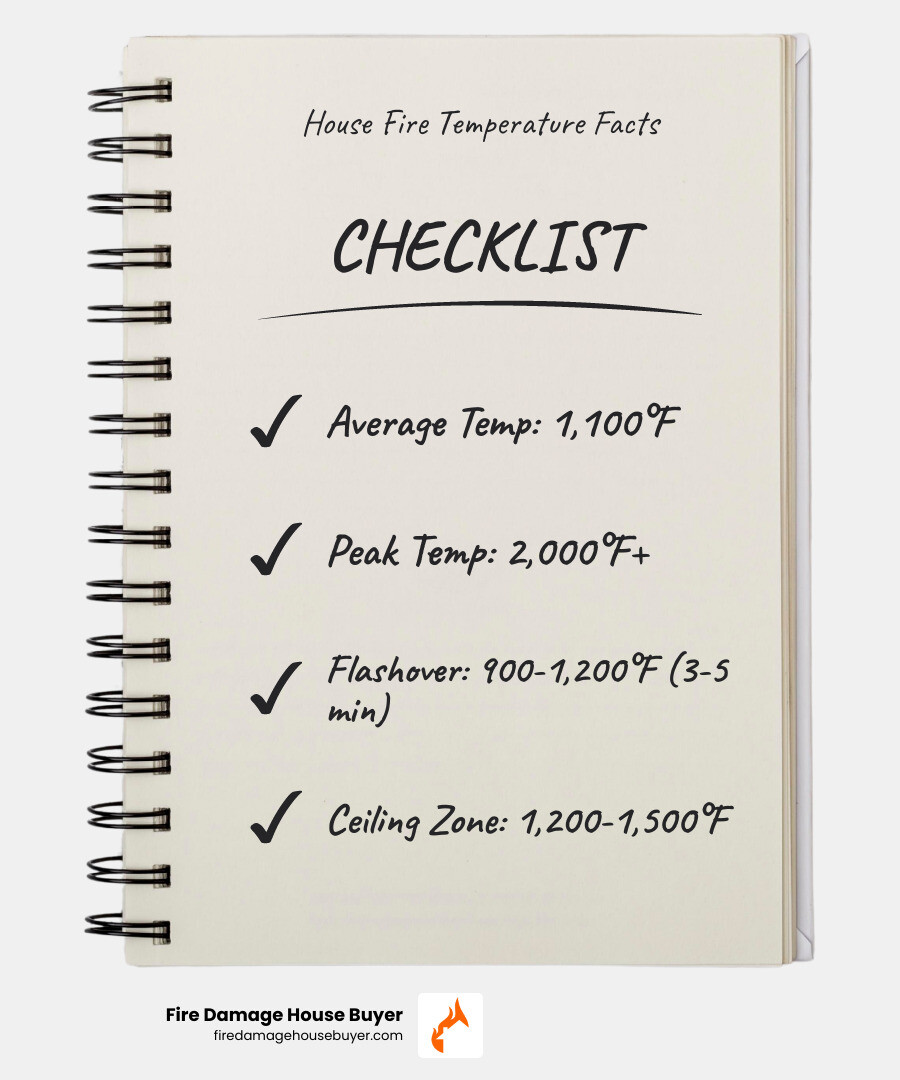
Quick Facts About House Fire Temperature:
- Average temperature: 1,100°F (593°C)
- Peak temperature: Can exceed 2,000°F (1,093°C)
- Time to reach dangerous levels: 30 seconds to 5 minutes
- Ceiling temperature: 1,200-1,500°F
- Eye-level temperature: 600°F
- Floor-level temperature: 100-200°F
- Flashover threshold: 900-1,200°F (occurs in 3-5 minutes)
The heat from a fire is often more dangerous than the flames. While fire spreads rapidly, extreme temperatures create lethal zones. At floor level, temperatures might be 100°F, but at eye level, they soar to 600°F—hot enough to scorch your lungs. Near the ceiling, temperatures can reach a staggering 1,500°F.
This heat also causes devastating structural damage. Steel beams weaken around 1,000°F, and aluminum melts at 1,220°F. Modern homes, with synthetic materials in furniture and construction, burn hotter and faster, giving families less time to escape. Understanding house fire temperature is crucial for fire safety and for dealing with the aftermath, affecting everything from escape time to repair costs.
I’m Daniel Cabrera, founder of Fire Damage House Buyer. After assessing over 275 fire-damaged properties, I’ve seen how understanding fire temperatures helps families make informed decisions about restoration versus selling.
The Science of a House Fire: How Hot Does It Get?
House fire temperature isn’t a single number but a dynamic process where temperatures escalate with terrifying speed. An average house fire burns between 1,000 and 2,000 degrees Fahrenheit, with peaks soaring to 2,500°F under the right conditions.
The progression is alarming. A small flame can become an out-of-control fire in 30 seconds. Within two minutes, smoke makes the home life-threatening, and in five minutes, the entire house can be engulfed. This rapid escalation leaves a very narrow window for safe evacuation.
What is Flashover and How Does It Relate to Fire Temperature?
A critical concept in fire science is flashover. This occurs when superheated gases at the ceiling radiate enough heat to ignite all combustible materials in a room simultaneously. The room erupts into flames, changing from a localized fire into a fully engulfed inferno. The temperature threshold for flashover is typically 900-1,200°F.
Flashover dramatically accelerates a fire’s spread, usually occurring within 3 to 5 minutes of ignition and drastically reducing escape time. This phase often causes the most significant damage as the room’s contents are consumed by intense heat.
The Role of Oxygen and Ventilation
Oxygen and ventilation are crucial in determining house fire temperature. A limited oxygen supply might lead to a smoldering fire with lower temperatures (300-600°F). However, a sudden influx of air—from a breaking window or an opening door—can cause the fire to intensify rapidly, leading to a backdraft or flashover. Conversely, ample ventilation feeds a fire, allowing it to burn hotter and faster.
This is why firefighters control ventilation to manage a fire’s intensity. As Ready.gov states, fire is FAST, and understanding how oxygen fuels it underscores the importance of quick, safe evacuation.
Understanding Lethal Zones: Temperature Variation in a Burning Room
A burning room doesn’t heat evenly. It creates distinct thermal layers that can mean the difference between life and death. Understanding these temperature zones is crucial because where you are in relation to the floor and ceiling directly impacts your survival chances.
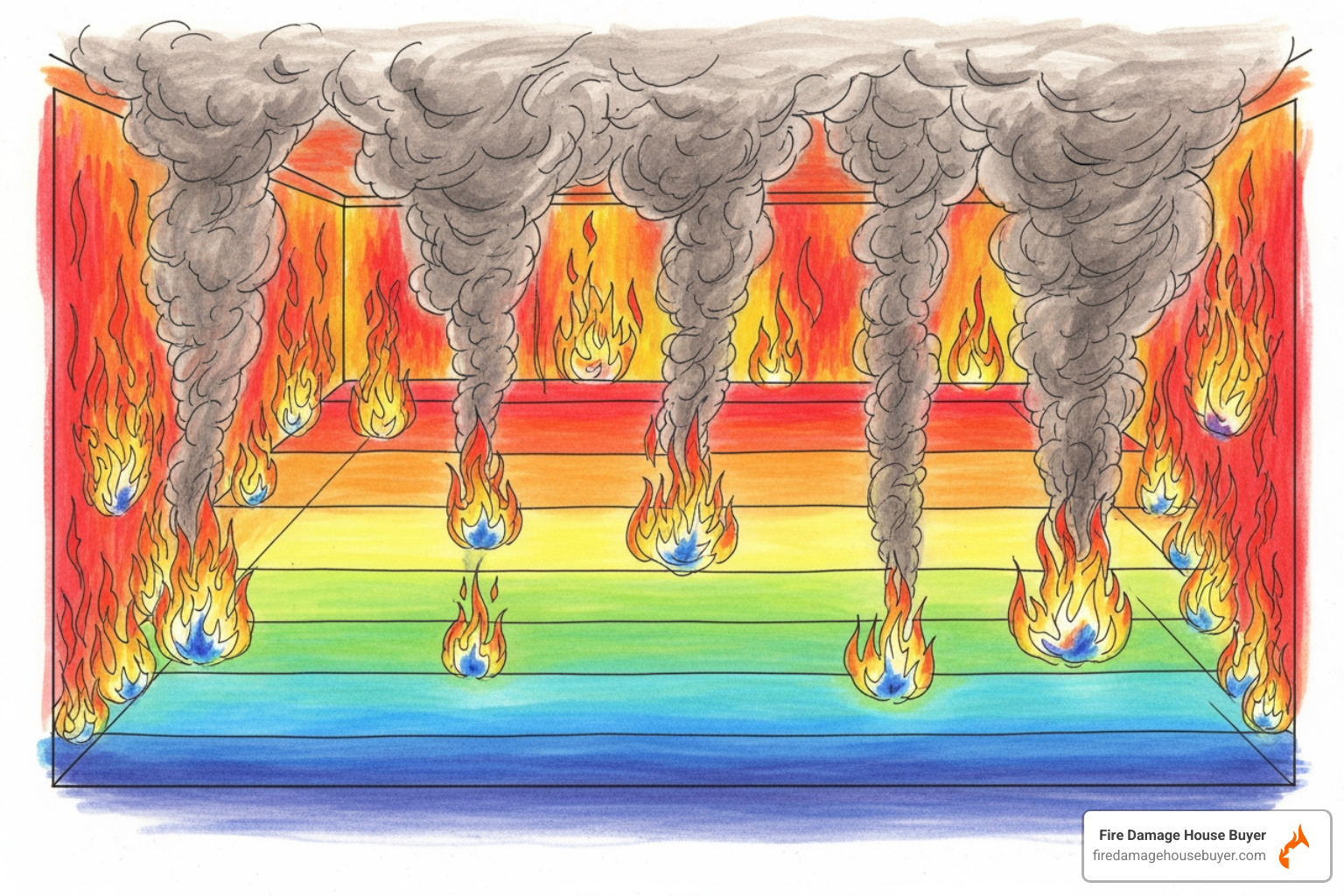
Heat rises, creating a deadly gradient of temperatures. The difference between these zones can be over 1,000 degrees, which is why firefighters and safety experts always tell you to stay low during a fire.
Floor-Level Temperatures
At floor level, temperatures typically range from 100-200°F. While still hot enough to cause burns, the floor remains your safest zone during the critical first minutes. This is the science behind the “stay low and go” advice. Cooler temperatures near the ground can buy you precious seconds to escape.
Eye-Level Temperatures
When you stand up, temperatures at eye level skyrocket to around 600°F—hotter than your kitchen oven. This is immediately life-threatening. Your respiratory tract can suffer burns at temperatures as low as 120-150°F. Breathing 600°F air can sear your lungs in a single breath. Fatal conditions develop at 300-350°F, so standing upright exposes you to unsurvivable temperatures.
Ceiling Temperatures
The ceiling is where house fire temperature reaches extreme levels, from 1,200-1,500°F and sometimes exceeding 2,000°F. This intense heat accumulates at the top of the room as hot gases rise. This superheated layer drives flashover, melts synthetic materials, weakens steel, and causes fire-resistant materials to fail.
Survival Implications and Immediate Danger Thresholds
These temperature zones show that timing is everything. In the early stages, a survivable path exists near the floor, but that safe zone shrinks rapidly. Inhaling hot gases can cause your airway to swell shut and can be fatal hours or days later. This is why early detection from a smoke alarm, which cuts your risk of dying in a fire by 55%, is so critical.
When we evaluate fire-damaged properties, we see evidence of these temperature zones in the damage patterns—scorched baseboards but destroyed ceilings. These visual markers tell the story of how heat stratified, creating lethal zones and devastating a home’s structure.
The Destructive Impact of Extreme House Fire Temperature
The intense heat from a fire doesn’t just threaten lives—it systematically tears apart your home. Understanding how house fire temperature affects different materials helps explain why fire damage is so devastating and restoration is so complex.
Structural Integrity Impact
Your home’s framework faces catastrophic damage at extreme temperatures. Steel beams begin losing strength around 1,000°F and can fail completely above 1,472°F, causing collapses. Concrete seems indestructible, but above 572°F, trapped moisture turns to steam, causing explosive cracking called “spalling” that compromises its integrity. Wood framing ignites between 500-750°F, losing its ability to support weight and becoming fuel for the fire.
Modern vs. Traditional Materials: Synthetics Burn Hotter
Modern homes burn differently. They are filled with synthetic materials—plastic furniture, foam cushions, polyester curtains—that ignite faster and burn significantly hotter than the natural wood and cotton in traditional homes. This is one reason modern fires reach dangerous temperatures so quickly, giving families less time to escape.
How house fire temperature affects different materials
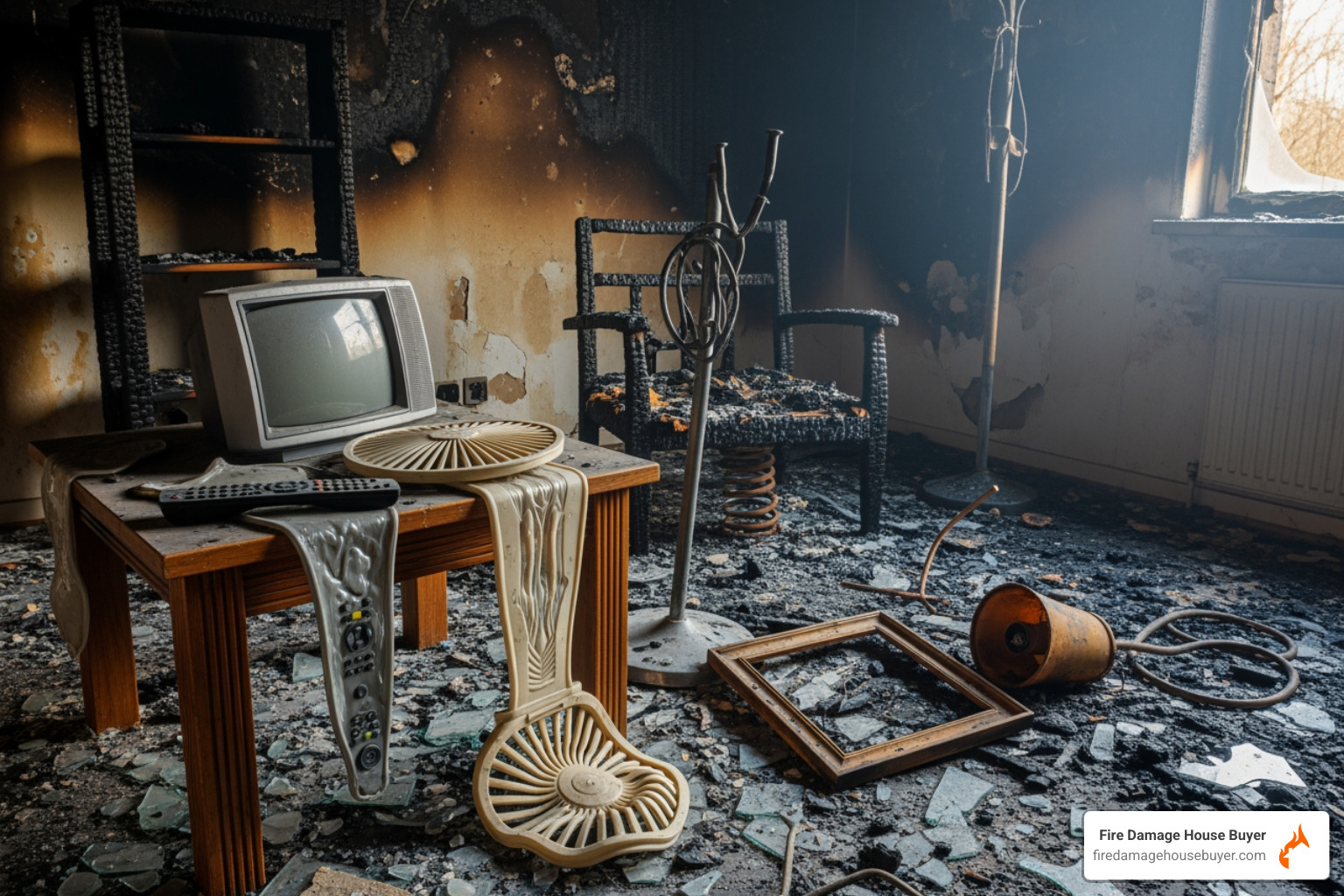
Walking through a fire-damaged home reveals selective destruction. Plastic and synthetic materials melt at just 250-340°F, contributing to higher temperatures and toxic smoke. Glass windows shatter around 500-700°F from thermal shock, feeding oxygen to the fire. Aluminum siding and fixtures melt at 1,220°F.
What about valuables? Gold (melting point 1,948°F) and silver (1,763°F) might survive an average fire, but during flashover when temperatures exceed 2,000°F, even gold can melt. Steel safes can warp and become impossible to open, and even diamonds can crack from rapid temperature changes.
| Material | Melting Point (Approximate) | Reaction to Fire Temperatures |
|---|---|---|
| Plastics/Synthetics | 250-340°F (120-170°C) | Melt, liquefy, ignite, contribute to hotter fires, toxic smoke |
| Glass | 500-700°F (260-370°C) | Warps, shatters due to thermal shock |
| Wood | 500-750°F (260-400°C) | Ignites, chars, burns, loses structural integrity |
| Concrete | >572°F (>300°C) | Spalling (cracking and bursting) |
| Aluminum | 1,220°F (660°C) | Melts, yields |
| Silver | 1,763°F (962°C) | Potentially survives, but can be damaged |
| Gold | 1,948°F (1,064°C) | Potentially survives, but can be damaged |
| Copper | 1,984°F (1,085°C) | Maintains integrity up to ~2,000°F, insulation burns |
| Steel | 2,500°F (1,370°F) | Softens, loses strength, eventually fails |
| Diamond | 6,000°F (3,315°C) | Not immune to damage from rapid temperature changes |
What does the color of the flame tell you about the house fire temperature?
Flame colors tell a story about the house fire temperature and what’s burning.
- Reddish-orange flames (1,100-1,800°F): Common in residential fires, where aluminum melts and wood is engulfed.
- Yellow-white flames (2,000-2,200°F): Indicate a more intense, fully developed fire where gold and silver are at risk.
- Bright white flames (>2,200°F): Represent the most extreme temperatures, often during flashover, where almost nothing is safe.
Understanding these temperature effects is crucial. The damage often extends far beyond what’s visible, complicating restoration. For a detailed look at evaluating the financial impact, read our guide on how to price a fire damaged house. The high cost of repairs is why many homeowners find selling as-is a simpler path forward.
From Restoration to Resolution: Your Options After a Fire
The flames are out, and you’re facing an overwhelming journey. Between the charred walls, smoke damage, and water from fire hoses, you have decisions no homeowner ever wants to make.
The Reality of Restoration
Rebuilding after a fire isn’t just fixing what you see. The extreme house fire temperature creates hidden damage, like warped framing and compromised electrical systems. You’ll also deal with toxic smoke residue, water damage, and potential mold.
The costs add up quickly. Minor fire damage repairs might start around $20,000 to $40,000, while severe damage can easily exceed $150,000 to $300,000 or more. These figures don’t include temporary housing or the emotional toll. Dealing with insurance adds another layer of complexity, with long claims and common disputes. For guidance, check out our house fire insurance claim tips.
A Different Path Forward
Here’s what many homeowners don’t realize: you don’t have to rebuild. Selling your fire-damaged house as-is is a legitimate option, and for many families, it’s the right one.
When you sell to a cash buyer who specializes in fire damage, you skip the entire restoration nightmare. No contractors, no permits, and no months of construction. You sell the house exactly as it stands. You also avoid real estate commissions and agent fees.
Perhaps most importantly, a cash sale closes fast. You could have cash in hand within days or weeks, allowing you to move forward with your life, find a new place to live, and begin healing without the constant reminder of the fire.
If you’re wrestling with this decision, our guide on rebuild or sell after house fire walks through the factors to consider. And if you decide that moving forward is better than looking back, we’re here to make it simple. Sell Fire Damaged House to us for a fair cash offer with no strings attached.
Frequently Asked Questions about House Fire Temperatures
After working with hundreds of homeowners, I’ve noticed certain questions about house fire temperature come up again and again. Here are the answers based on our experience.
How quickly does a house fire reach its peak temperature?
Frighteningly fast. A house fire can reach its peak temperature in as little as 3 to 5 minutes due to a phenomenon called flashover. This is when accumulated heat at the ceiling ignites everything in the room almost simultaneously, causing temperatures to spike to 900-1,200°F or higher in seconds. The speed is influenced by room size, the amount of synthetic furniture (which burns fast and hot), and air circulation.
Can a house fire melt gold or other valuables?
Yes, it can. Gold’s melting point is 1,948°F. While an average fire burns between 1,100-1,500°F, temperatures during flashover regularly exceed 2,000°F, which will liquefy pure gold. Silver, with a melting point of 1,763°F, is also at risk. Even if they don’t melt, valuables can be warped or damaged by thermal shock from firefighting water. Location matters: items in a floor-level safe have a much better chance of survival.
What makes some house fires burn hotter than others?
Several factors determine why some fires rage at 2,000°F while others stay closer to 1,100°F.
- Fuel Load: A home filled with modern synthetic furniture and plastics will burn significantly hotter than one with natural materials like wood and cotton.
- Oxygen Flow: More oxygen means a hotter, faster fire. Broken windows or open floor plans can feed the flames, while a sealed room might smolder until a door is opened, causing a dangerous backdraft.
- Architecture: Open floor plans can help a fire spread, while high ceilings can create convection currents that feed it.
- Accelerants: Flammable liquids like gasoline or even exploding aerosol cans can cause temperatures to spike dramatically.
When these factors align, temperatures can surge well beyond 2,000°F, causing catastrophic damage. This helps explain why some homes are total losses and why the decision to Sell Fire Damaged House as-is often makes the most sense.
Conclusion: Moving Forward After Experiencing a Fire
The reality of house fire temperature is sobering. We’ve walked through how fires can reach over 2,000°F in minutes, how different temperature zones create deadly conditions throughout your home, and how these extreme temperatures don’t just burn—they fundamentally alter the structure and safety of your property. From steel beams that soften at 1,000°F to synthetic materials that melt and ignite faster than ever before, modern house fires are more destructive than most people realize.
If you’re reading this after experiencing a fire, you’re probably facing one of the most difficult decisions of your life. The emotional toll alone is exhausting—losing your home, your belongings, your sense of security. Then comes the practical side: insurance adjusters, restoration estimates, structural engineers, and contractors. The bills start adding up quickly. Smoke remediation can cost $3,000-$10,000. Structural repairs might run $20,000-$100,000 or more, depending on the damage. Water damage from firefighting efforts adds another layer of complexity and expense.
Restoration is possible, but it’s rarely simple. Hidden damage from extreme heat—warped framing, compromised wiring, weakened foundations—often reveals itself only after work begins, leading to unexpected costs and delays. The process can stretch for months, sometimes over a year, while you’re displaced from your home and dealing with insurance complexities.
That’s exactly why we started Fire Damage House Buyer. We’ve worked with hundreds of families who simply couldn’t face the restoration journey, or who started down that path and realized it wasn’t right for them. There’s no shame in that decision. Sometimes the smartest, healthiest choice is to close this chapter and move forward.
When you Sell Fire Damaged House to us, you’re choosing a different path—one without contractors, without surprise repair bills, without months of uncertainty. We buy your property exactly as it stands, whether it’s lightly damaged or completely gutted. You don’t clean up a single piece of debris. You don’t negotiate with insurance companies over repair costs. You simply get a fair cash offer, a quick closing, and the freedom to start fresh.
We know this has been one of the hardest experiences of your life. But you don’t have to carry this burden alone. Get a no-obligation cash offer from us today. No pressure, no obligation—just a straightforward option that might be exactly what you need right now. Sometimes the simplest path forward is also the wisest one.