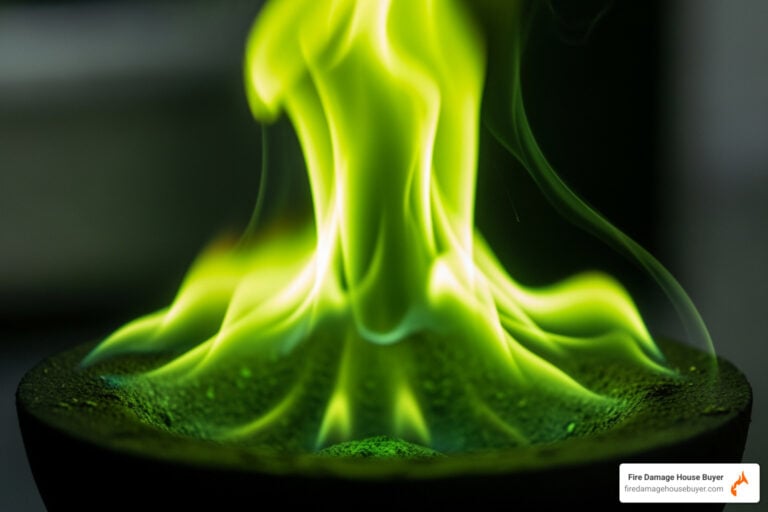
Understanding the Unusual Phenomenon of Green Flames
When you see a fire, you probably associate its color with its temperature: red for cooler flames, and blue or white for hotter ones. But what about green fire? The question of how hot is green fire is a common one, and the answer is more complex than you might think. Unlike the familiar red-to-blue spectrum, the color of a green flame isn’t a reliable indicator of its temperature. Instead, it’s a sign that specific chemicals are burning.
Here is a quick overview of what green flames signify:
- Chemical Reaction, Not Temperature: The green color is produced by the combustion of certain elements, like copper or barium, not by the heat of the fire itself.
- Variable Temperature: A green flame can have a wide range of temperatures, from relatively cool (around 500°C / 932°F) to very hot (over 1,200°C / 2,192°F), depending on the fuel source.
- A Sign of Contamination: In a house fire, green flames are a red flag. They often mean that hazardous materials, such as treated wood or electrical wiring, are burning, which can lead to toxic residue and complicated cleanup.
The presence of green flames fundamentally changes the nature of fire damage. While a typical house fire already presents significant challenges with smoke damage, structural issues, and water damage from firefighting efforts, green flames indicate chemical contamination that makes restoration exponentially more complex and expensive. According to environmental remediation experts, properties with chemical contamination from fires can require specialized cleanup that costs 3-5 times more than standard fire restoration.
While the science behind flame colors is fascinating, understanding the practical implications is crucial for homeowners. A green flame is not just a curiosity; it is a warning that the fire damage to your property may be more severe and dangerous than it appears. Knowing what causes house fires is the first step, but recognizing these specific signs can help you make safer, more informed decisions in the aftermath.
As Daniel Cabrera, founder of Fire Damage House Buyer with over 15 years of experience, I have seen how chemical indicators like green flames can transform a standard fire restoration into a complex hazardous material cleanup. Understanding what this means for your property is the key to navigating the difficult road ahead. In many cases, the complexity and cost of dealing with chemical contamination makes selling the property ‘as is’ a more practical and financially sound decision than attempting restoration.
What Causes Green Flames and Are They Natural?
Green flames are a captivating sight, but they are not a natural occurrence in most fires, like a wood-burning fireplace or a candle. Their appearance is a direct result of chemistry. When certain chemical elements are heated in a fire, they emit a distinct color of light, and for some elements, that color is green.
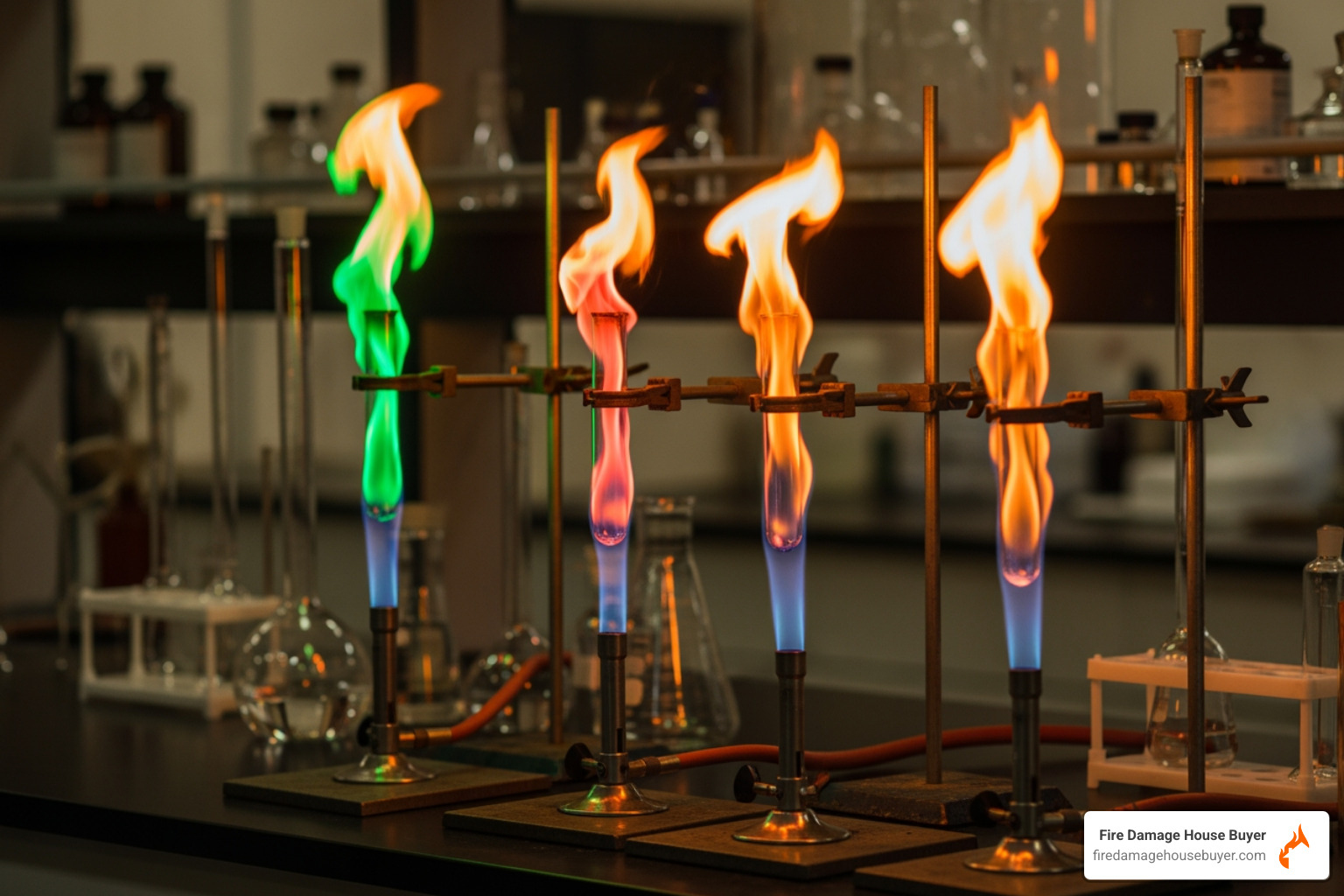
This process is known as atomic emission. In simple terms, when elements like copper, barium, or boron are exposed to high heat, their atoms get excited. As they return to their normal state, they release energy in the form of light. The color of this light is unique to each element, much like a fingerprint.
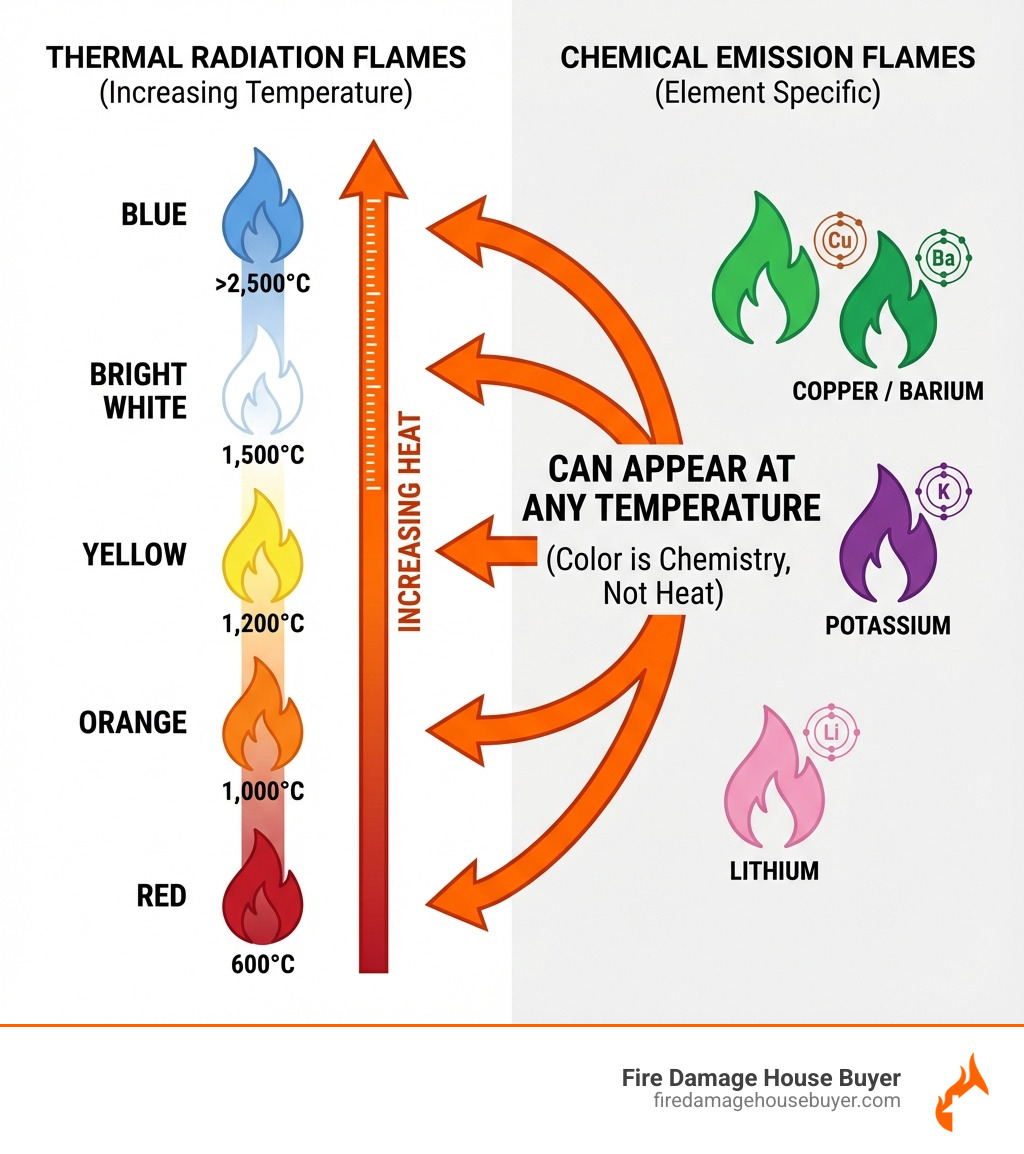
This is fundamentally different from the way most fires get their color. The familiar red, orange, and yellow of a wood fire are caused by a process called black-body radiation, where the color is directly related to the temperature of the glowing soot particles. Hotter particles glow yellow-white, while cooler ones glow red.
With green flames, the color is determined by the chemical present, not the temperature. This is why a green flame can appear in a fire that is either relatively cool or extremely hot.
Common chemicals that produce green flames include:
- Copper compounds: Often produce a vibrant blue-green flame.
- Barium compounds: Known for creating a bright, apple-green color.
- Boron compounds: Can create a vivid, almost emerald green flame.
For a homeowner, seeing green flames is a critical signal. It indicates that specific materials, often man-made and potentially hazardous, are burning. This could be anything from treated lumber to certain types of insulation or electrical wiring. Understanding what materials are in your home, such as knowing does house insulation burn and what it is made of, can be crucial in assessing the situation after a fire.
How Hot is Green Fire Compared to Other Flame Colors?
When people see a green flame, they often wonder if it is hotter or cooler than the familiar red or orange. Many of us are taught that blue flames are the hottest, so where does green fit in? The truth is, the color of a green flame has nothing to do with its temperature.

The temperature of a fire is determined by the fuel source and the amount of oxygen available. A green flame’s heat depends entirely on what is burning, not the color it produces. This is why a green flame can be relatively cool or very hot. For example, a small, controlled fire with a copper-based chemical might be cooler than a typical wood fire, while a large industrial fire involving certain metals could be significantly hotter.
This is because the green color comes from a process called atomic emission, where specific chemicals release colored light when heated. It is a separate phenomenon from the black-body radiation that gives most fires their familiar red-orange-yellow glow.
Temperature Comparison: Green Fire vs. Common Flames
To put it in perspective, here is a comparison of the variable temperature of green fire to the more predictable temperatures of common flames.
| Flame Type | Typical Temperature Range (Celsius) | Typical Temperature Range (Fahrenheit) | Notes |
|---|---|---|---|
| Wood Fire | 600-1,000°C | 1,112-1,832°F | Color is from glowing soot (black-body radiation). |
| Natural Gas | 900-1,500°C | 1,652-2,732°F | Typically blue, indicating efficient combustion. |
| Candle Flame | Up to 1,400°C | Up to 2,552°F | The hottest part is the blue base, while the yellow tip is cooler. |
| Green Flame | Variable, depending on chemical and fuel | Variable, depending on chemical and fuel | Color is due to specific chemicals, not necessarily temperature. |
In a house fire, the presence of green flames is an accidental and often dangerous indicator. For a more general understanding of fire temperatures, you can consult a guide to the temperatures associated with different flame colors, which can be helpful for those navigating the complexities of fire damage restoration. For a comprehensive overview of the entire restoration process, see our comprehensive house fire damage restoration guide.
Chemicals, Applications, and Variations of Green Fire
The allure of green flames is undeniable, often evoking images of magic or science fiction. But in reality, their existence is rooted firmly in chemistry. The ability to produce green flames has found various applications, from dazzling entertainment to practical industrial uses, and sometimes, it appears as an unwelcome guest in house fires.

What Chemicals Burn Green?
The vibrant green color in flames is produced by specific metal compounds. When heated, these compounds emit light at green wavelengths. The most common chemicals include:
- Copper Compounds: Copper sulfate and copper chloride are known for producing brilliant green to blue-green flames.
- Barium Compounds: Barium nitrate and barium chloride create a vivid “apple green” color, which is why they are a staple in fireworks.
- Boron Compounds: Boric acid, a common household chemical, and trimethyl borate produce a bright, almost emerald green flame.
The exact shade of green can vary. For example, copper chloride often produces a blue-green flame, while barium compounds create a more yellowish-green. The purity of the chemicals and the presence of other elements can also alter the color. A small amount of sodium, for instance, can add a strong yellow tint to the flame.
Where You Might See Green Flames
While not a common sight in a typical wood fire, green flames can appear in several contexts:
- Fireworks: Barium compounds are frequently used to create stunning green bursts in pyrotechnic displays.
- Science Experiments: Flame tests in chemistry labs use various metal salts to demonstrate how different elements produce unique colors.
- Industrial Applications: Certain welding processes and waste incineration can produce green flames if specific metals are present.
- House Fires: This is the most concerning scenario for a homeowner. Green flames in a house fire are a clear sign that specific, often hazardous, materials are burning. Common culprits include:
- Copper Electrical Wiring: Intense heat can cause copper wiring to burn, creating a green or blue-green flame.
- Treated Lumber (CCA): Wood treated with Chromated Copper Arsenate (CCA) for pest resistance will burn with a green flame, releasing highly toxic arsenic and chromium.
- Household Chemicals: Certain cleaners, pesticides, or pool chemicals can contain elements that burn green.
Understanding these sources is key to recognizing the potential dangers when you see an unusually colored flame in an uncontrolled environment like a house fire.
Safety Hazards: The Dangers Behind the Beauty of Green Fire
While a green flame might look intriguing, in a house fire, it is a serious red flag. It signals the presence of hazardous materials, and the resulting smoke and ash can be far more dangerous than those from a typical wood or paper fire. Understanding these risks is crucial for your safety and for making decisions after the fire is out.
Toxic Fumes and Contaminated Residue
The chemicals that create green flames are often heavy metals, which release toxic substances when burned. This creates a hazardous environment both during and after the fire. Research from the National Institute of Standards and Technology (NIST) shows that fires involving heavy metals can produce particulate matter that is 10-100 times more toxic than standard house fire smoke.
- Copper: Burning copper wiring can release fumes that cause “metal fume fever,” an illness with flu-like symptoms. The Occupational Safety and Health Administration (OSHA) reports that exposure to copper fumes can cause immediate respiratory irritation and long-term lung damage.
- Barium: Often used in fireworks, barium compounds are toxic if inhaled or ingested, potentially affecting the nervous system and heart. The EPA classifies barium compounds as hazardous substances requiring special handling.
- Arsenic and Chromium: The most significant danger comes from pressure-treated wood, often labeled CCA (Chromated Copper Arsenate). When this wood burns, it releases highly toxic and carcinogenic arsenic and chromium into the air. Studies show that burning just one 12-foot section of CCA-treated lumber can release enough arsenic to contaminate an entire house beyond safe levels.
These toxic substances do not just disappear when the fire is extinguished. They settle as a fine dust and residue on every surface, get absorbed by porous materials like drywall and furniture, and can linger in the air. Environmental testing data shows that without proper remediation, these contaminants can remain at dangerous levels for months or even years.
Complications for Cleanup and Restoration
The presence of these hazardous materials dramatically complicates the cleanup process. Standard fire restoration is not enough, and attempting DIY cleanup can expose you to serious health risks.
- Specialized Remediation: Your home becomes a hazardous waste site. Cleanup requires certified professionals with specialized training and equipment, including full-body protective suits and respirators. This is a far more intensive and regulated process than standard fire cleanup. The Institute of Inspection, Cleaning and Restoration Certification (IICRC) requires specific hazmat certifications for crews working on chemically contaminated fire sites.
- Extensive and Costly Testing: Before anyone can safely re-enter, the property must undergo extensive testing. This includes air quality sampling and surface testing to identify the specific contaminants and ensure they have been completely removed. These tests alone can cost $5,000-$15,000 and must be repeated multiple times throughout the cleanup process.
- Hazardous Waste Disposal: Contaminated debris, from drywall and insulation to personal belongings, cannot be thrown in a regular dumpster. It must be disposed of as hazardous waste, which costs approximately $300-$500 per ton compared to $50-$100 for regular construction debris.
- Health Monitoring Requirements: Anyone exposed to the contaminated environment may need medical monitoring. Some states require property owners to provide health screening for workers and neighbors potentially exposed to the toxic materials.
Because of these factors, the answer to “how hot is green fire” becomes less important than the answer to “what is burning?” The chemical nature of the fire, not its temperature, dictates the danger and the immense challenge of making the home safe again. If you have experienced a house fire, knowing what to do after a fire is critical, but if you saw green flames, the need for professional assessment is even more urgent. The process of getting rid of the fire smoke smell in house is also much more complex, as it involves removing toxic particulates, not just odor.
Given these overwhelming challenges, many homeowners find that selling their fire-damaged property ‘as is’ becomes the most practical solution, avoiding months of complex remediation and uncertain outcomes.
Frequently Asked Questions about Green Fire
Unusual flame colors can be alarming. Here are answers to some common questions about green fire.
Is green fire hotter than blue fire?
No. A blue flame, which indicates complete and efficient combustion, is typically one of the hottest flames, often exceeding 1,400°C (2,552°F). A green flame’s color comes from chemicals, not temperature. Its heat can vary greatly, but it is not inherently hotter than a blue flame.
Can you make green fire at home?
While it is chemically possible to create green fire with household items like boric acid, it is extremely dangerous and strongly discouraged. Handling flammable liquids and burning unknown chemicals can lead to uncontrolled fires, property damage, and the release of toxic fumes. This is best left to professionals in a controlled setting.
If I see green flames in a house fire, what does it mean?
Seeing green flames in a house fire is a serious warning sign. It means that specific materials are burning, likely releasing hazardous substances. The most common sources in a home are:
- Copper: From electrical wiring or pipes.
- Treated Wood (CCA): This wood contains arsenic and is highly toxic when burned.
- Household Chemicals: Certain cleaners, pesticides, or pool chemicals can contain elements that burn green.
The green color signals that the fire damage includes chemical contamination, which requires specialized, professional cleanup. After any fire, it is important to know what to do after a fire, but this sign adds a layer of urgency and complexity.
Restoration Challenges and Cost Considerations for Green Fire Damage
When a fire involves green flames, the aftermath is far more complicated than just dealing with smoke and soot. The presence of toxic chemicals creates significant restoration challenges and dramatically increases costs, turning a difficult situation into a potential financial and logistical nightmare.
The primary issue is the hazardous residue left behind. Unlike normal soot, this residue can contain heavy metals like arsenic, chromium, or copper, which are toxic and require specialized handling. Industry data from restoration professionals shows that chemical contamination increases project complexity by 300-500% compared to standard fire damage.
Here is what that means for the restoration process:
The Financial Reality of Chemical Fire Damage
-
Hazardous Material Abatement: Your home becomes a hazardous waste site. Cleanup requires certified professionals in full personal protective equipment (PPE) to safely handle and remove contaminated materials. According to the Environmental Protection Agency (EPA), hazmat remediation costs average $15-$25 per square foot, compared to $4-$7 for standard fire cleanup. For a 2,000 square foot home, this difference alone can add $22,000-$36,000 to restoration costs.
-
Extensive and Costly Testing: Before anyone can safely re-enter, the property must undergo extensive testing. This includes air quality sampling ($500-$1,500 per test), surface testing ($300-$800 per sample), and soil testing if contamination spread outside ($1,000-$3,000). These tests must be repeated multiple times throughout the project, with final clearance testing often costing $10,000-$20,000 alone.
-
Specialized Disposal: Contaminated debris cannot be thrown in a regular dumpster. Hazardous waste disposal costs approximately $300-$500 per ton, compared to $50-$100 for regular construction debris. A typical fire-damaged home can generate 20-40 tons of debris, meaning disposal costs alone can reach $20,000.
-
Skyrocketing Costs: The combination of specialized labor, advanced equipment, and hazardous waste disposal means the cost to repair a fire-damaged house can skyrocket. While a standard fire restoration might cost $50,000-$100,000, a project involving chemical contamination routinely exceeds $200,000-$300,000. Insurance coverage for this type of specialized cleanup is often limited, with many policies capping hazmat coverage at $10,000-$25,000.
Timeline and Living Situation Complications
-
Lengthy Timelines: A typical fire restoration can take 3-6 months. When hazardous materials are involved, the timeline can stretch to 12-18 months due to:
- Required waiting periods between decontamination phases
- Multiple rounds of testing and retesting
- Regulatory compliance and permit requirements
- Limited availability of certified hazmat restoration crews
- Potential findy of additional contamination during the process
-
Extended Displacement Costs: With restoration taking a year or more, temporary housing costs become substantial. Average rental costs of $2,000-$3,000 per month mean homeowners face $24,000-$54,000 in additional living expenses. Most insurance policies limit additional living expense coverage to 12 months, leaving homeowners to cover extended displacement costs.
Regulatory and Legal Complications
Chemical contamination triggers numerous regulatory requirements that standard fire damage does not:
- Environmental Impact Assessments: Many jurisdictions require formal environmental assessments for properties with chemical contamination, costing $5,000-$15,000.
- Neighbor Notification Requirements: Some states mandate notifying neighbors about hazardous material remediation, potentially affecting property values throughout the neighborhood.
- Ongoing Monitoring: Properties may require environmental monitoring for years after remediation, with annual costs of $2,000-$5,000.
- Disclosure Obligations: Even after successful remediation, sellers must disclose the chemical contamination history, significantly impacting resale value. Studies show properties with disclosed environmental issues sell for 15-30% less than comparable properties.
The Hidden Costs Nobody Talks About
Beyond the direct restoration costs, chemical fire damage creates numerous hidden expenses:
- Lost Personal Property: While standard fire damage might allow salvaging some belongings, chemical contamination typically requires disposing of all porous materials, including furniture, clothing, books, and family heirlooms. Replacement costs can easily exceed $50,000-$100,000.
- Landscaping and Soil Remediation: If contaminated ash settled on your property, soil removal and replacement can cost $20,000-$50,000.
- HVAC System Replacement: Chemical contamination often necessitates complete HVAC system replacement rather than cleaning, adding $10,000-$20,000.
- Professional Fees: Environmental consultants, industrial hygienists, and specialized contractors charge premium rates, with consulting fees alone reaching $10,000-$30,000.
For homeowners, this means not just a longer displacement and more stress, but a much larger financial burden that can exceed the property’s value. The decision to rebuild becomes a question not just of repairing fire damage, but of undertaking a complex environmental remediation project that may never fully restore the property’s value or livability.
Given these overwhelming challenges and costs, selling the property ‘as is’ to a company that specializes in buying fire-damaged homes often becomes the most financially sound decision. This approach eliminates the uncertainty, stress, and financial drain of attempting restoration while providing immediate cash to move forward with your life.
Conclusion
The question of how hot is green fire reveals a complex reality about fire damage that goes far beyond temperature. Unlike the predictable color-to-heat scale of a normal fire, a green flame’s color is produced by burning chemicals like copper or barium. While its temperature can vary widely, its presence is always a significant warning sign that transforms a challenging situation into a potentially impossible one.
The key takeaways for homeowners are clear and sobering:
-
Green flames indicate chemical contamination, not just heat damage. The presence of toxic materials like arsenic from treated wood or heavy metals from electrical components creates a hazardous environment that standard fire restoration cannot address.
-
Health risks extend far beyond the fire itself. Toxic fumes and contaminated residue pose serious health threats to anyone exposed, with effects ranging from immediate respiratory issues to long-term cancer risks. The contamination can persist for months or years without proper remediation.
-
Restoration becomes exponentially more complex and expensive. What might be a $50,000 standard fire restoration project can balloon to $200,000-$300,000 or more when chemical contamination is involved. Testing alone can cost tens of thousands of dollars, and the specialized cleanup requires hazmat-certified professionals and equipment.
-
Timelines stretch from months to years. Instead of a 3-6 month restoration, chemical contamination can mean 12-18 months of displacement, with associated living costs that insurance may not fully cover.
-
Financial recovery becomes uncertain. Between limited insurance coverage for hazmat cleanup, ongoing monitoring requirements, and permanent impacts on property value, the financial burden can exceed the property’s worth.
-
Regulatory and legal complications multiply. Environmental assessments, neighbor notifications, and permanent disclosure requirements add layers of complexity that standard fire damage never involves.
For homeowners facing the overwhelming prospect of chemically contaminated fire damage, the traditional path of restoration often becomes a financial and emotional trap. The combination of extreme costs, extended timelines, health risks, and uncertain outcomes makes restoration an impractical choice for many families.
This is where we offer a fundamentally different solution. Instead of enduring lengthy and costly restoration processes with uncertain results, we provide a straightforward, stress-free alternative. We buy fire-damaged houses in any condition, including those with severe chemical contamination, covering all 50 states from Alabama to Wyoming. This means:
- No repairs or cleanup required – We handle everything, eliminating your exposure to health risks and financial uncertainty
- No real estate agent commissions – Keep more money in your pocket during an already difficult time
- Fast closing – Get cash quickly to move forward with your life, not months or years of waiting
- No ongoing liability – Once sold, the property and its complications become our responsibility
- Certainty in an uncertain situation – Know exactly what you’ll receive and when, without the variables of restoration and traditional sale
The science of green fire teaches us that not all fire damage is created equal. When chemicals turn flames green, they also turn restoration into a hazardous, expensive, and often futile endeavor. Rather than risking your health, finances, and future on an uncertain restoration process, consider the simpler path forward.
Let us handle the burden of your chemically contaminated, fire-damaged property so you can focus on rebuilding your life, not your house. We understand the unique challenges of chemical fire damage and have the resources and expertise to manage these complex properties safely and efficiently.
To explore a simpler path forward, Sell Fire Damaged House to us. Contact us today for a fast, no-obligation cash offer and find how easy it can be to move forward after a fire. Don’t let the complexity of chemical contamination trap you in months or years of costly restoration – choose the certainty and simplicity of a cash sale today.