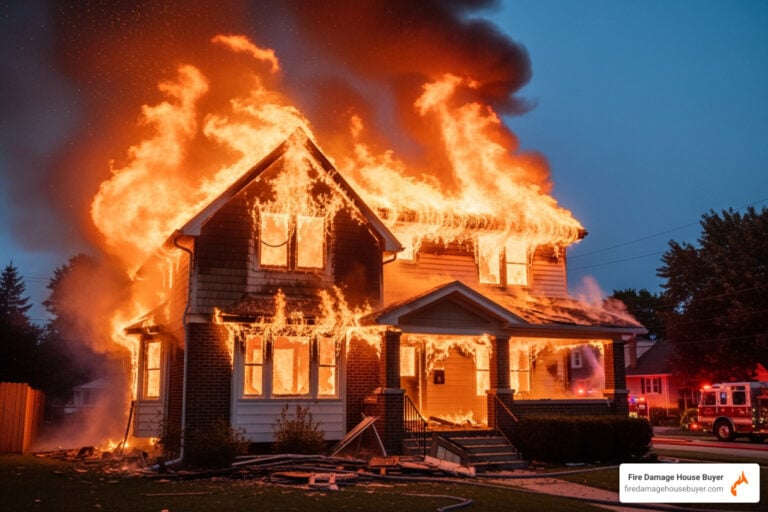
Understanding the Reality of House Fires in America
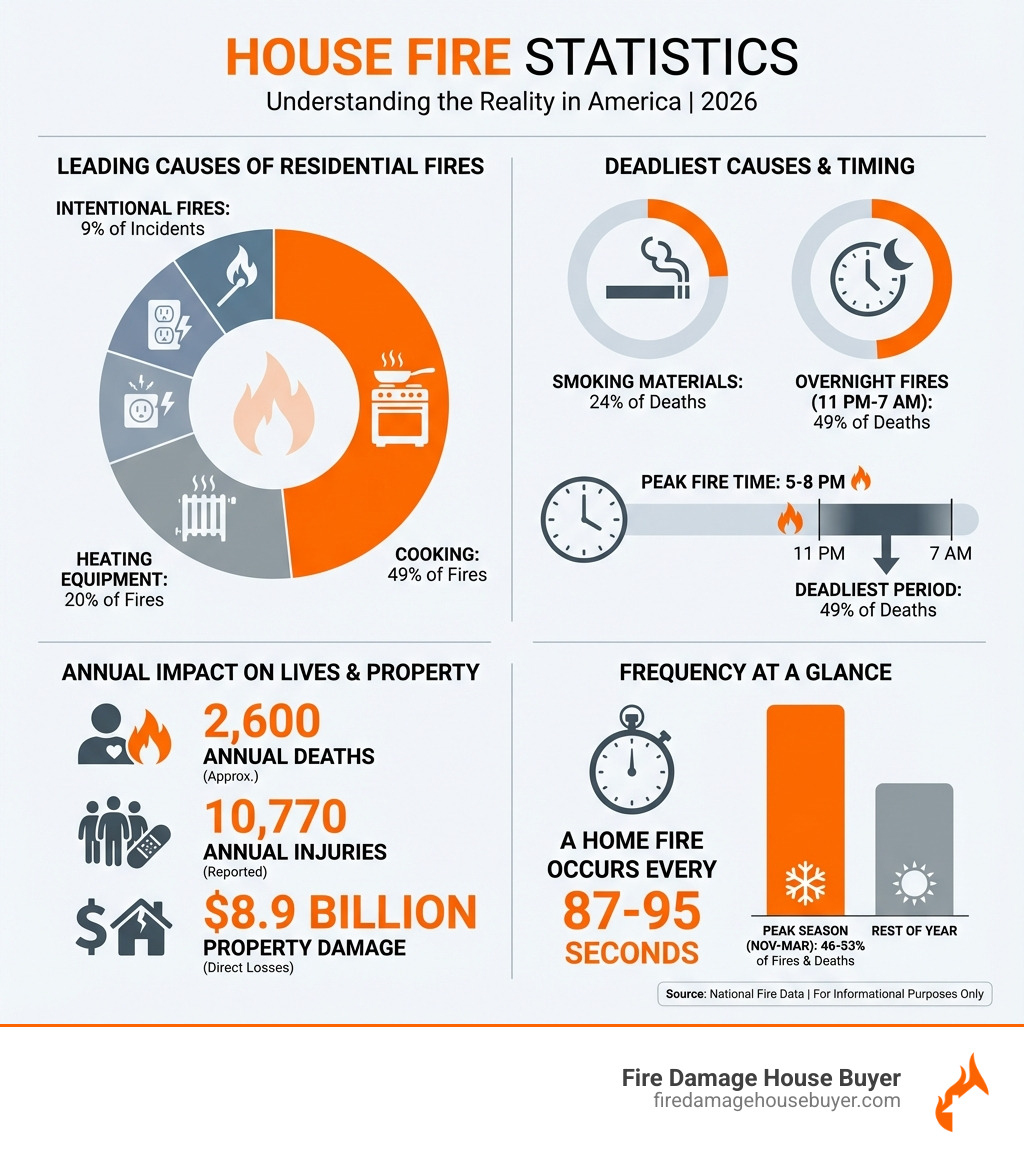
House fire statistics reveal a sobering reality: a residential fire is reported in the United States approximately every 87 to 95 seconds. These fires collectively result in over 350,000 incidents annually, causing an estimated 2,600 to 2,800 civilian deaths, 10,000 to 11,000 injuries, and between $8.9 and $11.3 billion in direct property damage each year.
Key House Fire Statistics at a Glance:
- Frequency: A home structure fire occurs every 87-95 seconds
- Annual Incidents: 350,000+ residential fires per year
- Deaths: Approximately 2,600-2,800 civilian deaths annually (7-8 deaths per day)
- Injuries: 10,000-11,000+ civilian injuries per year
- Property Damage: $8.9-$11.3 billion in direct losses annually
- Leading Cause: Cooking accounts for 47.7-49% of all residential fires
- Deadliest Cause: Smoking materials cause 23-24% of fire deaths despite only 5% of fires
- Peak Season: 46-53% of fires and fire deaths occur November through March
- High-Risk Time: Fires between 11 PM and 7 AM cause 49% of deaths despite only 19% of incidents
If you’ve recently experienced a house fire, you’re facing one of the most overwhelming situations a homeowner can encounter. Beyond the immediate trauma and displacement, you’re likely struggling with critical questions: Should I restore my home? Can I afford the repairs? How long will this take? What’s my property even worth now?
Understanding the broader context of house fire statistics can help you make informed decisions about your path forward. These numbers aren’t just abstract data—they represent real families, real homes, and real financial consequences that affect homeowners like you every single day. The statistics also reveal important patterns about why fires happen, where they start, and who is most at risk, information that becomes crucial when you’re deciding whether to rebuild or sell.
The restoration process after a fire typically costs between $3,107 and $51,243, with an average of $27,175, though extensive damage can push costs significantly higher. These figures often don’t account for temporary housing, lost possessions, or the emotional toll of a months-long recovery process. For many homeowners, particularly those without comprehensive insurance coverage or those facing claim disputes, these costs become impossible barriers to moving forward.
I’m Daniel Cabrera, founder of Fire Damage House Buyer, and over the past 15 years I’ve personally bought and sold over 275 distressed properties, including many fire-damaged homes, which has given me deep insight into house fire statistics and their real-world implications for homeowners. My experience has shown me that while the numbers tell part of the story, the human impact—the stress, uncertainty, and financial pressure families face—is what truly matters when you’re standing in the ashes of your home trying to decide what comes next.
You may also like to read:
The Alarming Frequency and Human Cost of House Fires
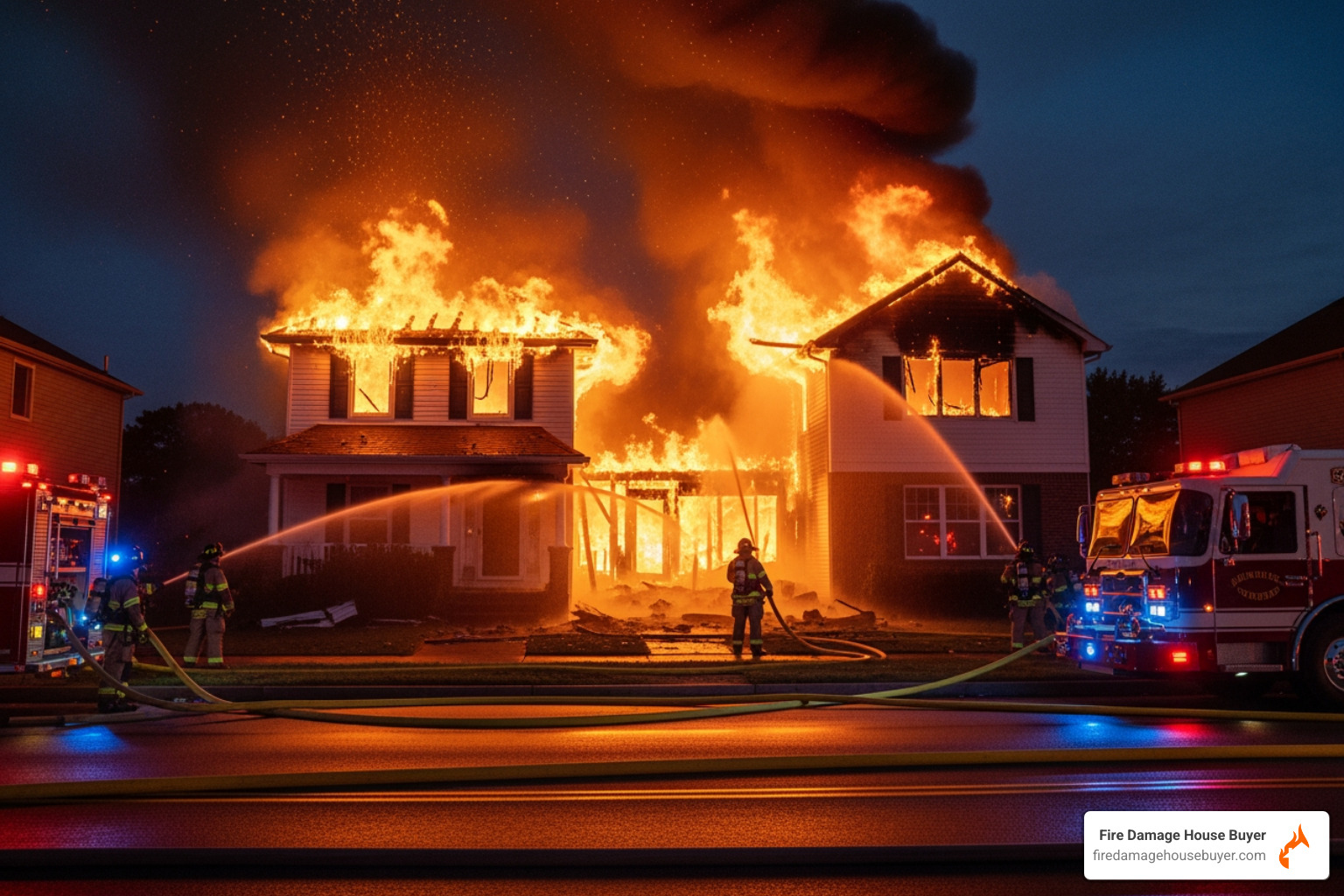
When we dig into house fire statistics, one of the first things that stands out is the sheer frequency of these devastating events. In 2023, local fire departments in the United States responded to an estimated 1.39 million fires, meaning a fire incident occurred somewhere in the country every 23 seconds. Residential structures bore a significant brunt of this, with a home structure fire reported approximately every 95 seconds. This translates to over 350,000 house fires annually across the nation.
But beyond the numbers of incidents, the human cost is truly heartbreaking. In 2023 alone, these fires caused an estimated 3,670 civilian deaths and 13,350 reported civilian injuries. On average, this means that every single day, at least seven people lose their lives due to fire, and one civilian fire-related injury occurs every 35 minutes. These aren’t just figures; they represent families torn apart and lives forever altered.
When we look at fatality and injury rates, the data paints a stark picture. The national fire death rate in 2022 was 13.3 per million population, with the national fire injury rate at 39.8 per million population. Certain demographics face even higher risks. For instance, children younger than 5 and adults older than 70 are at a significantly liftd risk of dying in house fires. Seniors over 65 are twice as likely to die in a residential fire as the general public. Sadly, our house fire statistics also reveal racial disparities: Black Americans have a fire death rate of 1.3 per hundred thousand population, nearly twice the overall rate. Additionally, men are more likely to die and be injured in fires than women, accounting for 61.3% of deaths and 60.3% of injuries in 2022.
You can explore more comprehensive fire data and trends on the US fire statistics from FEMA website. For homeowners navigating the aftermath of a fire, understanding these statistics underscores the importance of quick action and informed decisions. We’ve compiled essential steps for immediate safety and recovery in our guide on what to do after a house fire.
Key House Fire Statistics on Deaths and Injuries
The most tragic aspect of house fire statistics is the toll on human life. As mentioned, on average, seven people die in a fire every single day in the U.S. This alarming frequency brings us to a crucial, yet often misunderstood, fact: the majority of home fire deaths are not caused by the flames themselves. Instead, smoke inhalation is the leading cause of death in house fires, responsible for over 60% of fatalities. Toxic smoke can fill a home even faster than flames spread, making rapid escape absolutely critical.
A particularly disturbing statistic highlights the importance of basic safety measures: nearly two-thirds of all house fire-related deaths occur in homes without working smoke alarms. This means that a simple, affordable device could make the difference between life and death for countless individuals. In fact, from 2019-2023, 57% of home fire deaths occurred in fires where no smoke alarm was present or it failed to operate.
Children are also tragically vulnerable. Every day, at least one child dies from a fire inside the home, with an estimated 500 children (14 and younger) killed by fire each year. More than 50% of children aged 5 and younger die while asleep during a fire, underscoring the need for working smoke alarms and practiced escape plans. Further research into how factors like physical disability contribute to these fatalities can be found in the Physical Disability a a Factor in Home Fire Deaths report.
Uncovering the Source: Common Causes and Origins of House Fires
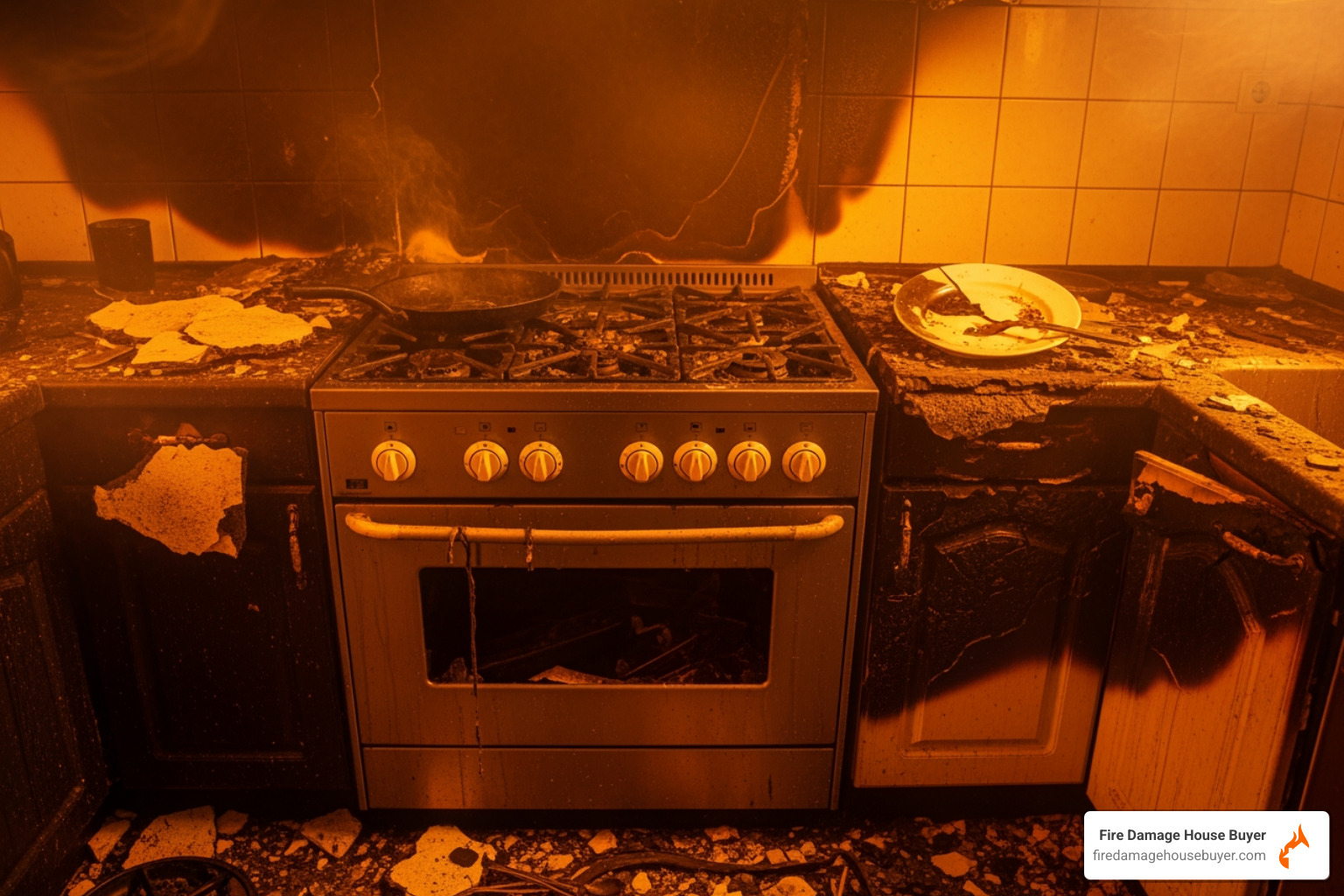
Understanding the “why” behind house fires is just as important as knowing the “how often.” House fire statistics consistently point to a few common culprits, often involving a combination of equipment malfunction and, unfortunately, human error. When we examine the leading causes, a clear pattern emerges that helps us identify critical areas for prevention.
Leading Causes of Ignition
What are the most common causes of house fires? The data is unequivocal:
-
Cooking Fires: This is the undisputed champion of house fire causes. Cooking accounts for nearly half (47.7% to 49%) of all residential fires. The majority of these incidents stem from unattended cooking, where food is left on the stovetop or in the oven without supervision. From 2019 through 2021, cooking equipment was involved in an estimated annual average of 157,100 fires. It’s a stark reminder that a moment’s distraction in the kitchen can have dire consequences. We explore this further in our article, what is the number one cause of house fires?.
-
Heating Equipment: Coming in second, heating equipment, including furnaces, fireplaces, and especially portable space heaters, is responsible for a significant portion of fires. From 2019 to 2021, heating and cooling equipment caused an estimated annual average of 37,600 fires. While portable heaters make up a smaller percentage of heating fires, they account for a disproportionately high percentage of fatal heating fires in residential buildings due to their mobility and close proximity to flammable items.
-
Electrical Malfunctions: Faulty wiring, overloaded circuits, and outdated electrical systems are silent dangers lurking within many homes. Electrical malfunction accounts for 6.9% to 7.7% of residential fires. An estimated annual average of 17,100 fires from 2019 to 2021 were attributable to electrical distribution equipment like installed wiring and lighting. Old homes, in particular, are susceptible to these issues. In 2017 alone, over 26,000 house fires were attributed to faulty wiring.
-
Unintentional or Carelessness: This broad category covers a range of human errors, from leaving candles unattended to improper use of tools, accounting for approximately 8.8% to 9.2% of residential fires.
-
Smoking Materials: While smoking materials cause a relatively small percentage of total fires (around 5%), they are shockingly deadly. Smoking materials caused 23-24% of home fire deaths from 2016-2020. This is primarily due to cigarettes igniting upholstered furniture or mattresses, often when occupants are incapacitated or asleep. From 2019 to 2021, smoking materials were associated with an annual average of 620 deaths, making them the largest contributor to fire deaths from heat sources.
-
Other Causes: Other ignition sources include candles, lighters, or matches (7% of fires, 110 deaths annually from 2019-2021), and chimney fires (21,510 annually). Intentional home fires, unfortunately, also contribute to these statistics, causing an average of 361 deaths (14%) from 2016-2020.
Where Fires Start and What Ignites First
The location where a fire begins within a home, and the first item ignited, are crucial pieces of information in house fire statistics for understanding risk and implementing preventative measures.
-
Area of Origin:
- Kitchens: Unsurprisingly, given cooking is the leading cause, kitchens are where most home fires begin, accounting for 41% to 44% of all home structure fires. While they cause the highest number of fires, they lead to a lower percentage of deaths (16% to 17%) compared to other areas, likely because occupants are often awake and able to react quickly.
- Bedrooms: Fires starting in bedrooms, while less frequent (6% to 7% of fires), are far more deadly, causing 24% to 25% of all home fire deaths. This is often because occupants are asleep and have delayed awareness.
- Living Rooms: Similarly, living room fires (3% to 4% of fires) are disproportionately fatal, accounting for 25% to 26% of deaths. These areas often contain significant fuel loads like upholstered furniture.
- Other Areas: Chimney fires (6% of residential fires) and laundry room fires (3% of residential fires) also contribute to the overall statistics.
-
Items First Ignited:
- Upholstered Furniture: This is a tragically common first item ignited in fatal fires. From 2019-2021, upholstered furniture was involved in an estimated annual average of 370 fire deaths, despite being the first item ignited in only 1% of fires.
- Mattresses and Bedding: Similar to upholstered furniture, mattresses or bedding ignitions accounted for an annual average of 320 deaths from 2019-2021, even though they were the first item ignited in only 1.8% of fires.
- Cooking Materials: Food and other cooking materials are the item first ignited in 29% of home structure fires.
- Flammable Liquids: Stored in garages or workshops, these can lead to rapid fire spread.
- Structural Components: We often get asked about building materials. Our article on does house insulation burn? digs into the fire resistance of various components.
Analyzing Trends, Timings, and Key Contributing Factors
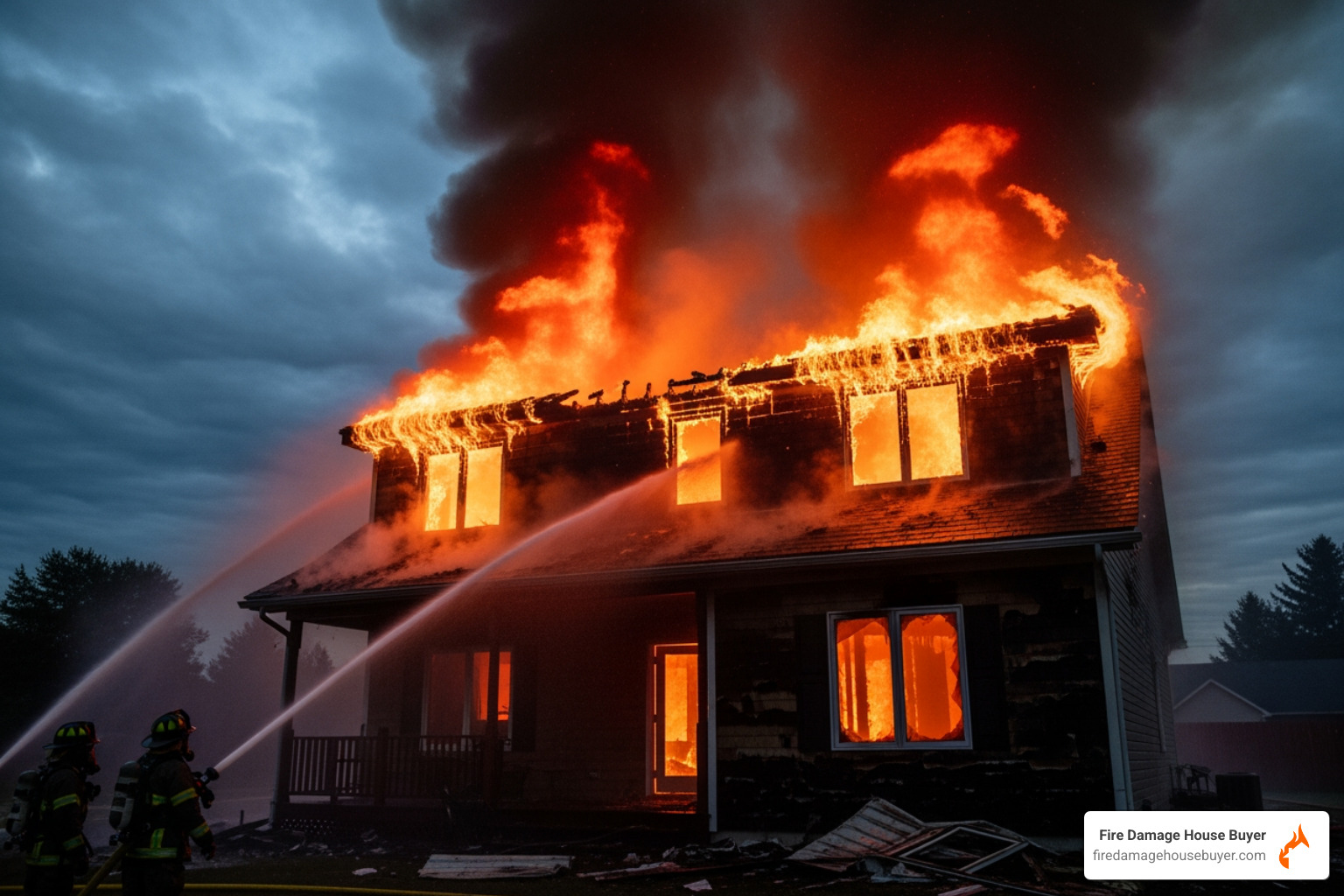
Understanding house fire statistics isn’t just about current numbers; it’s also about recognizing historical trends and how factors like time of day and season influence risk. These insights are vital for both prevention and emergency preparedness.
Historical Trends and the Role of Smoke Alarms
Looking back over the decades, we can see significant shifts in house fire statistics. The good news is that the number of reported home fires has fallen dramatically. The 2021 estimate of 338,000 reported home fires was 54% lower than the 734,000 recorded in 1980. Similarly, the home fire death toll in 2021 (2,840) was 45% lower than the 5,200 deaths in 1980. This reduction in incidents and fatalities is a testament to improved fire safety standards, public education, and fire department efforts.
However, a concerning trend emerges when we look closer: the death rate per 1,000 reported home fires was 11% higher in 2021 than in 1980. This suggests that while fewer fires are occurring, the ones that do ignite are often more deadly. Modern furnishings, often made from synthetic materials, burn hotter and faster than older, natural materials, significantly reducing escape time. This means that once a fire starts, the ability to prevent harm has not kept pace with the reduction in fire frequency. The NFPA’s Home Structure Fires report provides a deeper dive into these complex trends.
This stark reality underscores the vital role of smoke alarms. As we’ve noted, nearly two-thirds of all house fire-related deaths occur in homes without working smoke alarms. Smoke alarms were present in 74% of reported home fires from 2019-2023. However, 57% of home fire deaths during this period occurred in fires where no smoke alarm was present or where it failed to operate. This clearly demonstrates that functional smoke alarms are not just a recommendation, but a critical life-saving device.
How Time and Season Affect House Fire Statistics
Fires don’t happen randomly; they follow predictable patterns tied to our daily routines and the changing seasons.
- Seasonal Peaks: House fire statistics consistently show that residential fires are more common during the colder months. From 2016-2020, 46% of home structure fires and 55% of home structure fire deaths occurred in the five-month span from November to March. This is largely due to increased use of heating equipment, fireplaces, and candles.
- Holiday Fire Risks: Certain holidays bring a heightened risk. Thanksgiving consistently accounts for the highest number of fires per day every year, primarily due to cooking accidents. Christmas tree fires also pose a significant threat, causing approximately $17.5 million in damages annually. Many fires involving candles also occur around Christmas, Christmas Eve, and New Year’s Day.
- Time of Day Analysis: Our daily routines also influence fire occurrence. Reported home fires generally peak from 5:00 to 8:00 p.m., coinciding with dinner preparation and increased activity in the home. However, the most dangerous fires occur overnight. Fires reported between 11:00 p.m. and 7:00 a.m. (19% of incidents) caused a disproportionate half (49%) of all home fire deaths. This is because occupants are often asleep and less likely to detect a fire early, leading to delayed escape. We dig into various factors that contribute to these incidents in our article what causes house fires?.
The Aftermath: Financial Impact and Your Recovery Options

Beyond the devastating human toll, house fire statistics reveal an equally staggering financial burden. A fire doesn’t just destroy a home; it impacts property values, insurance premiums, and can lead to immense out-of-pocket expenses for homeowners. For many, the economic impact is just as overwhelming as the emotional one.
The Staggering Financial Toll of House Fires
The direct property damage from house fires is immense. In 2023, the total property losses from fires in the U.S. were estimated at $23.2 billion, with residential properties accounting for $11.3 billion of that figure. House fires cause an estimated $9 billion to $12 billion in direct property damage each year. To put that in perspective, between 2013 and 2017, house fires cost Americans $6.5 billion annually.
These figures aren’t just about the charred remains of a structure. Fire damage extends far beyond the direct flames to include:
- Soot and Smoke Damage: Smoke and soot infiltrate every surface, causing corrosive damage and lingering odors. This requires specialized cleaning and often replacement of materials. Our article on what does smoke damage do? explains this in detail.
- Water Damage from Firefighting: The water used to extinguish the blaze often causes extensive damage to walls, flooring, and personal belongings. This can lead to mold growth if not addressed quickly and properly.
- Heat Damage: Even in areas not directly touched by flames, intense heat can warp plastics, melt electronics, and compromise structural integrity.
The average cost of fire damage restoration can range from $3,107 to $51,243, with an average restoration cost of $27,175. However, these are just averages; a single homeowners’ insurance claim for fire damage can be approximately $77,000 per incident. More severe fires can easily exceed these figures. For guidance on addressing this, see our article on cleaning up after a house fire.
Navigating Insurance Claims and the Restoration Maze
After a fire, homeowners face a daunting journey through insurance claims and restoration. The insurance industry itself faces challenges, with climate change and urban expansion increasing fire risks, making them more systemic and complex to insure against. While most standard homeowners’ insurance policies cover accidental house fires, navigating the claims process can be incredibly complex and stressful. You can find essential advice in our house fire insurance claim tips and learn more about coverage in does house insurance cover fire damage?.
The restoration process itself is a long and arduous path:
- Securing the Property: It’s the property owner’s responsibility to secure the property immediately after a fire to prevent further damage or theft.
- Assessment and Mitigation: This involves professional inspection, debris removal, and initial steps to prevent further damage like mold. Occupants need to be careful of what they touch due to potential contamination from soot and dirty water.
- Insurance Adjusters: Waiting for insurance adjusters to assess damage and approve claims can take weeks or months. It’s crucial not to dispose of damaged items until they’ve been assessed.
- Finding Contractors: Identifying reliable, qualified contractors for specialized fire and water damage restoration is a critical step, often leading to delays and potential disputes.
- Rebuilding/Repairing: This can take many months, or even over a year, depending on the extent of the damage and contractor availability.
- Temporary Housing: During this entire period, homeowners often live in temporary housing, adding to the financial and emotional strain.
This entire process is fraught with emotional and financial stress. Homeowners must deal with lost possessions, displacement, and the continuous battle with paperwork and contractors, all while trying to rebuild their lives.
Frequently Asked Questions about House Fires
How common is a house fire in the U.S.?
A home structure fire is reported approximately every 87-95 seconds in the United States, leading to over 350,000 incidents annually. While the overall number of fires has decreased over the decades, they remain a significant and frequent threat to homeowners.
What is the leading cause of house fire deaths?
While cooking is the leading cause of house fires (accounting for 47.7-49% of incidents), smoking materials are the leading cause of civilian fire deaths. Fires started by smoking materials, such as cigarettes igniting upholstered furniture or mattresses, are disproportionately deadly, causing 23-24% of fire deaths despite only 5% of fires.
How quickly can a house fire spread?
Modern house fire statistics show that a small flame can escalate into a major, life-threatening blaze in less than three minutes. The temperature can quickly reach more than 1000°F, and toxic smoke can fill a home even faster, making rapid escape crucial for survival. Synthetic furnishings, common in modern homes, contribute to this rapid spread.
Conclusion: A Simpler Path Forward After a Fire
Our deep dive into house fire statistics paints a clear picture: these incidents are frequent, devastating, and carry immense human and financial costs. We’ve seen that while the overall number of fires has decreased, the death rate per incident remains a serious concern, often exacerbated by the lack of working smoke alarms. Cooking, heating equipment, and electrical malfunctions are leading causes, with smoking materials being the deadliest. The financial toll, with billions in property damage and average restoration costs reaching tens of thousands of dollars, can be crippling for homeowners.
For many, the traditional path of navigating complex insurance claims, managing extensive repairs, and enduring months of displacement is simply too much. The stress, uncertainty, and financial burden can feel impossible, especially when you’re already reeling from the trauma of a fire.
This is where we offer a simpler, more direct alternative. Instead of facing the lengthy and stressful restoration process, Fire Damage House Buyer provides a fast, fair cash offer for your property, allowing you to bypass the complexities of repairs and insurance battles. We buy houses as-is, meaning you don’t need to lift a finger for cleanup or repairs. This provides a clear path to moving on with your life, allowing you to focus on your family’s recovery rather than the daunting task of rebuilding.
If you’re looking for a hassle-free way to sell your fire-damaged home and move forward, we’re here to help. Get a cash offer for your house today, or visit our homepage to Sell Fire Damaged House.