
Dealing with fire damage is stressful enough. Getting a denial letter from your insurance company makes it worse. Unfortunately, fire insurance claim denials are more common than most homeowners expect.
Understanding why insurance companies deny fire claims puts you in a stronger position to protect your claim, appeal a denial, or explore other options for moving forward. For a complete overview of what to expect when filing, read our guide to fire damage insurance claims. This guide covers the most common reasons insurers deny fire damage claims, how to respond to a denial, and what alternatives you have when insurance falls short. You should also review the legal and financial considerations after a fire to understand your full range of options.
How Common Are Fire Insurance Claim Denials?
Fire damage claims involve significant payouts, which means insurers scrutinize them closely. While exact denial rates vary by company and state, industry data shows that roughly one in five homeowners insurance claims faces a partial or full denial. Fire claims, due to their size and complexity, often receive even more scrutiny.
The good news is that many denials can be challenged. Knowing the specific reasons behind your denial is the first step toward getting it overturned.
10 Common Reasons Insurance Companies Deny Fire Claims
1. Arson or Suspected Arson
If an insurance company suspects that the homeowner intentionally started the fire, the claim will be denied. Arson is both a criminal offense and grounds for voiding your policy entirely.
Insurers investigate arson by looking at:
- The origin and cause of the fire (determined by fire investigators)
- Financial motives, such as recent increases in coverage or outstanding debts
- Whether the homeowner was present at the time of the fire
- Inconsistencies in the homeowner’s statements
Even if criminal charges are never filed, an insurer can deny a claim based on the “preponderance of evidence” standard, which is lower than the “beyond a reasonable doubt” standard used in criminal court.
2. Policy Lapses or Non-Payment of Premiums
If your homeowners insurance policy lapsed before the fire due to missed premium payments, you have no active coverage and your claim will be denied. Insurers typically send a notice before cancellation, but homeowners sometimes miss or overlook these communications.
How to avoid this: Set up automatic payments and confirm your policy is active each renewal period.
3. The Property Was Vacant or Unoccupied
Most homeowners insurance policies include a vacancy clause that limits or excludes coverage if the home has been unoccupied for 30 to 60 consecutive days. Vacant properties carry higher risk for fire, vandalism, and other damage, so insurers treat them differently.
If your home was vacant at the time of the fire, your standard policy likely won’t cover the loss. You would need a separate vacant property insurance policy for coverage.
4. Negligence or Failure to Maintain the Property
Insurance covers accidental losses, not losses that result from the homeowner’s negligence. If your insurer determines that the fire was caused by a hazard you knew about and failed to address, they may deny the claim.
Common examples of negligence-based denials include:
- Faulty wiring that was flagged during an inspection but never repaired
- Overloaded electrical circuits without proper breaker protection
- Failure to clean a chimney, leading to a chimney fire
- Ignoring a recall notice on an appliance that later caused a fire
What to do: Maintain your home regularly, address inspection findings promptly, and keep records showing that you corrected known hazards.
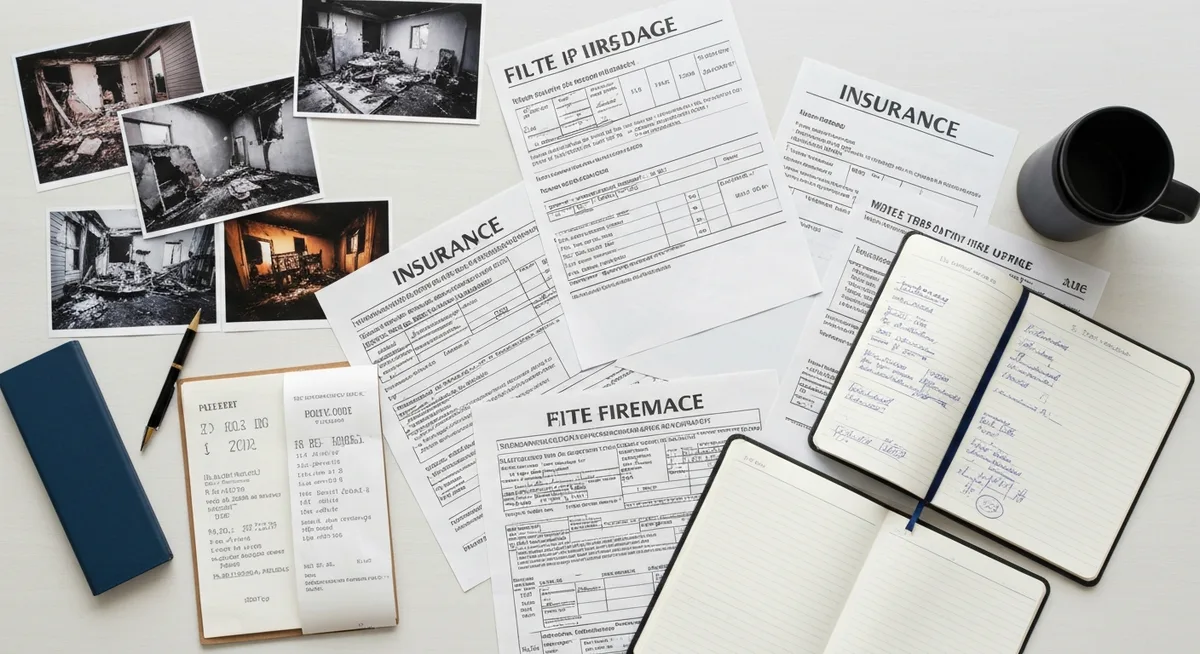
5. Insufficient Documentation
A fire damage claim requires thorough documentation. If you cannot prove the extent of the damage or the value of your lost belongings, your insurer may reduce or deny your claim.
Documentation problems that lead to denials include:
- No photos or videos of the damage before cleanup began
- Missing or incomplete home inventory of personal property
- No receipts or records showing the value of destroyed items
- Failure to keep a record of temporary living expenses
How to strengthen your claim: Document everything immediately after the fire. Take photos and videos before any cleanup. Create a detailed inventory of damaged items with estimated values. Save every receipt related to the fire.
6. Coverage Exclusions in Your Policy
Standard homeowners policies do not cover every type of fire-related loss. Common exclusions include:
- Code upgrade costs: If rebuilding requires meeting updated building codes, standard policies won’t cover the extra expense unless you have an ordinance or law endorsement.
- Flood damage from firefighting: Water damage caused by firefighters extinguishing the blaze may fall under a flood exclusion in some policies.
- Certain high-value items: Jewelry, art, collectibles, and other high-value belongings often have sub-limits that fall well below their actual worth.
- Business property: If you run a home-based business, your standard policy may not cover business equipment or inventory destroyed in the fire.
Always review your policy’s declarations page and exclusions section so you know exactly what is and isn’t covered before a fire occurs.
7. Misrepresentation or Fraud on the Application
If your insurer discovers that you provided inaccurate information on your insurance application, they can void your policy retroactively and deny any claims. This applies even if the misrepresentation wasn’t related to the fire.
Examples of misrepresentation include:
- Understating the age or condition of your home
- Failing to disclose prior fire damage or claims
- Not mentioning that the home is used as a rental property
- Incorrectly listing the home’s square footage or construction type
Insurance companies have access to claims databases and public records. Inaccuracies on your application can surface during the claims process, putting your entire policy at risk.
8. Late Reporting of the Claim
Most homeowners insurance policies require you to report a fire “promptly” or within a specified timeframe. If you wait too long to notify your insurer, they may argue that the delay prevented them from properly investigating the claim.
Late reporting can also raise suspicion of fraud, making the claims process more adversarial. Report the fire to your insurance company as soon as it’s safe to do so, ideally within 24 to 48 hours.
9. Disputed Cause of the Fire
Sometimes the cause of a fire is unclear or disputed. If the fire department’s report lists the cause as “undetermined,” your insurer may use this ambiguity to delay or deny your claim.
Disputed fire causes are particularly common with:
- Electrical fires where the exact failure point is hard to identify
- Kitchen fires where multiple ignition sources were present
- Fires in older homes with outdated wiring or heating systems
In these situations, hiring an independent fire investigator to produce a detailed origin and cause report can provide the evidence needed to support your claim.
10. Exceeding Policy Limits
Even when a claim is approved, the payout may not cover your actual losses if the damage exceeds your policy limits. This isn’t a true denial, but it has the same practical effect: you’re left with a gap between what insurance pays and what it costs to recover.
Common situations where limits fall short include:
- Underinsurance: Your dwelling coverage hasn’t kept pace with rising construction costs.
- Actual cash value policies: Depreciation reduces your payout below the replacement cost.
- Personal property sub-limits: High-value items are capped well below their worth.
- Insufficient ALE coverage: Temporary living costs during a lengthy rebuild exceed your additional living expense limit.
Review your policy annually and adjust coverage to reflect current rebuild costs, not just market value.
What to Do If Your Fire Insurance Claim Is Denied
A denial doesn’t have to be the end of the road. Here are the steps you can take to fight back.
Step 1: Request a Written Explanation
Your insurer is required to provide a written explanation for the denial, citing the specific policy language they relied on. Review this carefully and compare it to your actual policy.
Step 2: Gather Additional Evidence
If the denial is based on insufficient documentation or a disputed cause, gather additional evidence to counter the insurer’s reasoning. This may include:
- Independent repair and rebuilding estimates from licensed contractors
- An independent fire investigation report
- Updated home inventory with supporting photos, receipts, or appraisals
- Witness statements or fire department records

Step 3: Hire a Public Adjuster
A public adjuster works for you, not the insurance company. They review your policy, assess the damage independently, and negotiate with your insurer on your behalf. Public adjusters typically charge a percentage of your settlement (usually 5% to 15%), but they often recover significantly more than homeowners get on their own.
Step 4: File a Formal Appeal
Most insurers have an internal appeals process. Submit your appeal in writing, include all supporting documentation, and follow up regularly. Keep copies of everything you send and receive.
Step 5: Contact Your State Insurance Department
If your insurer is acting in bad faith, such as unreasonably delaying, underpaying, or denying a valid claim, you can file a complaint with your state’s department of insurance. The department can investigate and, in some cases, order the insurer to reconsider.
Step 6: Consult an Attorney
For large claims or bad-faith denials, an insurance attorney can help. Many fire damage attorneys work on a contingency basis, meaning you only pay if they recover money for you. An attorney can also pursue bad-faith damages if your insurer acted improperly.
When Insurance Isn’t Enough: Selling Your Fire-Damaged Home
Sometimes the math just doesn’t work. Your claim gets denied, your settlement is too low, or the cost and stress of rebuilding outweigh the benefits. Many homeowners in this position weigh whether to rebuild or sell after a house fire. In these situations, selling your fire-damaged home as-is is a practical alternative.
You don’t need to make any repairs before selling. Cash buyers purchase fire-damaged properties in their current condition. Here is how our process works, allowing you to:
- Skip the months-long insurance dispute process
- Avoid out-of-pocket repair costs
- Close quickly and move on with your life
At Fire Damage House Buyer, we purchase fire-damaged homes nationwide. We provide fair cash offers, handle the paperwork, and can close in as little as 7 days. There are no agent commissions, no repair requirements, and no hidden fees.
Get your free cash offer today or call us at (844) 714-3778 for a no-obligation consultation. For additional support, explore our post-fire recovery resources.
Frequently Asked Questions
Can insurance deny a fire claim?
Yes. Insurance companies can deny fire claims for several reasons, including suspected arson, policy lapses, negligence, insufficient documentation, and coverage exclusions. However, many denials can be appealed successfully with proper evidence.
What percentage of fire insurance claims are denied?
Exact statistics vary, but industry data suggests that roughly 15% to 20% of homeowners insurance claims are denied or significantly underpaid. Fire claims, due to their size and complexity, may face even higher scrutiny from insurers.
How long does an insurance company have to deny a fire claim?
Timeframes vary by state, but most states require insurers to acknowledge a claim within 15 days and make a decision within 30 to 45 days. If your insurer is delaying unreasonably, you may have grounds for a bad-faith complaint with your state insurance department.
Can I sell my house if my fire insurance claim was denied?
Yes. You are not required to repair fire damage before selling your home. Cash buyers like Fire Damage House Buyer specialize in purchasing fire-damaged homes as-is, regardless of whether an insurance claim was approved, denied, or never filed.
Should I hire a public adjuster or an attorney?
For most disputes, start with a public adjuster. They specialize in maximizing insurance payouts and are usually less expensive than an attorney. If your insurer is acting in bad faith, refusing to negotiate, or the claim involves a very large amount, consult an attorney who specializes in insurance disputes.
What is considered bad faith by an insurance company?
Bad faith occurs when an insurer unreasonably denies, delays, or underpays a valid claim. Examples include failing to investigate properly, misrepresenting policy language, making unreasonably low settlement offers, or not responding to claims within the legally required timeframe. Bad-faith practices can result in additional penalties and damages awarded to the policyholder.
Understanding the full claim process is key to avoiding denials. Read our complete guide on fire damage insurance claims for step-by-step instructions.