When fire tears through your home, one of the first questions that hits is: “How much is this going to cost to fix?” The answer is rarely simple. Fire damage restoration cost depends on factors like how far the fire spread, what kind of damage it caused, and how much work goes into cleanup and rebuilding.
The national average for fire damage restoration falls between $20,000 and $45,000, though costs can range from as low as $3,000 for minor damage to well over $100,000 for severe structural destruction. Understanding these numbers is the first step toward making a smart decision about your property’s future.
This guide breaks down exactly what drives fire damage restoration costs, what each repair category typically runs, and when selling as-is might make more financial sense than restoring.
Key Takeaways
- The average fire damage restoration cost ranges from $20,000 to $45,000, but severe damage can exceed $100,000.
- Costs are driven by damage severity, home size, location, and the type of repairs needed (structural, smoke, water, electrical).
- Per-square-foot restoration costs typically fall between $4.25 and $6.50.
- Insurance may cover restoration, but gaps in coverage are common and can leave homeowners paying out of pocket.
- Selling a fire-damaged home as-is for cash can be a faster, less stressful alternative to a lengthy and unpredictable restoration process.
What Is Fire Damage Restoration?
Fire damage restoration is the process of returning a fire-damaged property to a safe, livable condition. It goes far beyond simply replacing what burned. A complete restoration and repair process addresses every layer of damage the fire left behind, including structural repairs, smoke and soot removal, water damage from firefighting efforts, electrical system replacement, and cosmetic rebuilding.
The process typically involves several phases:
- Emergency board-up and securing the property to prevent further damage or break-ins.
- Assessment and inspection by professionals who document the full scope of damage.
- Water extraction and drying since firefighting hoses often cause secondary water damage.
- Smoke and soot cleanup from walls, ceilings, HVAC systems, and personal belongings.
- Structural repairs to the foundation, framing, roof, and load-bearing elements.
- Electrical and plumbing system restoration to bring everything up to code.
- Cosmetic finishing including drywall, painting, flooring, and fixtures.
Each of these phases carries its own cost, and skipping any one of them can lead to long-term problems like mold growth, weakened structures, or code violations.
Average Fire Damage Restoration Costs by Severity
Not all fires are the same, and restoration costs reflect that reality. Here is what homeowners typically face based on damage severity:
Minor Fire Damage ($3,000 – $15,000)
Minor fire damage is limited to a single room or small area. Think of a kitchen stove fire that was contained quickly or a fire that affected only one section of a room. At this level, you are mainly dealing with:
- Smoke and soot cleanup
- Repainting walls and ceilings
- Replacing damaged appliances or fixtures
- Minor drywall repair
Moderate Fire Damage ($15,000 – $45,000)
Moderate damage means the fire spread beyond a single room, affecting multiple areas of the home. Restoration at this level often includes:
- Significant smoke damage throughout the house
- Water damage from fire suppression
- Partial structural repairs (damaged joists, drywall replacement)
- HVAC system cleaning or replacement
- Flooring replacement in affected areas
This is where most homeowners land, and it is also where costs can start climbing unexpectedly as hidden damage gets uncovered during the restoration process.
Major Fire Damage ($45,000 – $100,000+)
Major fire damage affects a large portion of the home or compromises the structure itself. At this level, restoration involves:
- Full structural assessment and rebuilding
- Roof replacement or major repair
- Foundation inspection and repair
- Complete electrical rewiring
- Plumbing system overhaul
- Extensive water and mold remediation
- Full interior rebuilding from studs out
For severe damage, costs regularly exceed $100,000, and some homes are simply not economically viable to restore. If your costs are approaching or exceeding your home’s value, selling your fire damaged house as-is may be the smarter financial move.
Fire Damage Restoration Cost Breakdown by Category
Understanding where your money goes during restoration helps you evaluate whether the total investment makes sense. Here is a detailed breakdown:
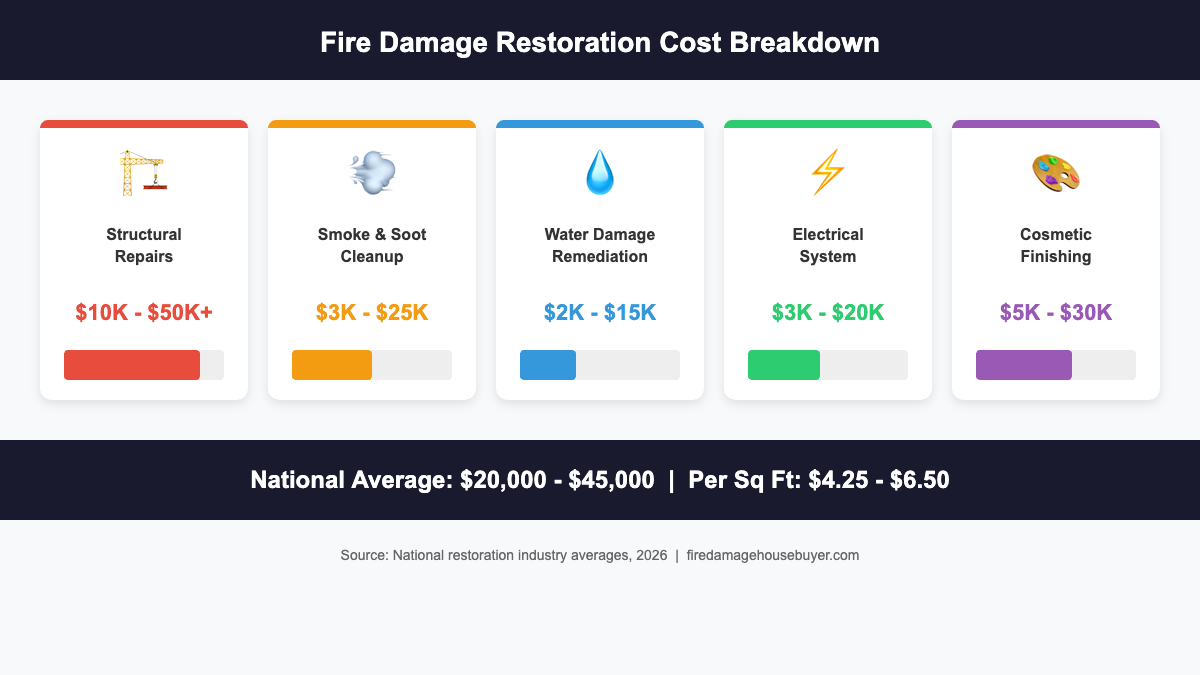
Structural Repairs: $10,000 – $50,000+
Structural damage is the most expensive category. Fire weakens load-bearing walls, warps steel beams, and can compromise your home’s foundation. Common structural repairs include:
- Foundation repair: $5,000 – $15,000
- Roof replacement: $8,000 – $25,000
- Framing and load-bearing wall repair: $5,000 – $20,000
- Support beam replacement: $3,000 – $10,000
A structural engineer’s assessment (typically $500 – $2,000) is a necessary first step before any structural work begins.
Smoke and Soot Cleanup: $3,000 – $25,000
Smoke travels everywhere, even into rooms the fire never reached. Professional smoke remediation includes:
- Thermal fogging and ozone treatment: $1,000 – $5,000
- HVAC duct cleaning: $500 – $2,500
- Wall and ceiling cleaning/sealing: $1,500 – $8,000
- Content cleaning (furniture, fabrics): $1,000 – $10,000
Smoke damage is often underestimated during initial assessments. The smell alone can make a home uninhabitable, and improper cleanup leads to long-term health hazards.
Water Damage Remediation: $2,000 – $15,000
Firefighting hoses pump thousands of gallons of water into your home. This secondary damage often rivals the fire damage itself:
- Water extraction: $1,000 – $4,000
- Structural drying: $1,500 – $5,000
- Mold prevention and remediation: $1,500 – $6,000
- Subfloor and insulation replacement: $1,000 – $5,000
Water damage that goes untreated for even a few days can lead to mold, which adds another $2,000 to $10,000 to the restoration bill.
Electrical System Repair: $3,000 – $20,000
Fire and extreme heat destroy wiring, outlets, and electrical panels. Electrical restoration must meet current building codes, which may require:
- Rewiring affected areas: $3,000 – $10,000
- Electrical panel replacement: $1,500 – $4,000
- Outlet and switch replacement: $500 – $2,000
- Code compliance upgrades: $1,000 – $5,000
Electrical work is non-negotiable. Damaged wiring is a leading cause of secondary fires.
Cosmetic and Interior Finishing: $5,000 – $30,000
Once the structural, mechanical, and cleanup work is complete, the cosmetic rebuild begins:
- Drywall installation and finishing: $2,000 – $8,000
- Interior painting: $1,500 – $5,000
- Flooring replacement: $2,000 – $10,000
- Cabinet and fixture replacement: $2,000 – $8,000
These costs add up quickly, especially in larger homes or when homeowners want to match the pre-fire quality of finishes.

Factors That Affect Fire Damage Restoration Cost
Several variables can push your restoration costs higher or lower:
Fire Severity and Spread
A fire contained to one room costs far less to restore than one that engulfed multiple floors. The longer the fire burned and the more areas it reached, the higher the restoration bill.
Home Size and Layout
Restoration companies typically charge between $4.25 and $6.50 per square foot. A 1,500-square-foot home might cost $6,375 to $9,750 in base restoration fees, while a 3,000-square-foot home could run $12,750 to $19,500 before factoring in specific damage repairs.
Geographic Location
Labor and material costs vary significantly by region. Restoration in major metropolitan areas like Los Angeles, New York, or San Francisco often costs 20-40% more than the national average due to higher contractor rates and material prices.
Building Materials
Older homes with unique materials (plaster walls, hardwood framing, custom millwork) cost more to restore than homes with standard modern construction. Matching original materials for historical homes can be especially expensive.
Permit and Code Requirements
Local building codes may require upgrades beyond simple repair. If your home’s electrical, plumbing, or structural systems did not meet current code before the fire, you may be required to bring everything up to standard during restoration, adding thousands to the bill.
Hazardous Material Removal
Older homes may contain asbestos, lead paint, or other hazardous materials that require specialized removal. This can add $3,000 to $15,000 depending on the scope.
Does Insurance Cover Fire Damage Restoration?
Most homeowner’s insurance policies cover fire damage restoration, but coverage is rarely as comprehensive as homeowners expect. Here is what to know:
What insurance typically covers:
- Structural repairs up to your dwelling coverage limit
- Personal property replacement (with depreciation)
- Additional living expenses while your home is being restored
- Debris removal (often with a sub-limit)
Common coverage gaps:
- Underinsurance: Many homes are insured for less than their actual replacement cost, leaving homeowners to cover the difference.
- Code upgrade costs: Standard policies may not cover the cost of bringing your home up to current building codes.
- Extended vacancy: If restoration takes longer than expected, additional living expense coverage can run out.
- Landscaping and external structures: Fences, sheds, and landscaping often have limited coverage.
Filing a fire damage insurance claim is a complex process. Working with a public adjuster can help maximize your payout, though their fees (typically 5-15% of the settlement) are another expense to factor in.
For a deeper look at the claims process, check out our guide on how to file a fire damage insurance claim.
Restoration vs. Selling As-Is: When the Numbers Do Not Add Up
Many homeowners face the difficult choice of whether to rebuild or sell after a house fire. The answer often comes down to the numbers.
Here is the reality many homeowners face: after tallying up restoration costs, the total often exceeds what makes financial sense. Consider this scenario:
| Factor | Restoration Path | Sell As-Is Path |
|---|---|---|
| Estimated restoration cost | $65,000 | $0 |
| Timeline | 6-12 months | 7-14 days |
| Out-of-pocket risk | High (cost overruns common) | None |
| Stress level | High | Low |
| Financial certainty | Low | High |
Restoration projects are notorious for cost overruns. Hidden damage uncovered during demolition, material price increases, and contractor delays can push the final bill 20-50% higher than initial estimates.
For many homeowners, the math simply does not work. The cost to restore exceeds the home’s post-repair value, or the financial risk of an unpredictable restoration is too high.
That is exactly why companies like Fire Damage House Buyer exist. We purchase fire-damaged homes as-is for cash, with no repairs, no agent commissions, and no hidden fees. You get a fair cash offer based on your property’s current condition and can close in as little as 7 days.
Instead of spending months managing contractors and watching costs climb, you walk away with cash in hand and the freedom to move forward. For additional support during this time, explore our post-fire recovery resources.
How to Get a Fair Cash Offer for Your Fire-Damaged Home
Here is how our process works. If restoration costs have you reconsidering your options, here is how the process works:
- Contact us for a free evaluation. Share your property address and basic details about the fire damage. Call (844) 714-3778 or fill out our online form.
- Receive your fair cash offer. We assess your property and provide a no-obligation cash offer, typically within days.
- Close on your timeline. Accept the offer and close in as little as 7 days. We handle all closing costs.
There are no repairs to make, no showings to schedule, and no agent commissions to pay. You sell your home exactly as it is and move on.
If you live in a condo or townhouse within an HOA community, restoration costs may involve additional complications. HOA master policies, repair timelines, and special assessments can significantly affect your total out-of-pocket expense. Our guide on fire damage and HOA properties explains what to expect.
Frequently Asked Questions
How much does fire damage restoration cost on average?
The national average for fire damage restoration ranges from $20,000 to $45,000. Minor damage in a single room may cost as little as $3,000, while severe structural damage can exceed $100,000. The final cost depends on factors like home size, fire severity, geographic location, and the types of repairs needed.
How long does fire damage restoration take?
Minor fire damage restoration can be completed in 2-4 weeks. Moderate damage typically takes 2-4 months. Major structural restoration can take 6-12 months or longer, depending on the scope of work, permit requirements, and contractor availability.
Does insurance pay for fire damage restoration?
Most homeowner’s insurance policies cover fire damage restoration up to your dwelling coverage limit. However, gaps are common, including underinsurance, code upgrade costs not covered, and additional living expense limits. Working with a public adjuster can help maximize your claim payout.
Is it worth restoring a fire-damaged house?
It depends on the extent of damage and the numbers. If restoration costs approach or exceed the home’s post-repair value, or if the financial risk of cost overruns is too high, selling as-is may be the smarter choice. For minor damage, restoration often makes sense.
Can I sell a fire-damaged house without restoring it?
Yes. Companies like Fire Damage House Buyer purchase fire-damaged homes as-is for cash. There are no repairs, no agent commissions, and no closing costs. You can close in as little as 7 days and use the cash to start fresh.
What is the cost per square foot for fire damage restoration?
Fire damage restoration typically costs between $4.25 and $6.50 per square foot, though this can vary based on damage severity and geographic location. This per-square-foot rate covers general restoration work but does not include major structural repairs or specialized services.